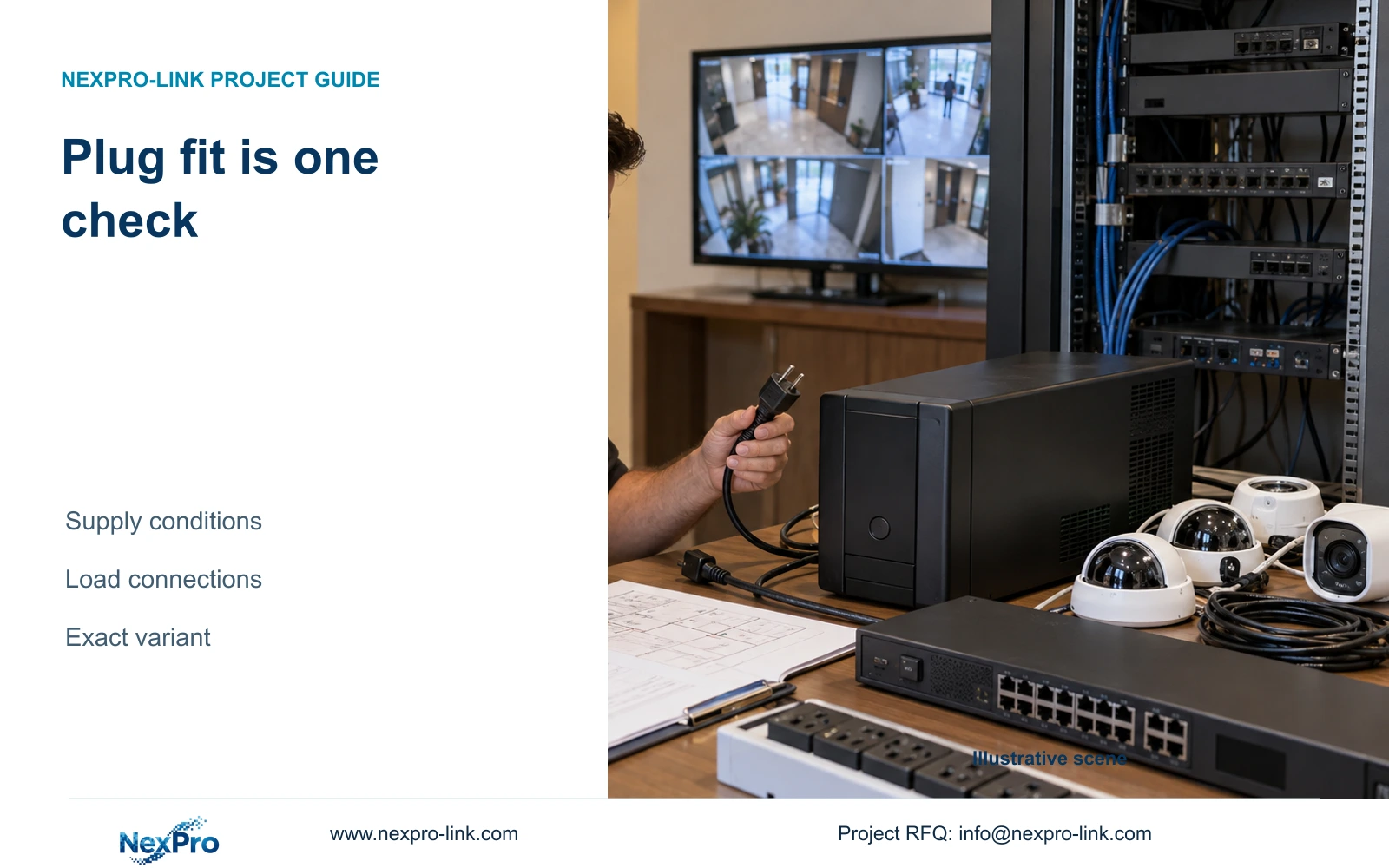
A model purchased for one country is not automatically qualified for another hotel project. Reuse relevant technical records while reviewing the destination, purchasing entity and local supply and service boundaries.
Section 01
Identify the destination and purchasing entity
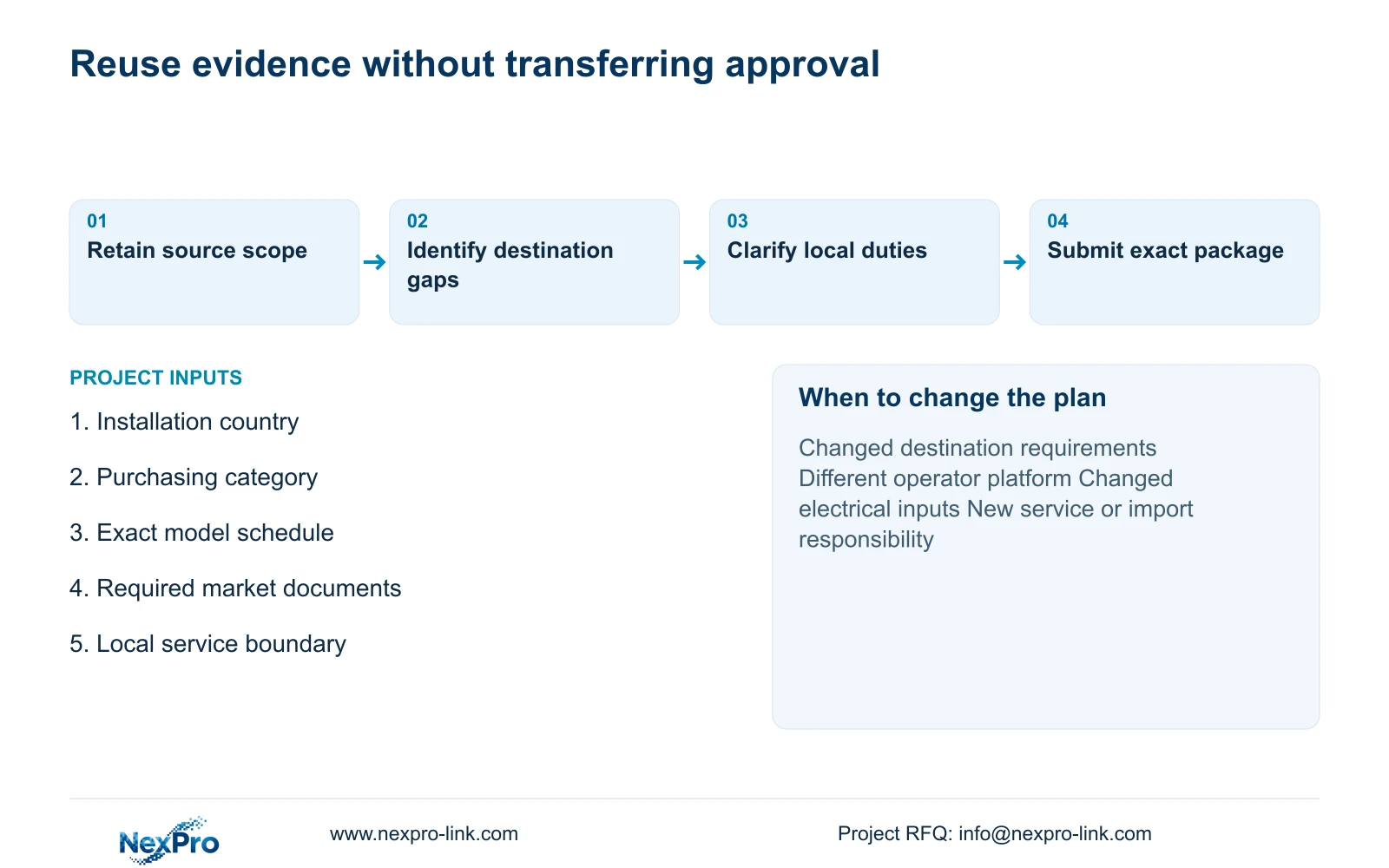
Use a destination-specific supplier and model submission for each international hotel project. An earlier purchase in another country can provide relevant records, but it does not establish acceptance for the new buyer, site or market. Reuse unchanged engineering information only within its documented scope, and reopen the submission when destination requirements, product configuration or service responsibilities differ.
Start with the installation country, delivery location and purchasing entity. Identify who reviews supplier registration, who accepts the equipment brand and models, and who authorizes the order. An operator's commercial relationship with a supplier does not resolve every consultant or local project decision. Keep those review objects visible in the correspondence.
Describe the category under consideration. NexPro-Link's CCTV manufacturing core and coordinated supporting-equipment supply should have separate scope statements. The local contractor's installation and commissioning responsibilities need their own assignment. A single commercial contact can coordinate a package without becoming the responsible manufacturer or installer for every discipline.
| Required task | Given information | Decision still needed |
|---|---|---|
| Register the supplier | Purchasing entity and category | Buyer-specific registration requirements |
| Accept equipment | Exact proposed model schedule | Destination and project suitability |
| Deliver and support | Installation location | Import, local action and service responsibilities |
Section 02
Match the exact product scope
Carry the full SKU and configuration into the new submission. Similar series names, housing appearance or resolution do not establish equivalent power, mounting or software behavior. Identify the proposed camera modes, recorder arrangement and supporting accessories. Mark any changed items so earlier evidence cannot silently attach to a different product.
The UPS records illustrate why this matters. SP2K(S) is a tower model rated 2 kVA/2000 W, while SP2KR(S) is a rack model rated 2 kVA/1800 W. Their shared kVA value does not make their watt limits equal. Battery configuration and runtime remain separate inputs; a default battery value for another selected model cannot be transferred to either proposal.
If the hotel operator has a mandatory brand or platform, retain that requirement unless the buyer permits an alternative. Where substitution is allowed, provide a baseline and a named alternative with its departures. Coordinated supply of cameras, locks and power equipment does not establish native software integration. Each interface must be assessed against the actual project system and version.
| Item | Option A | Option B | Effect on the hotel task |
|---|---|---|---|
| 2 kVA UPS | SP2K(S): 2000 W, tower | SP2KR(S): 1800 W, rack | W limit and installation arrangement differ |
| Integration | Shared supply order | Verified required interface | Only the latter can support the specified workflow |
Section 03
Separate market documents and engineering data
Create separate records for destination-related submission documents and engineering evidence. A model datasheet can support a capacity or environmental discussion, but it does not establish that every importing or market requirement has been met. Conversely, a buyer's supplier registration record does not prove that a proposed recorder supports the selected disk and stream configuration.
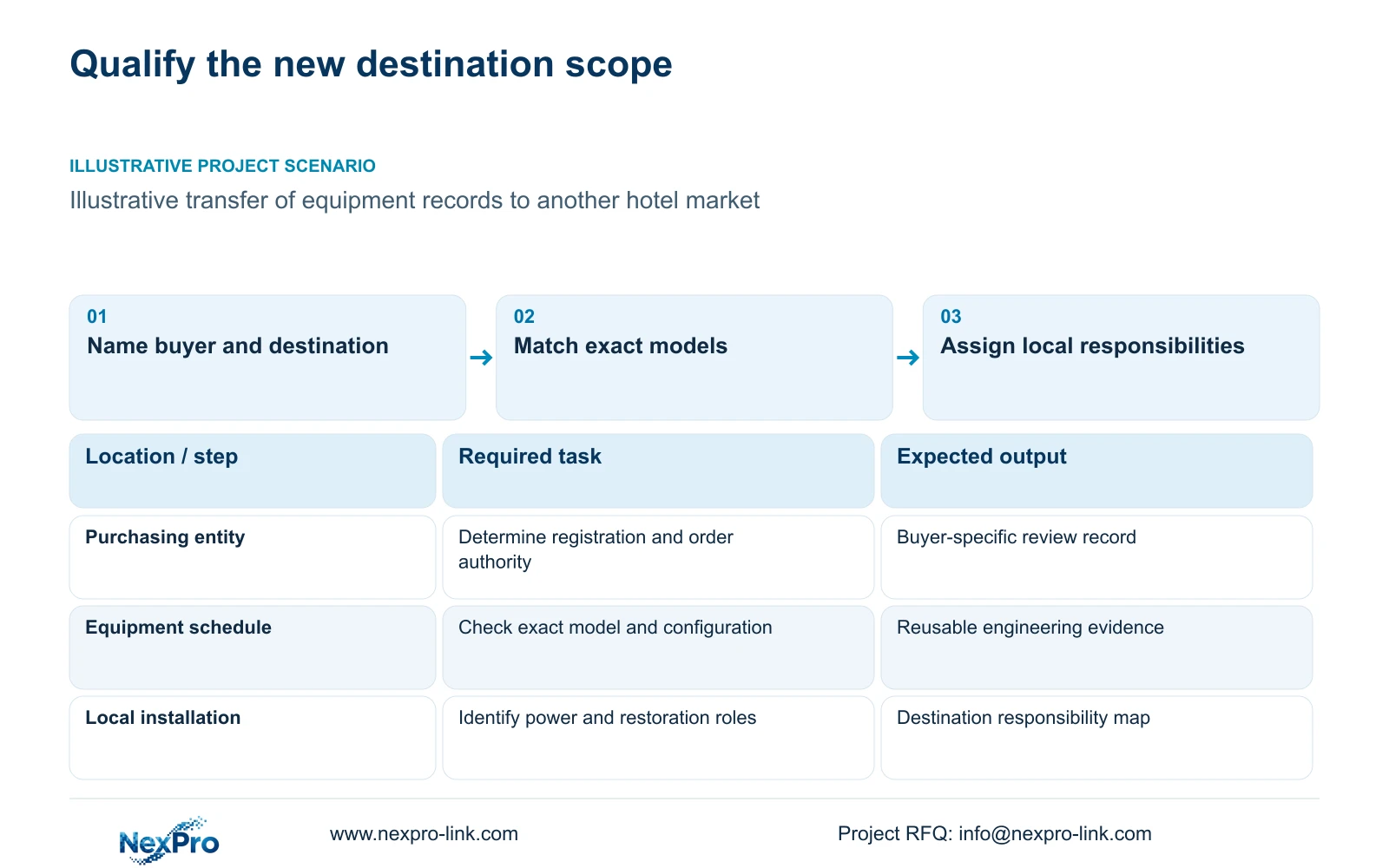
The submission record distinguishes destination applicability from engineering suitability. It is an analysis checklist, not a statement of a country’s legal requirements or an approval result. The retained illustration summarizes scoped review; the responsible buyer or destination adviser must identify the actual documents required for the proposed model.
Request the relevant document requirements from the responsible buyer or destination adviser, then identify which supplied records match the exact proposed models. Keep missing or unresolved items open. Provide only the portion of the project brief needed for the review. This avoids circulating unrelated confidential tender material while still allowing a useful technical response.
| Record | Scope to identify | Unresolved item stays with |
|---|---|---|
| Buyer registration/approval | Entity, project, category and approving role | New buyer; previous acceptance is background only |
| Market document request | Destination requirement supplied by responsible party | Buyer/destination adviser; no invented universal requirement |
| Product document | Exact model/version and the document’s actual stated scope | Supplier confirms match; do not attach another SKU’s record |
| Engineering configuration | Electrical inputs, mounting, streams and interfaces | Designer/local specialists; certification is not capacity proof |
| Delivery/restoration | Import/delivery boundary, local action and return responsibility | Commercial and site owners in the written scope |
Section 04
Compare local power and service needs
Collect the site's confirmed electrical inputs and installation boundary before final equipment selection. The protected path may include remote access switches as well as the recorder. A fibre backbone transfers data; it does not automatically supply camera power at the remote node. Local electrical design, protection and installation remain tasks for the appropriate project specialists.
Treat previous project calculations as reference methods. CASE01's total load combines assumed equipment across nodes and must be divided by actual protection zones when the installation is distributed. Moving the same equipment schedule to a different hotel does not establish that one central UPS can protect every location or that the earlier battery arrangement provides the required runtime.
Compare the practical restoration path as well. Identify who diagnoses a fault, who performs local replacement and who arranges authorized return or replenishment. The supplied warranty policy gives a 24-month receipt-based limited hardware baseline for applicable main equipment, subject to controlling order terms. Batteries, storage, cable and OEM scope are separate. Remote technical support does not establish included site labor, travel or unlimited free transport.
Section 05
Prepare a destination-specific submission
Prepare a representative equipment schedule that pairs each requirement with the proposed model, relevant evidence and unresolved destination input. Include the delivery boundary and local responsibility for installation and support. If a trial is useful, choose one that addresses a material local uncertainty, such as the required client workflow or a public-zone observation task.
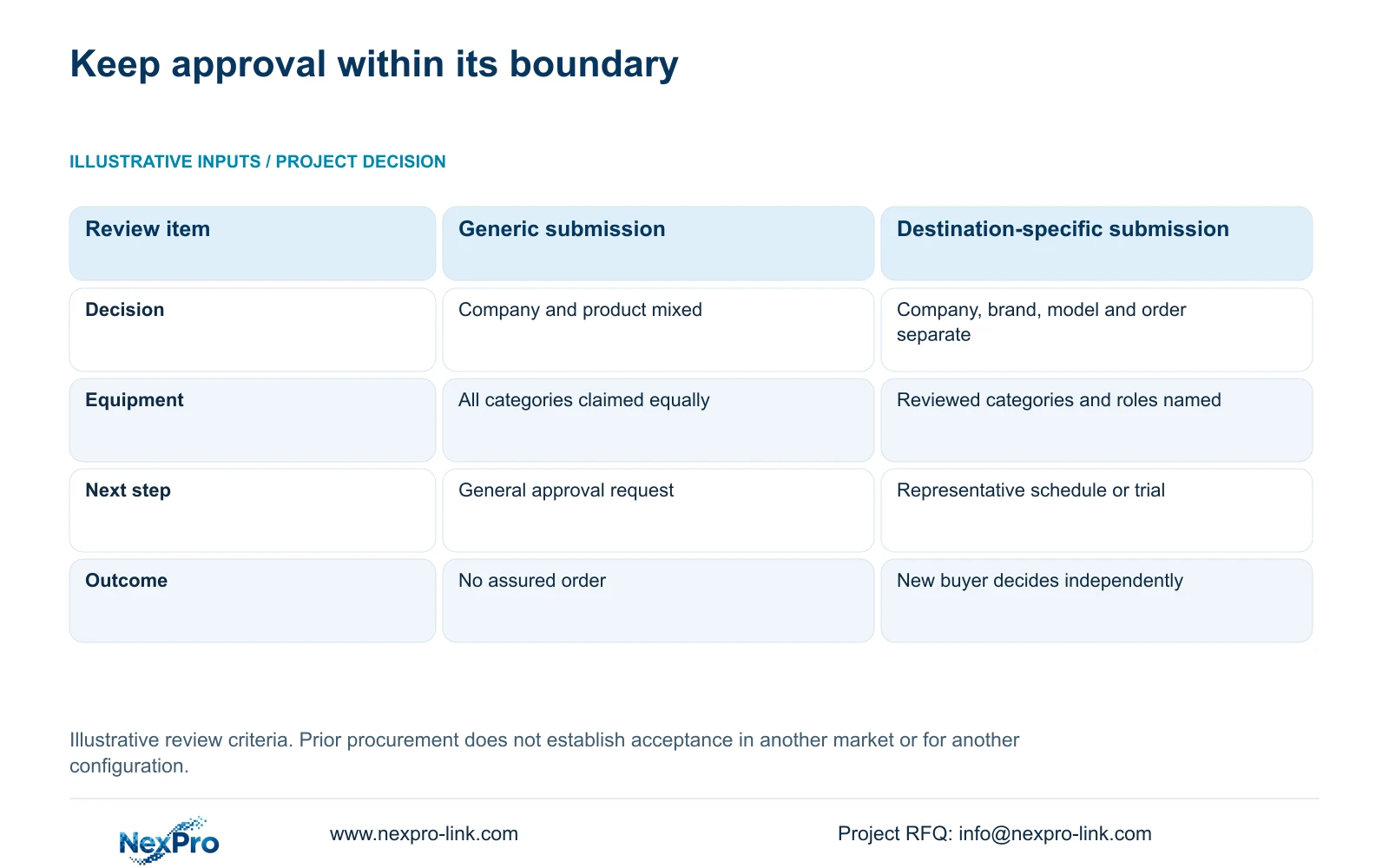
The scoped approach in the matrix changes the recommendation by making its review object explicit. A useful submission can proceed before every drawing is complete, provided preliminary quantities and assumptions remain identifiable. It should not claim broad qualification across countries or product categories that the buyer has not reviewed.
Separate additional evaluation scope from the required operating outcome and its cost. A local sample exercise is worth discussing where the destination introduces conditions absent from earlier evidence. If the configuration and task are unchanged and the buyer accepts the relevant record, avoid adding a trial without a defined purpose. Include actual sample, transport and local-work costs when quoted; no standard lead time or fee is established here.
| Retained outcome | Extra scope | When useful | Counter-condition |
|---|---|---|---|
| Required client workflow | Representative local trial | Platform or version differs | Buyer accepts matching existing evidence |
| Supported equipment supply | Destination document clarification | Applicable requirements remain unresolved | Exact scope already documented and accepted |
Section 06
Avoid transferring approval beyond its scope
Record an acceptance against the reviewing entity, project, category and exact model configuration. Distinguish technical acceptance from order authority and delivery readiness. A prior order, demonstration or supplier-list entry supplies context only within its scope. It cannot establish a new country's requirements or guarantee a future procurement award.
Recommend a destination-specific submission while import, power, documentation and service responsibilities are being defined. Reconfigure the proposal if local requirements, operator standards or actual equipment duties differ from the reference. Preserve the approved hotel task while explaining the changed supply and installation implications. Avoid replacing a mandatory brand simply to reuse an earlier package.
Send the destination, purchasing category, available model schedule and buyer's review requirements to info@nexpro-link.com. Identify the local installer or service responsibility and whether alternatives may be considered. NexPro-Link can discuss model matching, project documents and coordinated overseas supply through hotel project equipment support and BOQ and tender support. Initial correspondence does not require credentials, guest images or unrelated commercial records.
Section 07
Buyer questions
Can an approved supplier record be reused for another country? It can be submitted as relevant background, with its original entity and category identified. The new buyer decides whether it is acceptable; model suitability and destination requirements still need their own review.
Does one coordinated order establish integration between all systems? No. Specify the actual interfaces and software versions for each subsystem. A commercial supply arrangement does not prove native interoperability or assign every local installation responsibility.
What destination information belongs in the first inquiry? Provide the installation and delivery locations, purchasing entity or category, proposed model schedule and required review documents. Identify the intended local installation and restoration roles where known.
Engineering references
These sources support the general planning principles. Always use the selected product's current datasheet and applicable project standards for final design.