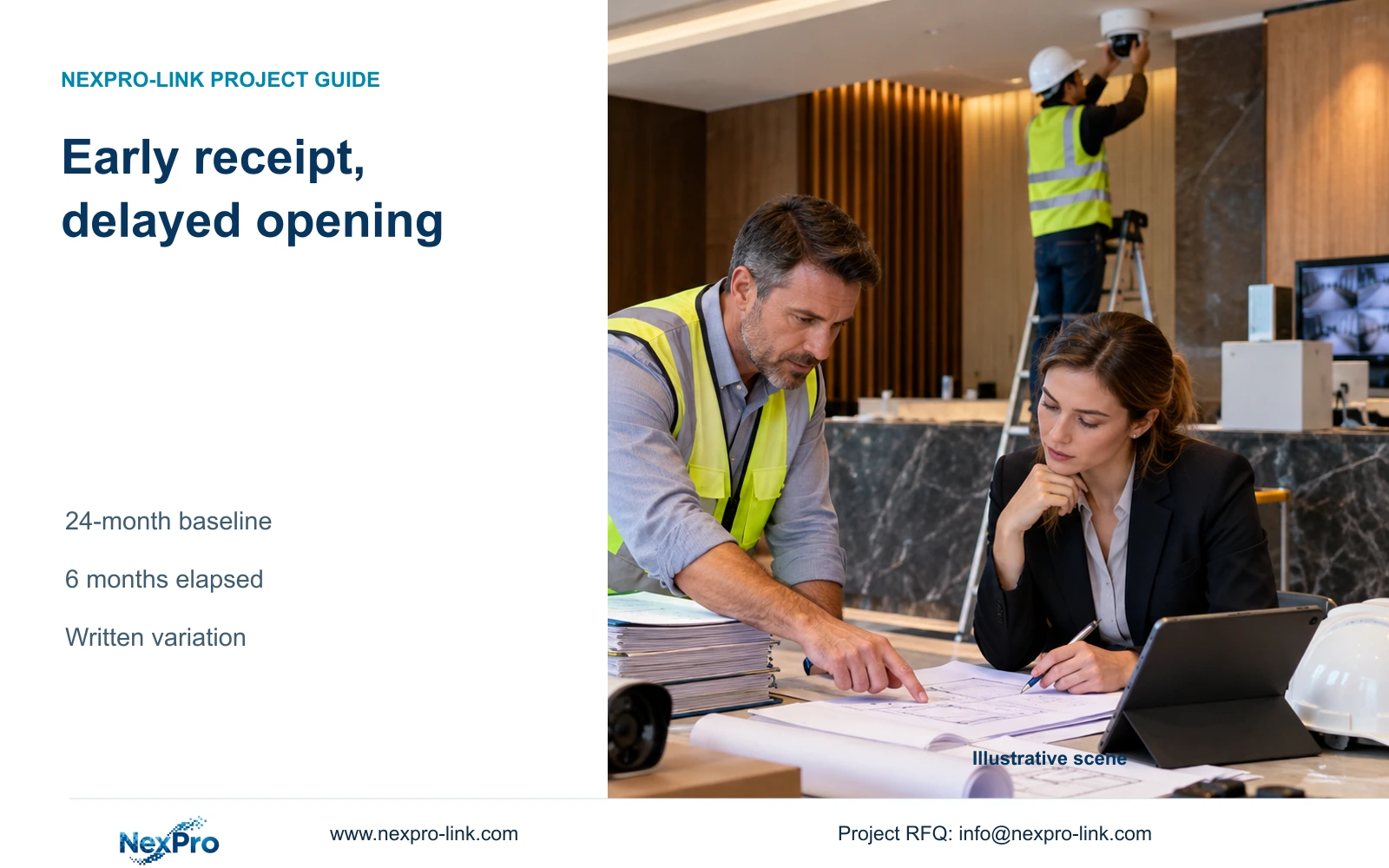
A delayed hotel opening does not automatically postpone a receipt-based equipment warranty. Record each delivery and compare the remaining term with the hotel's opening requirement before seeking a written variation.
Section 01
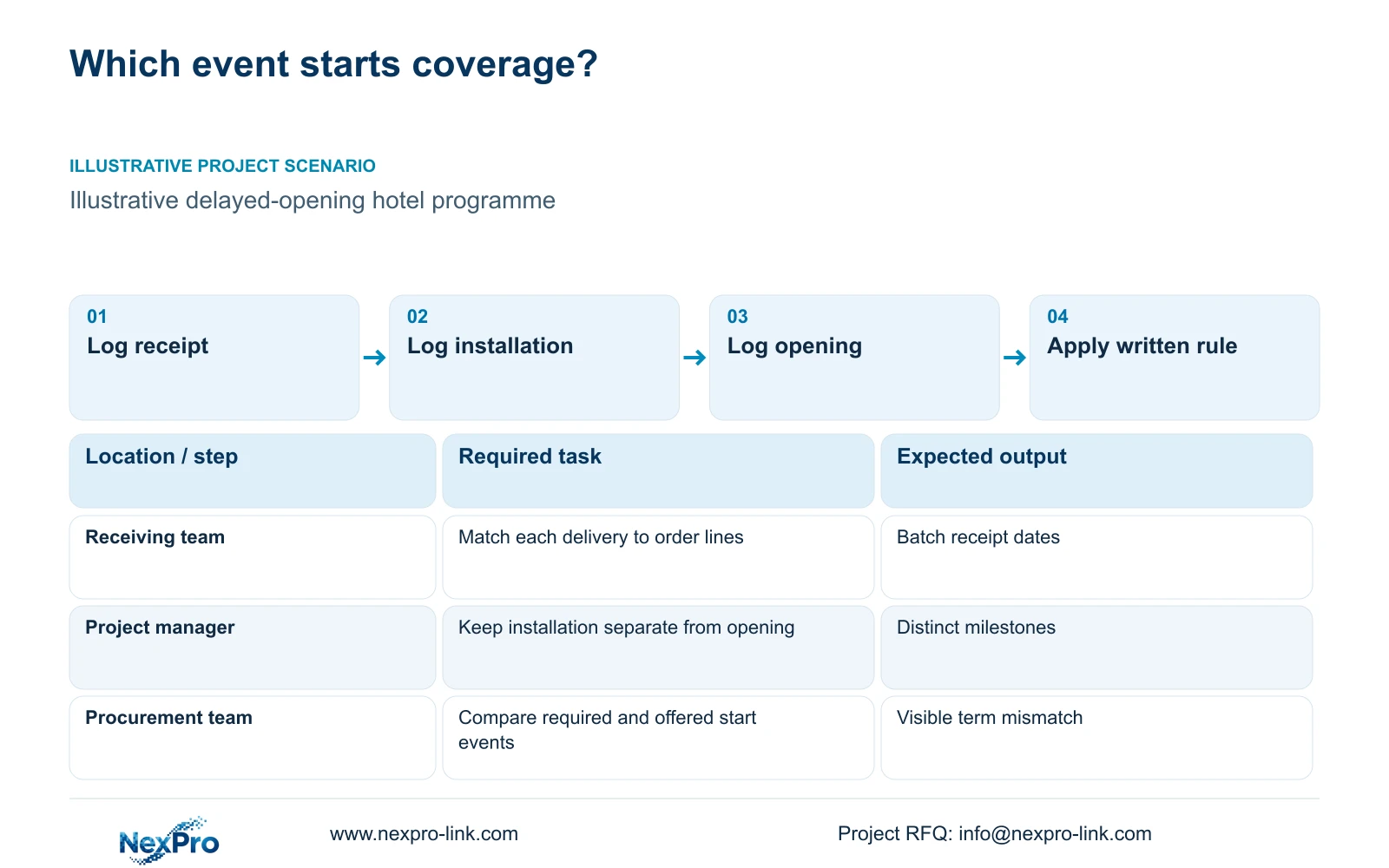
Record receipt, installation and opening separately
Use the applicable receipt record and written start rule when equipment arrives before the hotel opens. Do not move the warranty start to opening merely because construction is delayed. If the remaining coverage at opening will fall short of the owner's requirement, request a project-specific arrangement before ordering or seek an explicit written variation to the existing agreement.
Keep delivery, installation and operational opening as separate milestones. Receipt establishes when goods reached the relevant customer under the applicable terms; installation records when equipment entered the system. Opening describes the hotel's operating programme. A project spreadsheet should show each event without treating one as a substitute for another.
Where deliveries are phased, connect dates to the actual models and batches. A recorder received with the first shipment and a later UPS delivery should not inherit one convenient project date unless the written terms establish that treatment. This record also helps distinguish equipment held in storage from equipment already installed and operating.
| Required task | Given information | Decision still needed |
|---|---|---|
| Establish hardware start | Receipt evidence for each batch | Applicable contractual receipt event |
| Assess opening coverage | Planned opening milestone | Remaining term for covered items |
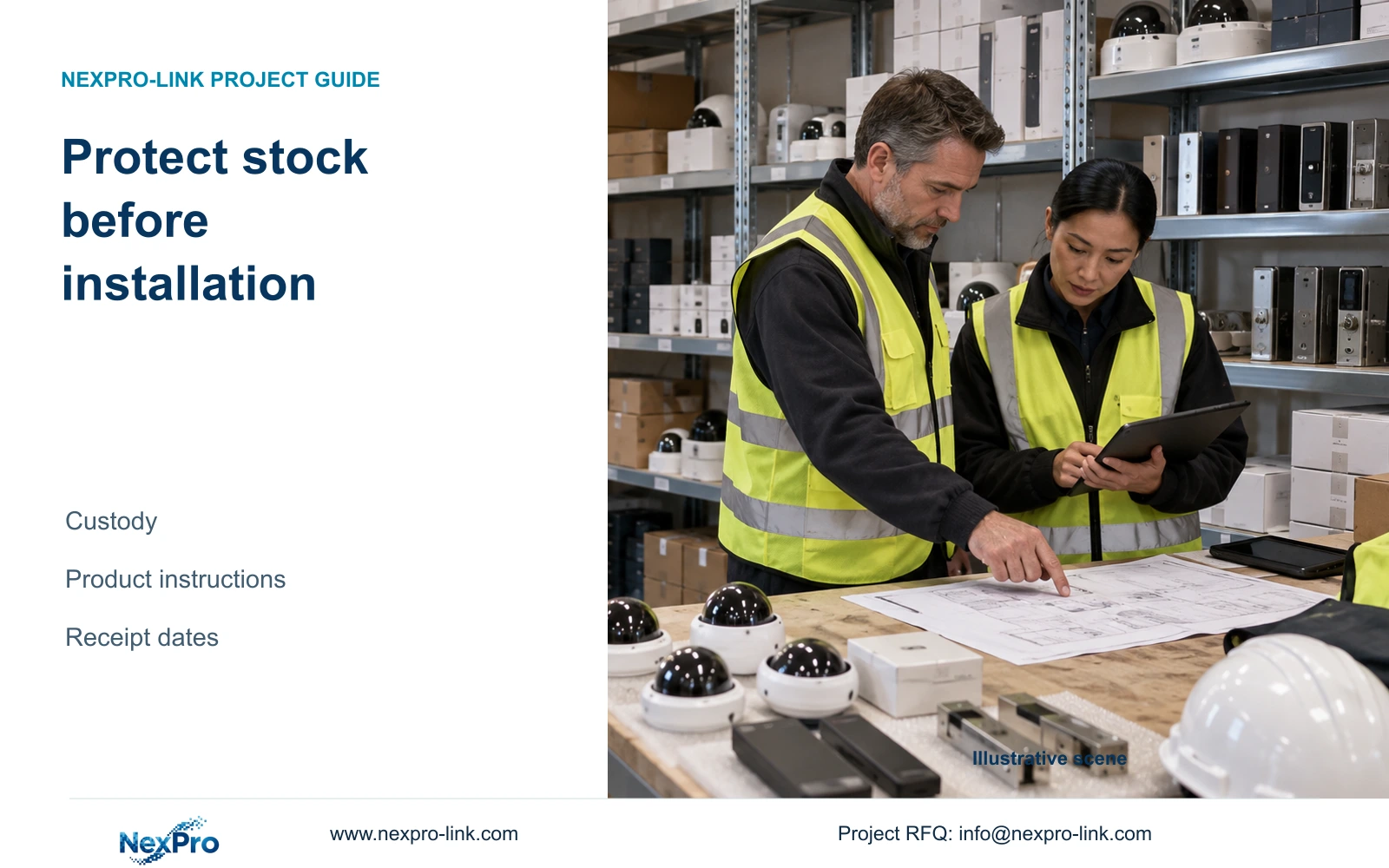
| Assign stored equipment care | Installation remains pending | Storage owner and model instructions |
Section 02
Identify the start rule for each covered item
The supplied NexPro-Link policy record, checked on 7 October 2026, gives eligible main equipment a 24-month limited hardware baseline from customer receipt. Use that scoped information alongside the controlling quotation, pro forma invoice and contract. A later opening date does not amend the policy, and historical references to a longer term do not establish the terms of a new order.
Classify the items before applying the rule. Recorder hardware, UPS hardware, batteries and disks may have different coverage. An order containing all of them does not establish a single start event or period for every component. Record any OEM or special-order conditions against the affected line.
If a tender asks for coverage from completion or opening, make the mismatch visible in the proposal. Keep the requested event and the offered event in separate columns until agreement is reached. The project manager can then decide whether to accept the baseline, alter delivery timing or negotiate a specific variation without silently changing the supplier's existing obligation.
Section 03
Calculate the coverage remaining at opening
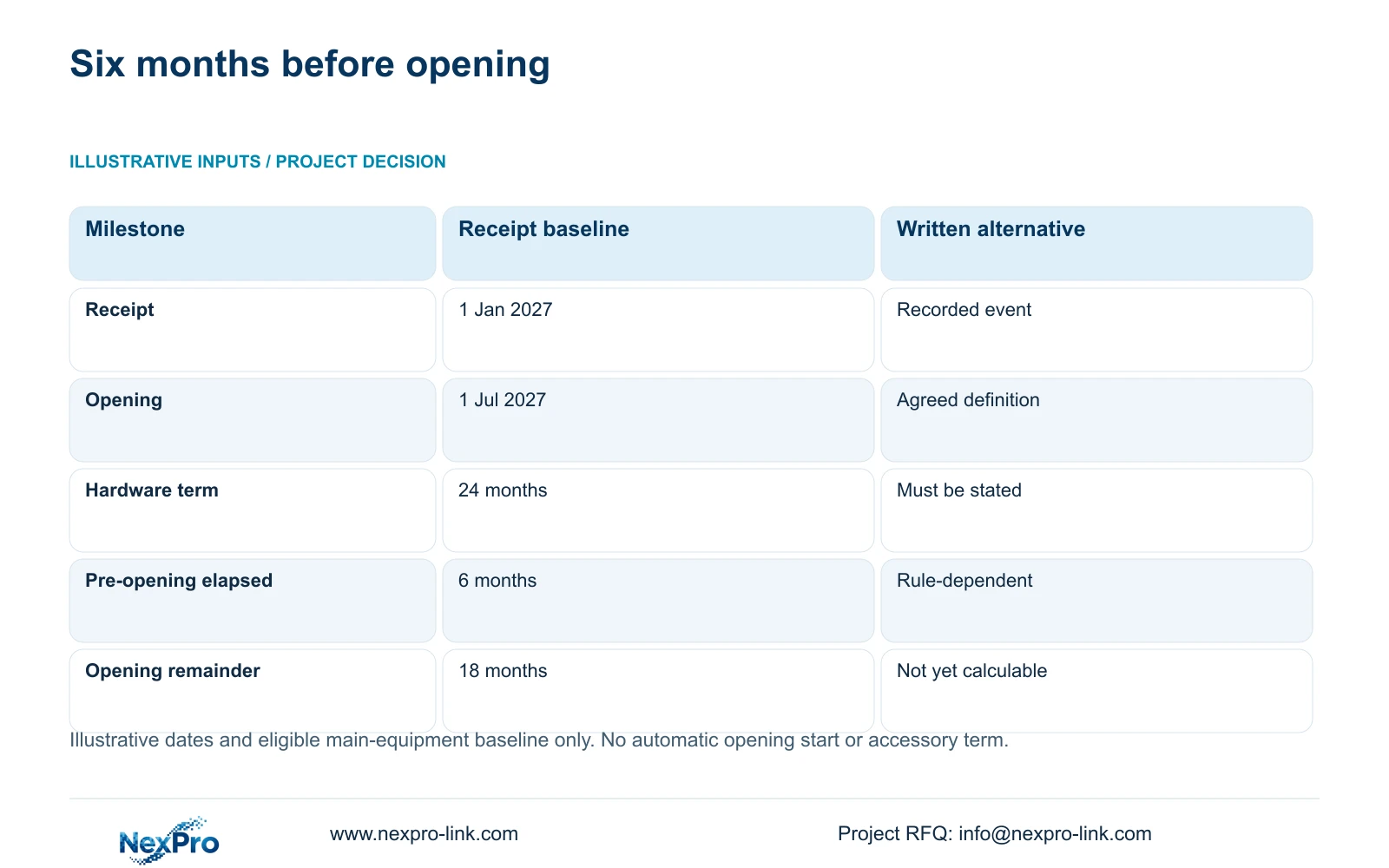
The illustrative timeline assumes customer receipt on 1 January 2027 and hotel opening on 1 July 2027. The 24-month period comes from the supplied eligible main-equipment policy baseline; the two dates are teaching inputs. Calculate remaining coverage in months as contractual term minus elapsed months from its applicable start event.
Six calendar months pass between the assumed events. Therefore, 24 minus 6 leaves 18 months at opening. The calculation describes time remaining under the example, not a new offer, a repair response period or the expected life of the equipment. It does not assign a battery or HDD warranty.
This result changes the procurement decision when the owner requires more opening-stage coverage than the baseline leaves. The alternative column intentionally has no invented term. A proposed opening-based arrangement can be evaluated only after the covered items, duration and event definition are written down. If opening moves again, recalculate using the actual agreed rule.
| Metric / condition | Receipt-based example | Written project-specific proposal |
|---|---|---|
| Assumed start event | Customer receipt: 1 January 2027 | Only a different event explicitly agreed in writing |
| Baseline term (months) | 24 | Do not invent a different term |
| Elapsed to opening (months) | 6, to 1 July 2027 | Depends on the written event |
| Remaining baseline at opening (months) | 18 | Not calculable without agreed term |
| Batteries / disks / cable | Model/order-specific | Not automatically covered by main term |
Section 04
Keep storage care separate from warranty entitlement
Assign responsibility for equipment while installation is pending. Ask for the selected model's storage and handling instructions, including any battery-specific requirements, rather than creating a universal temperature limit or recharge interval. The hotel's warehouse arrangements and the supplier's warranty terms answer different questions and need separate records.
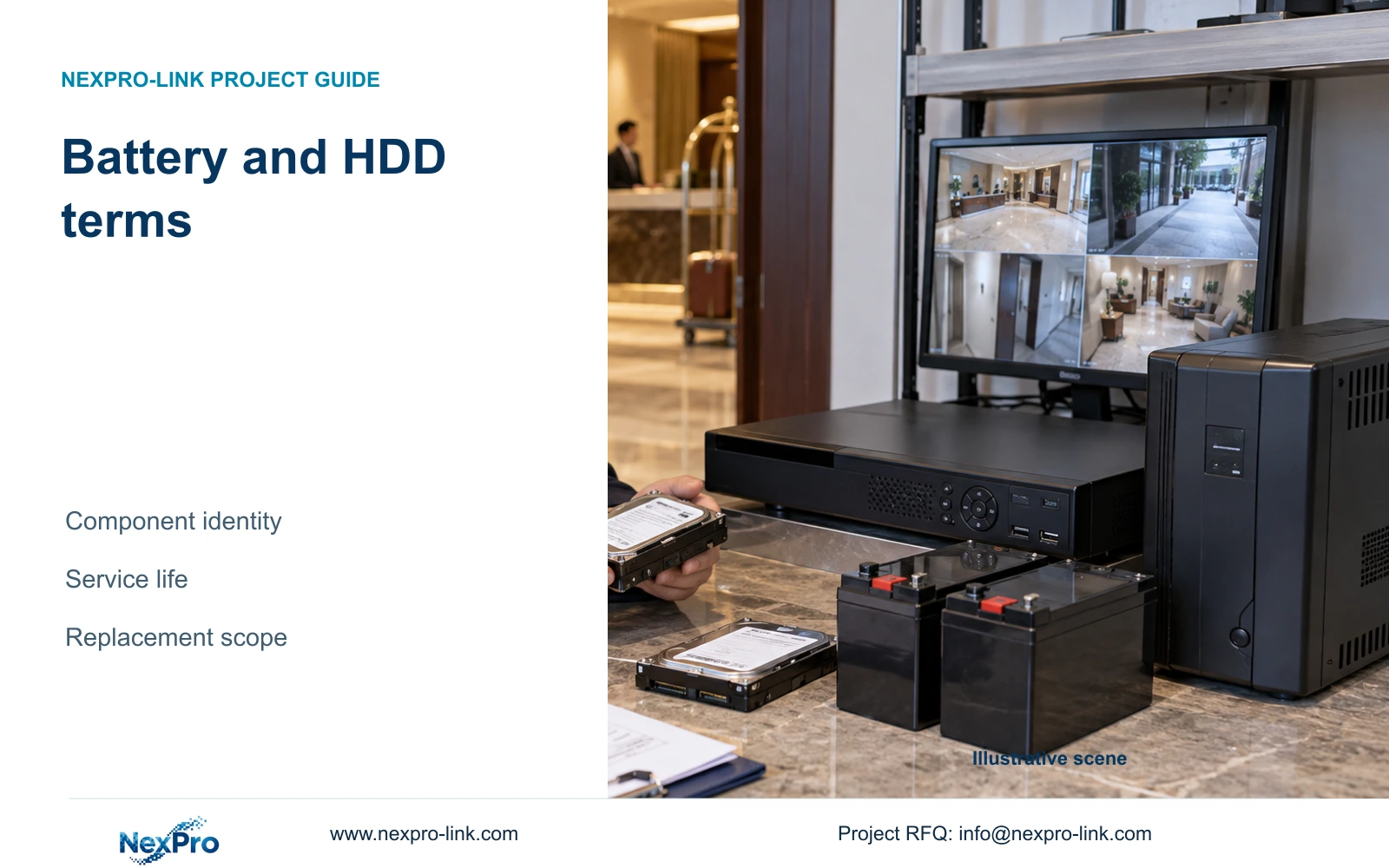
For SP2KR(S), the supplied product record identifies a rack-mounted online double-conversion LiFePO4 UPS rated at 2 kVA and 1800 W. Those fields do not establish the delivered battery capacity, storage-care interval or runtime. A default battery value from another selected model must not be transferred to this unit's schedule.
Document custody and any observed condition at receipt, then preserve the relevant inspection and care records during the delay. Proper care does not automatically suspend a receipt-based clock. Equally, the passage of six months does not prove that stored equipment has deteriorated or that a claim will be rejected. The actual condition and written terms govern the affected case.
Section 05
Compare delivery and coverage arrangements
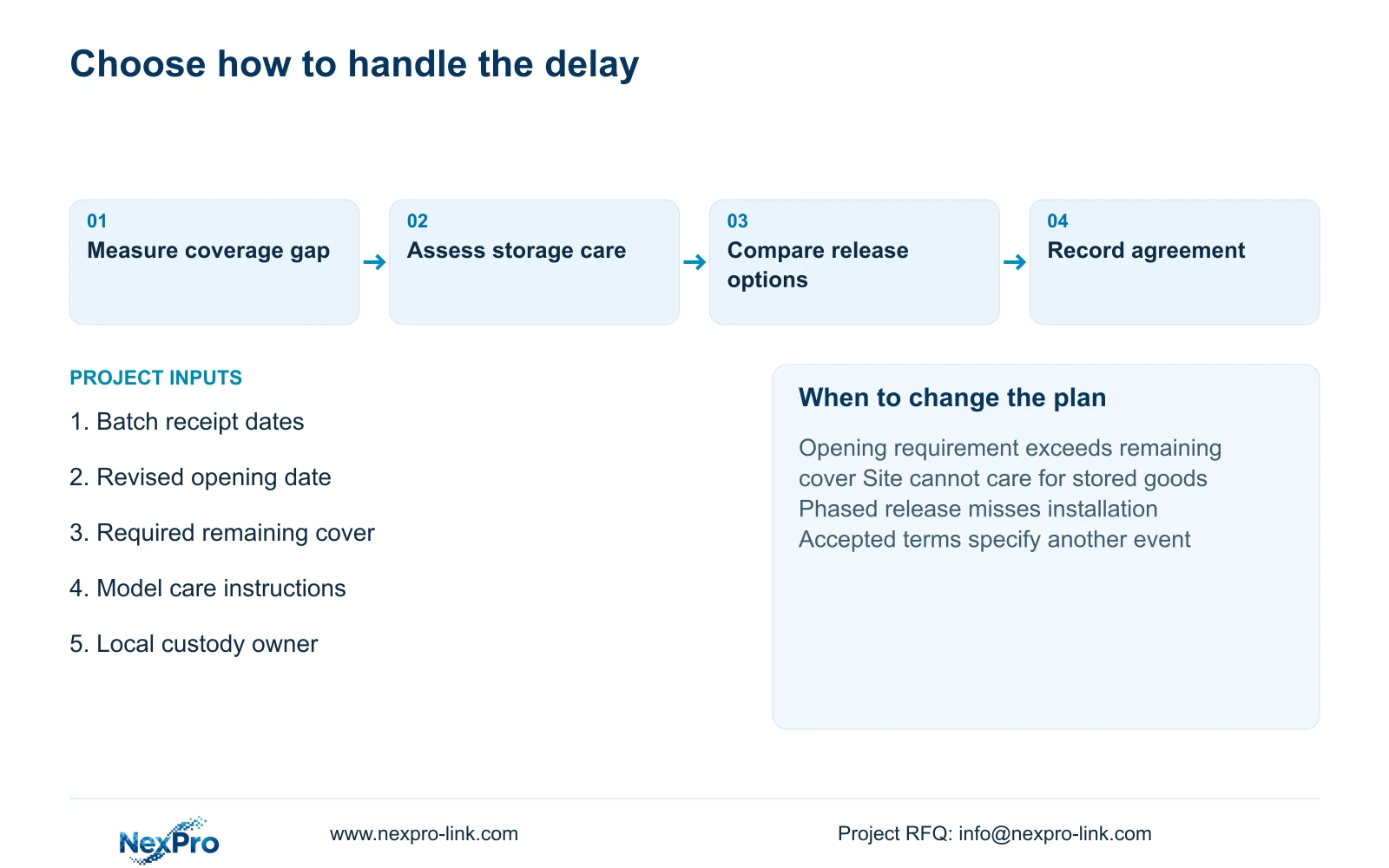
Assess early receipt against phased delivery and any proposed coverage variation. Early receipt can support installation preparation where the site has suitable custody and access arrangements. A later release may reduce the pre-opening interval, but its transport, preparation and installation dependencies must fit the actual programme. No lead time is promised by the calendar example.
A written variation may address a start event without including additional site attendance, faster freight or spare stock. Compare each addition separately. The coverage outcome and the restoration outcome need their own terms, particularly when the hotel will have no local technical team at opening.
Retain early delivery under the baseline when its remaining term is acceptable and the site can manage the stored equipment. Change the arrangement when the owner's required opening coverage is unmet or the site cannot provide suitable care. Obtain actual commercial and scheduling inputs before comparing cost; a longer period is not enough to rank the alternatives.
| Arrangement | Retained outcome | When useful | Limitation |
|---|---|---|---|
| Early receipt | Equipment available for preparation | Care and remaining coverage are acceptable | Receipt clock continues |
| Phased delivery | Required equipment available by its installation stage | Actual programme supports later release | Transport and preparation need confirmation |
| Written start variation | Specified coverage at the agreed event | Owner's requirement exceeds the baseline | No effect until explicitly agreed |
Section 06
Confirm the variation and preserve its evidence
Any variation should identify the order and affected models, state the start event precisely and retain the agreed term. Include what happens if the planned milestone changes. A programme revision or informal reference to a delayed opening is not sufficient evidence that the hardware warranty was amended.
Keep the accepted version with receipt records and the equipment schedule. Separate any change to delivery, coverage or local service so the cost manager can see which scope changed. Replacement-term treatment also needs its written basis. The contractor's project defects obligation remains a separate agreement and should not be rewritten through the equipment date calculation.
For a scoped discussion, send info@nexpro-link.com the draft or existing order reference, covered models, batch receipt dates and revised opening requirement. State the destination and who will care for or install the equipment during the delay. NexPro-Link's hotel project support can discuss coordinated supply boundaries; acceptance of a requested variation must be explicit in the relevant written record.
Section 07
Buyer questions
Can different deliveries have different warranty starts? Use the event defined by the applicable terms and retain batch-specific receipt evidence. Do not assign one project date to separate deliveries without a written basis.
Does remote support stop when the hardware term expires? Ongoing reasonable guidance and limited hardware cover are separate scopes. Confirm supported activities for the supplied equipment; continuing guidance does not promise free repair or attendance.
What should accompany a request for opening-based coverage? Provide the affected order lines, receipt or planned delivery dates, revised opening milestone and required coverage outcome. Identify whether delivery changes or local service are also requested.
Engineering references
These sources support the general planning principles. Always use the selected product's current datasheet and applicable project standards for final design.