A failed cable result needs a traceable link record and a controlled corrective action. Separate technical diagnosis from cost responsibility, then retest the affected connection.
Section 01
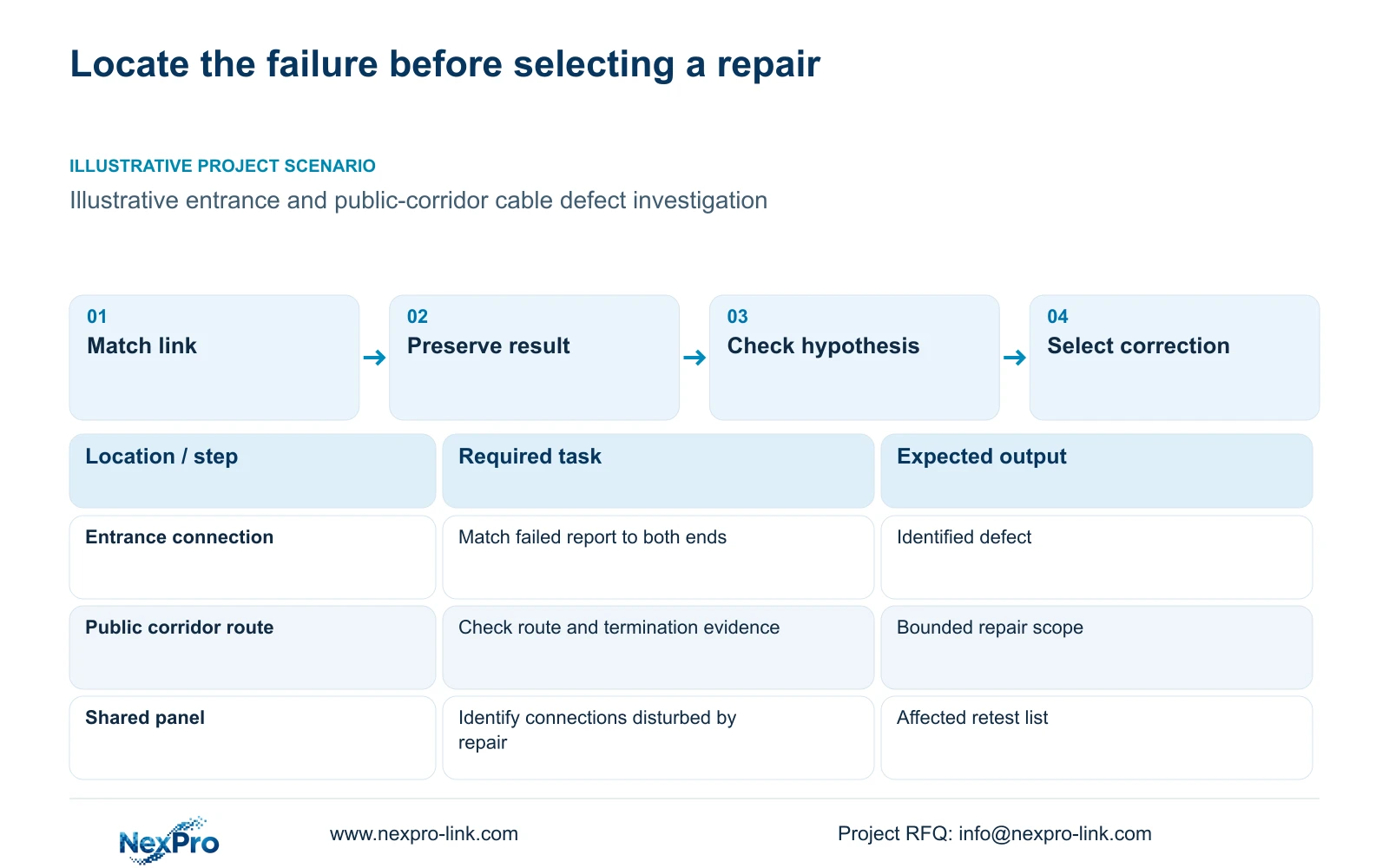
Record the failed link identity
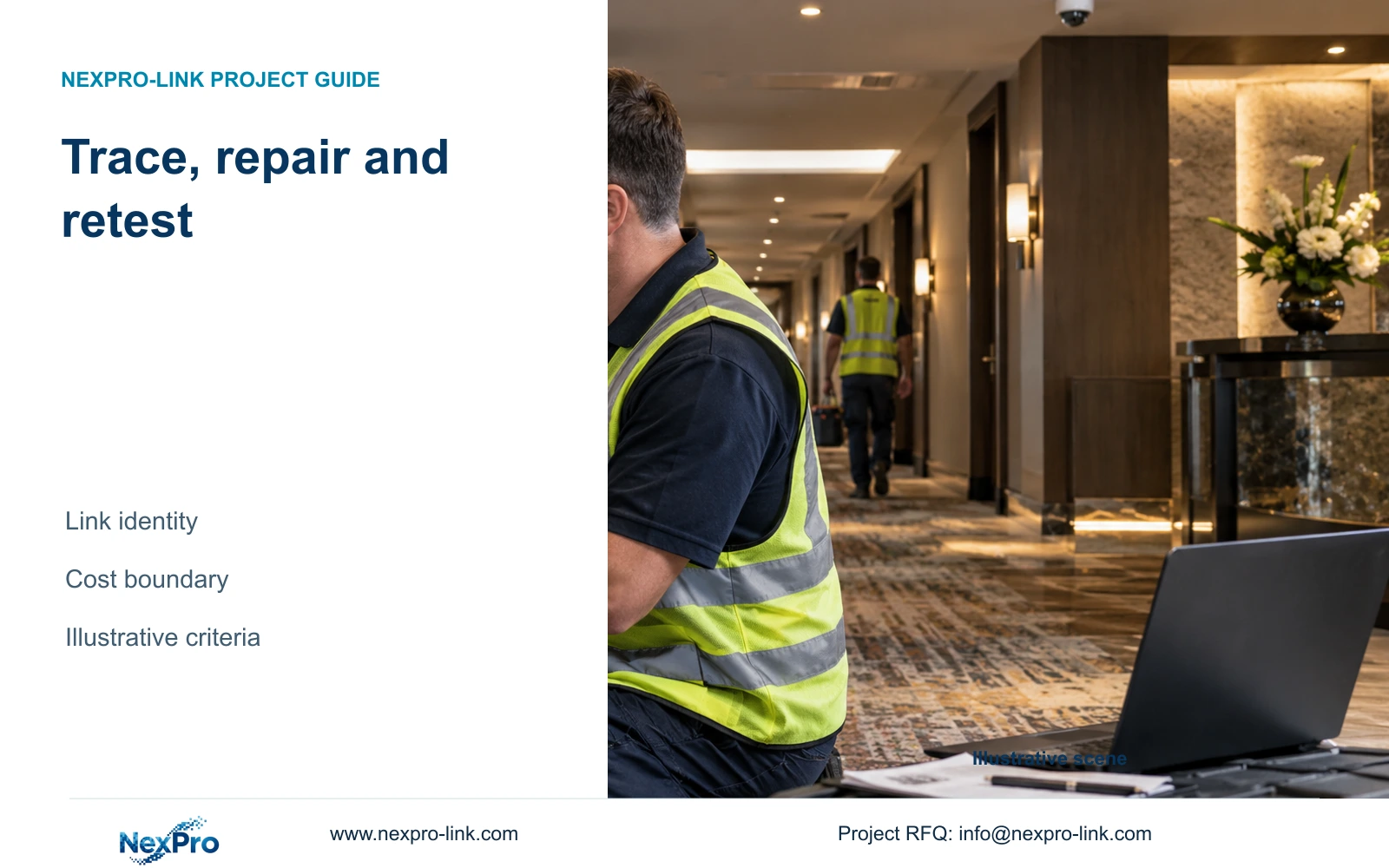
Authorize a targeted investigation of the identified failed link before approving replacement of a whole cable batch. Record the original result, test basis and installed connection. Expand the investigation when repeated failures or shared installation conditions indicate a wider problem. A single failure establishes a problem within its tested scope; it does not establish the cause or the condition of every supplied component.
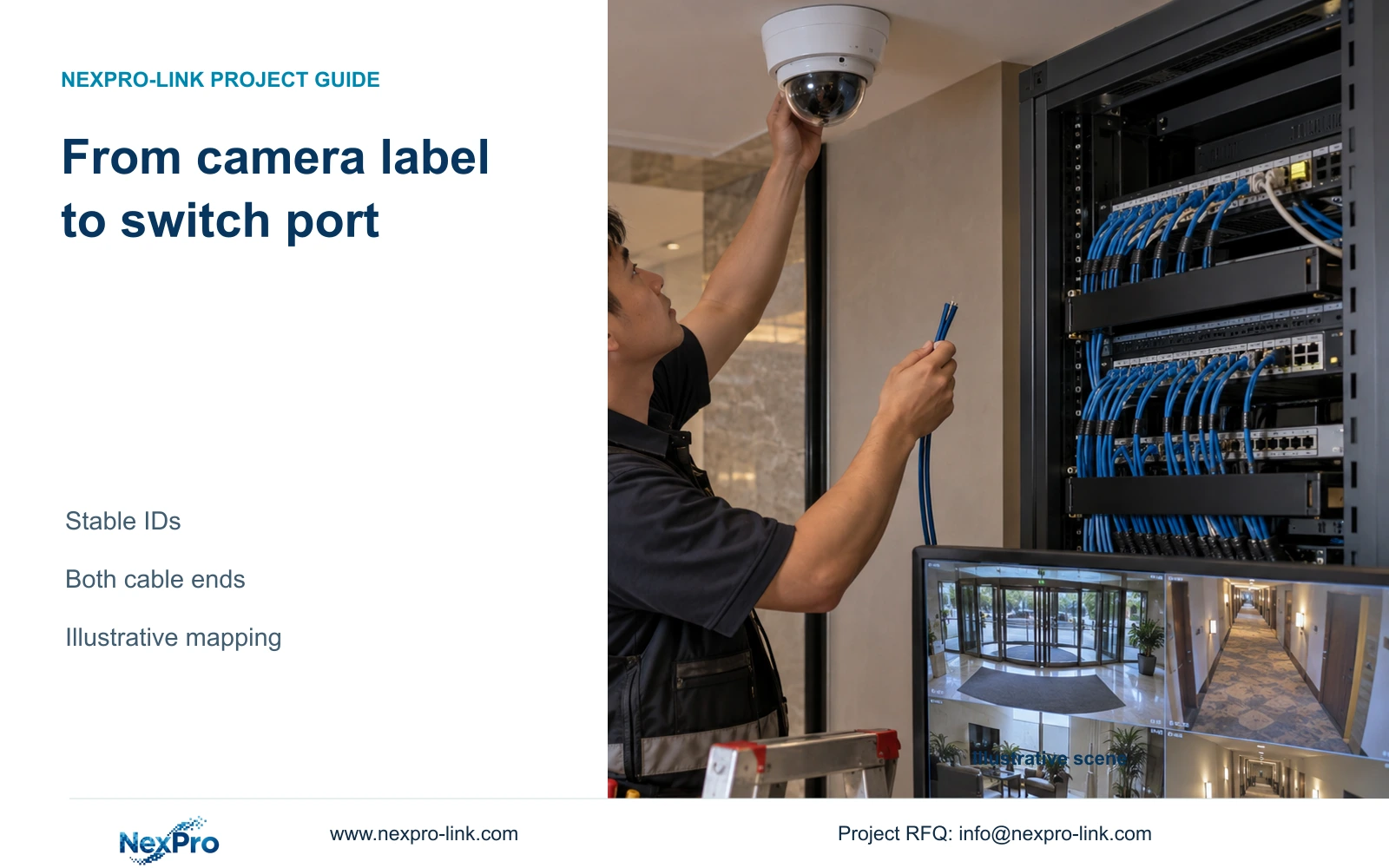
Connect the report to a permanent endpoint ID, both cable ends, panel termination and drawing location. Include the test date, instrument details, selected test configuration and reported failure. Preserve the original file so that a later successful result can be compared with the same connection and acceptance basis.
For a hotel quantity surveyor, the first useful output is an identifiable defect with a defined investigation scope. A report labeled only with a floor name leaves the contractor unable to distinguish adjacent public-route cameras. If the connection cannot be located reliably, resolve its identity before assigning repair quantities or accepting a replacement quotation.
| Required task | Given information | Decision still needed |
|---|---|---|
| Locate the failed connection | Report shows a failure | Match report to cable ends and panel port |
| Repeat the acceptance test | Original result is retained | Confirm the specified test configuration |
Section 02
Separate material and installation hypotheses
List plausible causes as hypotheses with evidence needed to evaluate each one. Cable construction, connector suitability, termination workmanship and route damage belong in different fields. A symptom should remain a symptom until the investigation supports a cause. This keeps the technical record useful even when commercial responsibility remains disputed.
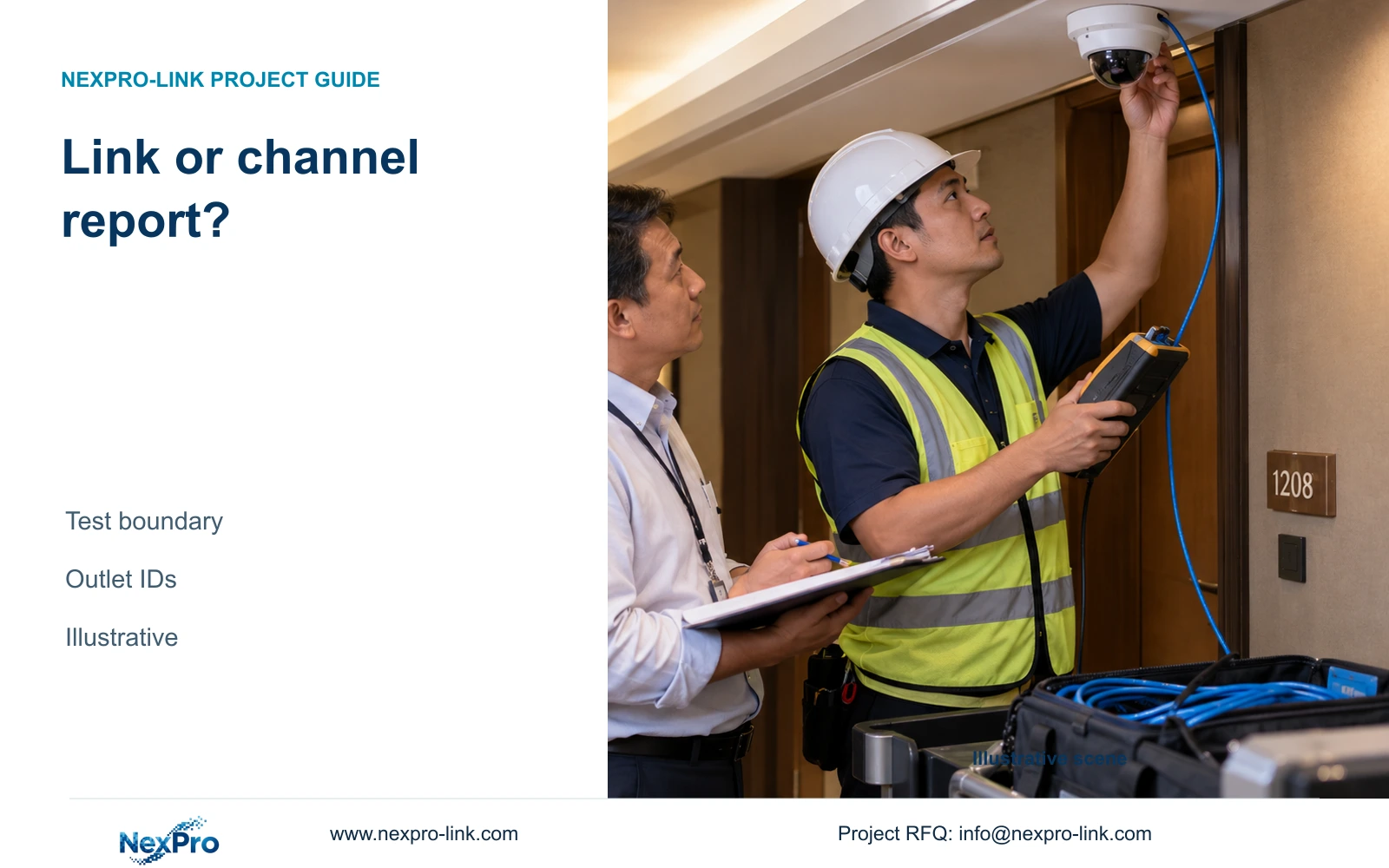
Check that the test covered the intended permanent link or complete channel. The supplied Fluke Networks guidance uses a typical 90 m permanent-link basis and 100 m channel basis including patch cords. Confusing these boundaries can produce an unsuitable comparison. Confirm the project category and test setup before treating a result as evidence against a material supplier.
SP5648 is a Cat6 48-port patch panel and DT968MX is a Cat6 toolless module in the supplied product record. Those component descriptions do not prove the performance of an installed combination. Record the actual cable and connector identities. Factory checks can address reproducible component conditions, while hotel routing and site workmanship require site evidence.
Section 03
Compare targeted corrective actions
Select corrective work according to the evidence and the task that remains incomplete. Where a termination is the supported suspect, define inspection or retermination at that end and the subsequent test. Where the route shows damage, assess a continuous replacement run and its access implications. Replacing several components together may restore service while leaving the original cause unresolved.
Keep the corrective proposal explicit about retained material, new material and hotel access. Work above a finished public lobby ceiling can involve reinstatement and coordination beyond cable supply. The estimate should identify those activities without assuming a fixed repair duration or a supplier-funded outcome.
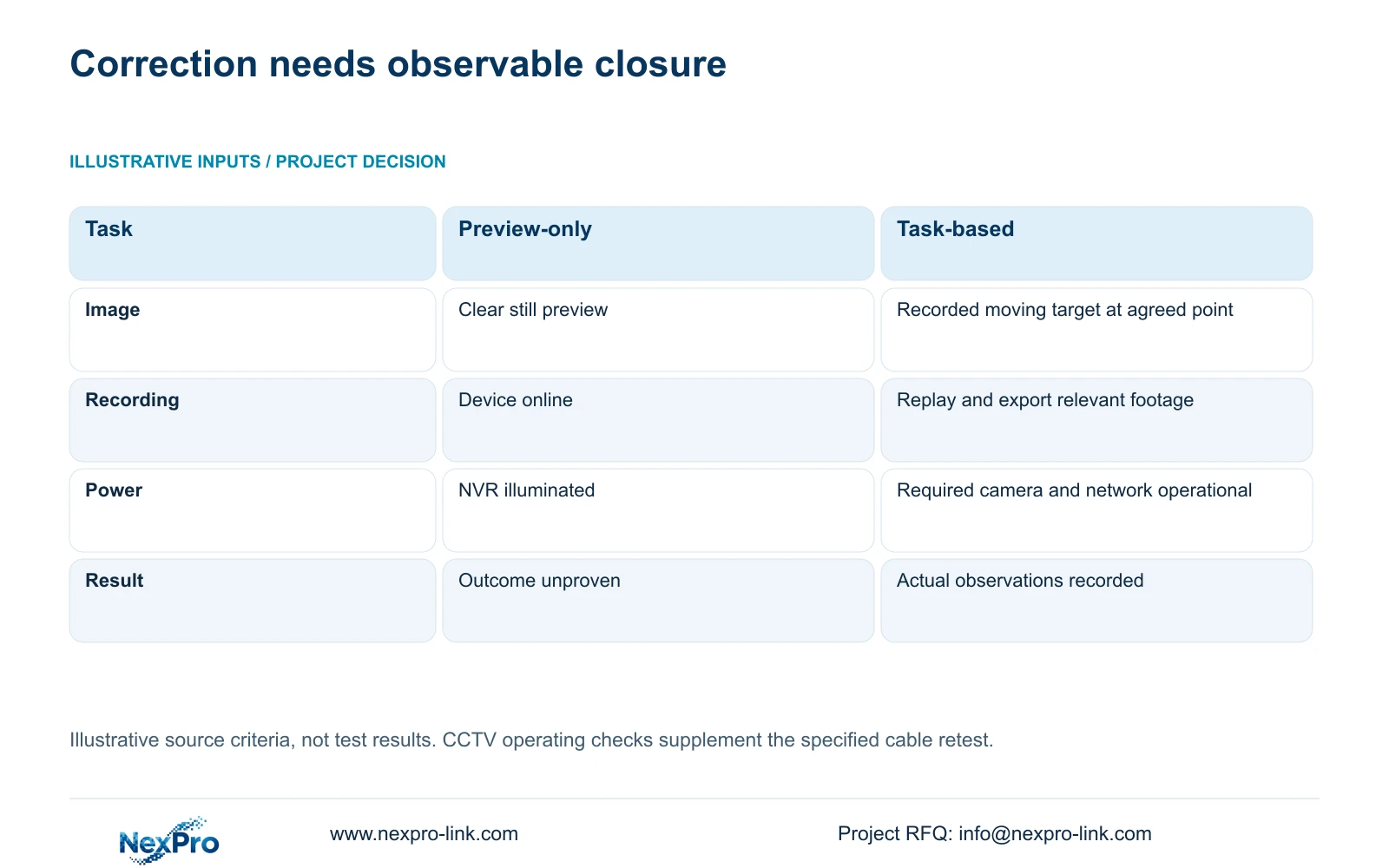
The supplied quality matrix compares preview-only acceptance with task-based acceptance. It contains illustrative criteria, not measured results or a performance formula. Apply it after the cable correction as a separate operating check. A clear live image can coexist with an incomplete cable acceptance record, and a successful cable retest still needs the agreed CCTV task checks.
| Metric / condition | Preview-only acceptance | Task-based acceptance |
|---|---|---|
| Image | A still preview appears clear | Recorded moving target reviewed at the agreed point |
| Recording | Device online | Relevant footage can be replayed and exported |
| Power | NVR stays illuminated | Required camera and network path remains operational |
| Result status | Cannot prove complete outcome | Record actual observations; not pre-filled passes |
Section 04
Retest the affected scope
Repeat the specified acceptance test on the corrected link and retain its association with the original failure. Use comparable conditions unless an authorized change to the test basis is necessary. Record that change openly so a pass under a different configuration is not presented as a direct repeat of the original test.
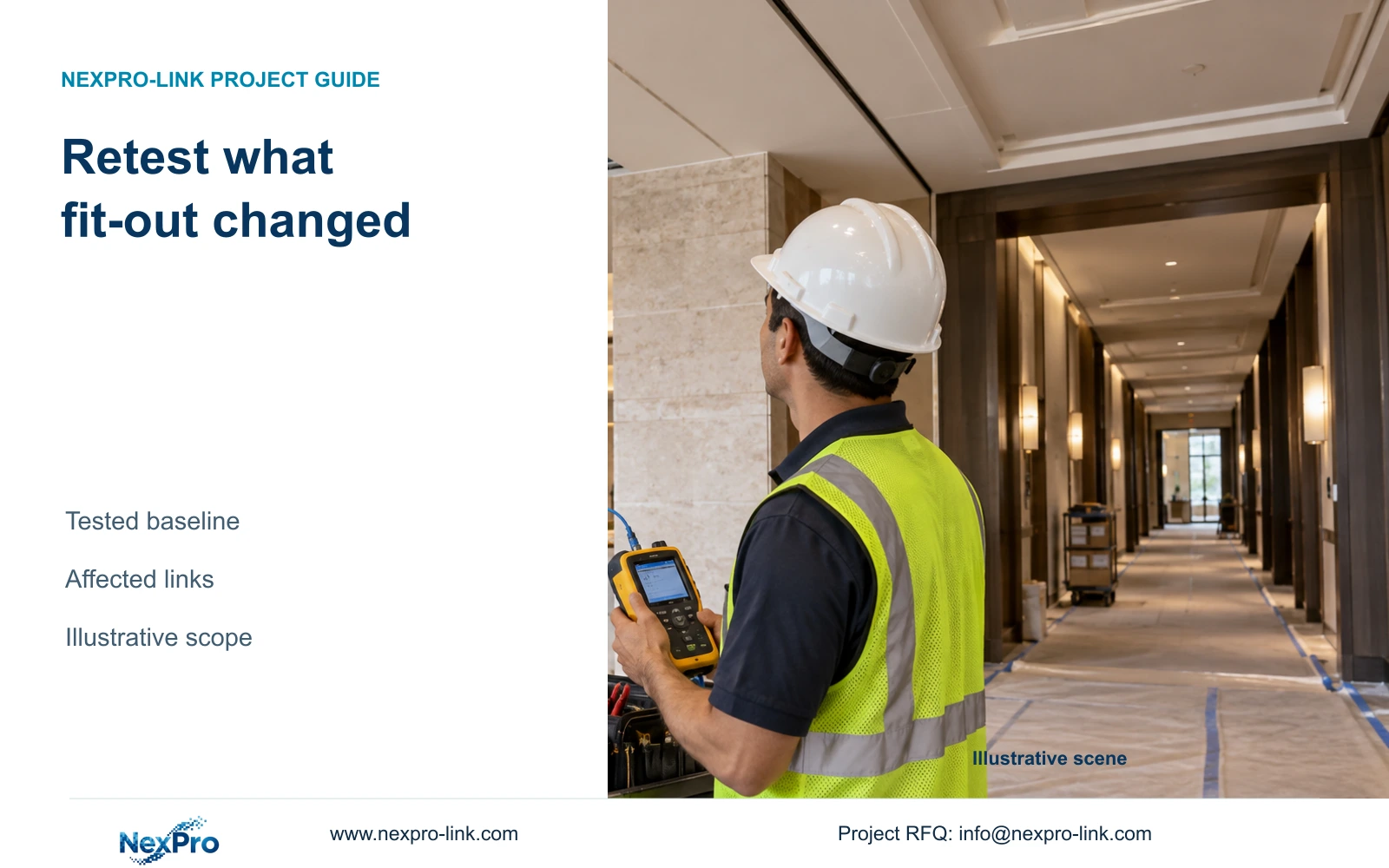
Identify neighboring connections affected by the work. A repair within a shared panel, cable bundle or pathway may justify additional checks on that affected scope. Broader retesting should follow documented disturbance, a repeated pattern or the contract requirements. An isolated corrected connection does not automatically require a claim about the entire hotel installation.
Use the quality matrix to record whether the required camera and network path supports the intended operating state. Review relevant recording, replay and export with authorized personnel. Where outage operation is in scope, verify the selected protected path under the agreed professional supervision. Enter actual observations, leaving unperformed tasks open.
Section 05
Track effort and unresolved causes
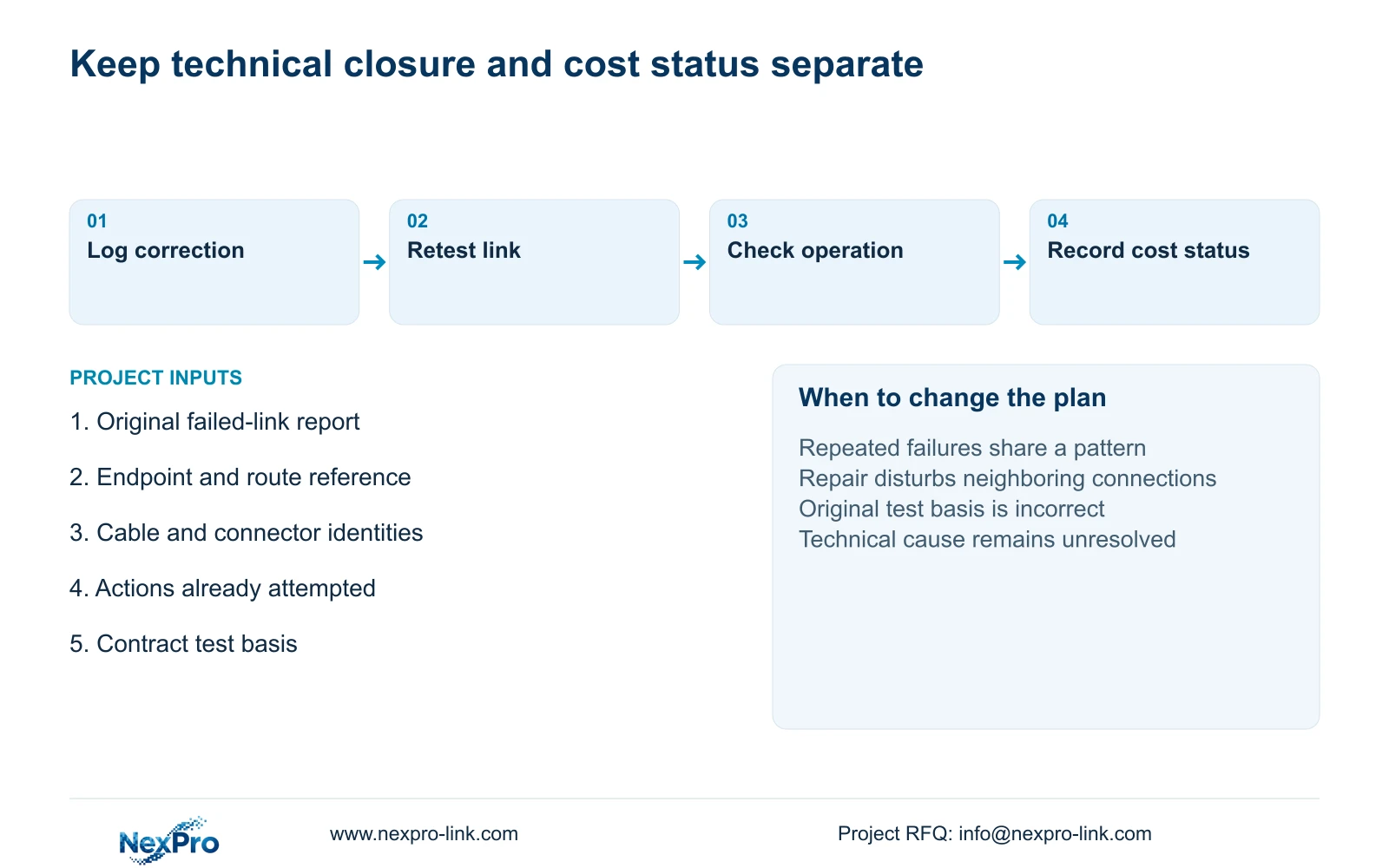
Separate technical status from commercial status. A link may be restored while responsibility for investigation, replacement material or ceiling reinstatement remains unresolved. Record both statuses so that a functioning camera does not erase an outstanding cost issue, and a cost disagreement does not prevent the technical team from documenting restoration.
Track inspection labor, replacement components, access work and retesting against the defect identity. Distinguish corrective work already included in the installation scope from an instructed change. Unknown quantities or rates should remain visible in the estimate. Avoid allocating the same retest activity to several cost lines.
The supplied warranty record gives applicable main equipment a baseline of 24 months from customer receipt, subject to controlling written terms. Cable, storage, batteries and OEM scope require their own terms. That baseline does not determine responsibility for a site termination defect or establish that local labor, travel and reinstatement are free. Use the order and installation contract for those boundaries.
Section 06
Close the defect with usable results
Close the technical defect with a traceable corrected connection, the relevant retest result and completed operating observations. State the scope of closure. If the cause remains unconfirmed, retain that qualification even when service is restored. A checked box without a retrievable result gives maintenance little help if the symptom returns.
Recommend targeted correction when the failed link and likely corrective boundary are supported by evidence. Move to a wider investigation if failures recur across related links, repair work disturbs shared infrastructure, or the specified acceptance scope requires it. The illustrative CASE01 installation provides public-zone system context; it supplies no actual failure rate or site test results.
Send the failed-link report, its endpoint and route reference, the installed cable and connector details, and the correction already attempted to info@nexpro-link.com. NexPro-Link can discuss component matching and a scoped supply response through BOQ and tender support. Site testing, access arrangements and commercial allocation must remain assigned to the parties responsible for the actual hotel work.
Section 07
Buyer questions
Does one failed test justify rejecting every reel? No. Preserve the failed result and investigate its scope. A wider material review needs supporting evidence, such as a repeated pattern tied to identified material or conditions. Do not infer a batch failure rate from one connection.
Can a passing factory check replace a site retest? No. Factory checks cover their recorded sample and conditions. The installed route, terminations and final connection require the specified site acceptance evidence after correction.
Can we close the repair before agreeing who pays? Technical restoration and commercial settlement can be recorded separately. Document the completed tests and any unresolved cause, then keep the cost allocation open under the relevant contract without describing it as settled.
Engineering references
These sources support the general planning principles. Always use the selected product's current datasheet and applicable project standards for final design.