A low CAT6 point rate may exclude work that another bidder includes. Define the completed link and normalize route lengths before choosing the economical offer.
Section 01
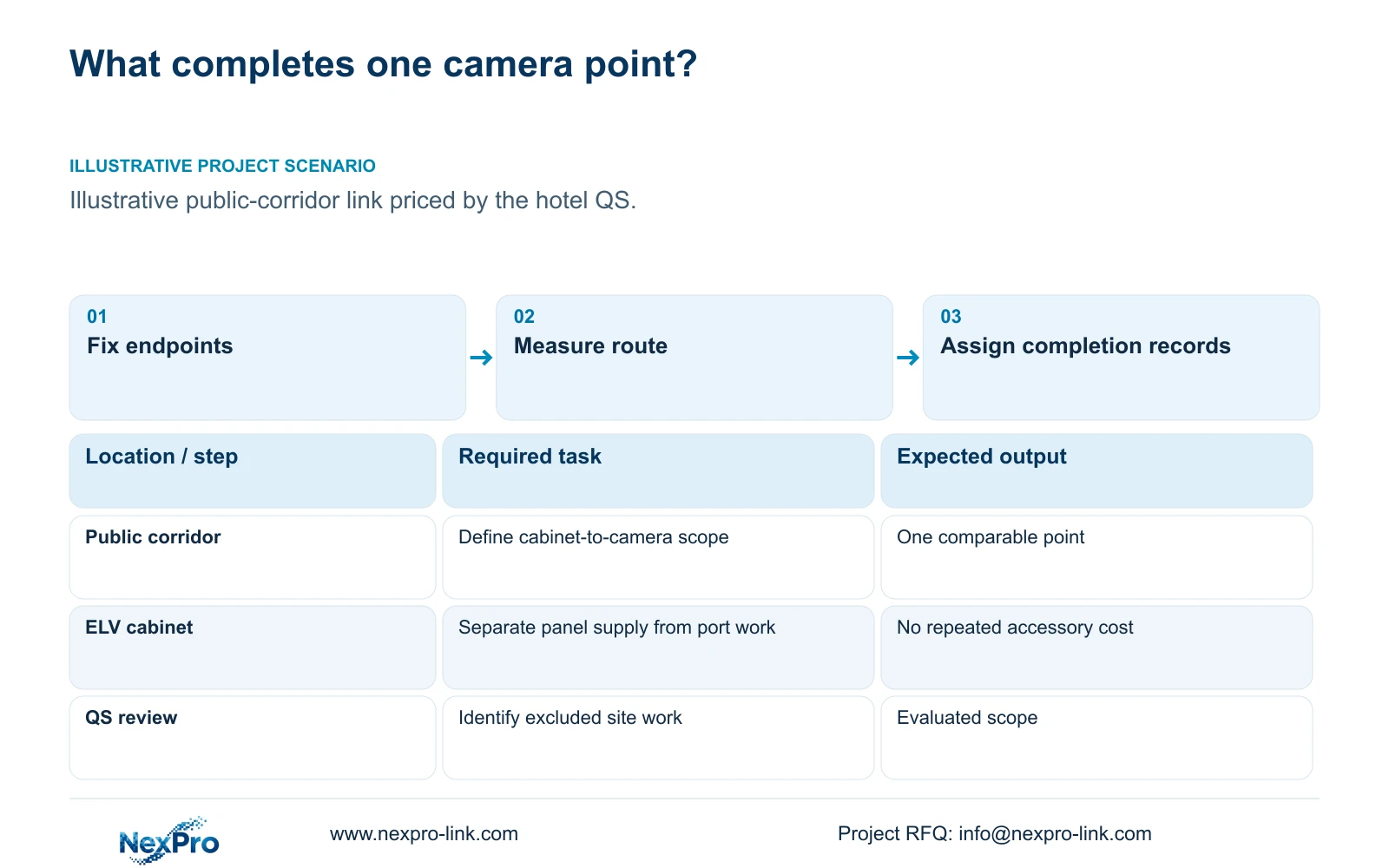
Define a completed camera point
Compare installed CAT6 point prices only after both offers cover the same route, endpoint arrangement and acceptance records. Choose the lower evaluated cost when those requirements match. If one quotation covers cable supply and another includes installation, request a scope adjustment before ranking them. Their headline rates describe different purchases.
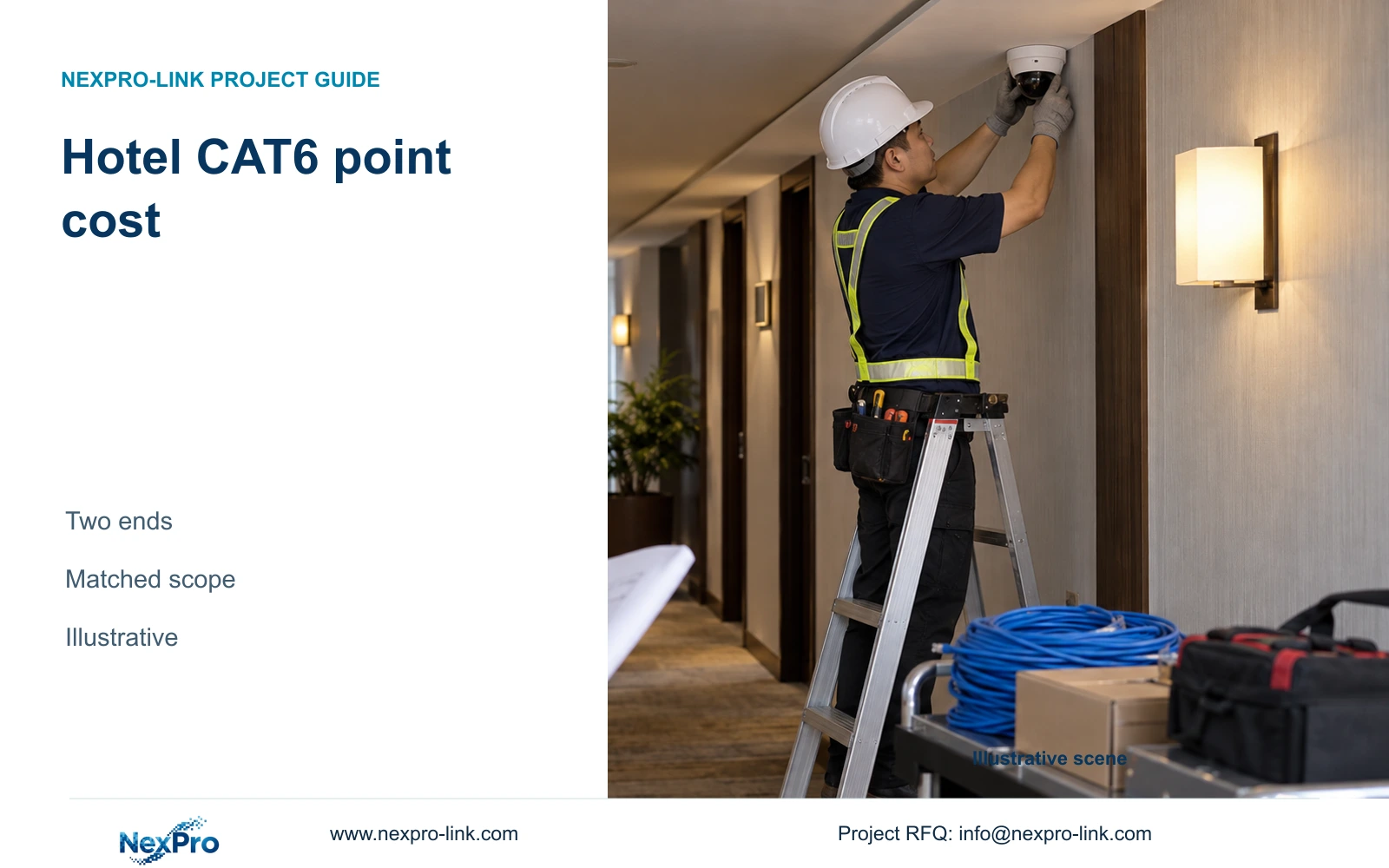
For a hotel public-corridor camera, define the link from its assigned cabinet termination to the camera-side termination. State whether patch cords, modules, installation labour and test records belong to that point. Camera supply, mounting and configuration should remain identifiable even when the bidder combines them commercially. This lets the quantity surveyor trace a missing item without assuming that every omission is an extra charge.
Use a short completion schedule alongside the price schedule. A link can be physically installed while its labeling or testing remains unfinished. Payment and acceptance decisions should follow the agreed contract boundary, with unresolved work visible. NexPro-Link's BOQ support can help organize equipment and inclusion records; local installation remains a separately agreed responsibility.
| Required task | Given information | Decision still needed |
|---|---|---|
| Connect a public-corridor camera | Camera position and cabinet identified | Termination arrangement and patch cords |
| Accept the installed link | Bid includes a testing allowance | Test object, records and point labels |
Section 02
Normalize cable length assumptions
Ask each bidder to use the same route-length schedule. Include the horizontal route, vertical changes and stated termination allowances. A direct distance on a floor plan can support an early estimate, but it does not describe a cable following the approved pathway. Keep uncertain routes provisional so a later revision has a clear quantity basis.
Separate the permanent cable from patch cords. The supplied Fluke guidance describes the typical 90 m permanent-link and 100 m channel bases; the project's category, connection arrangement and test requirements still govern the actual design. A route exceeding its specified basis needs a design decision, not an unexplained addition to the cable order.
Compare reel format and continuous-cut feasibility as well as installed metres. Dividing total length by reel length gives a purchasing lower bound. It cannot prove that every required run fits. State whether the point rate absorbs purchased tails or whether bulk cable is priced separately. Otherwise one bidder may price installed length while another recovers its entire reel purchase through the point rate.
Section 03
Count two-ended terminations
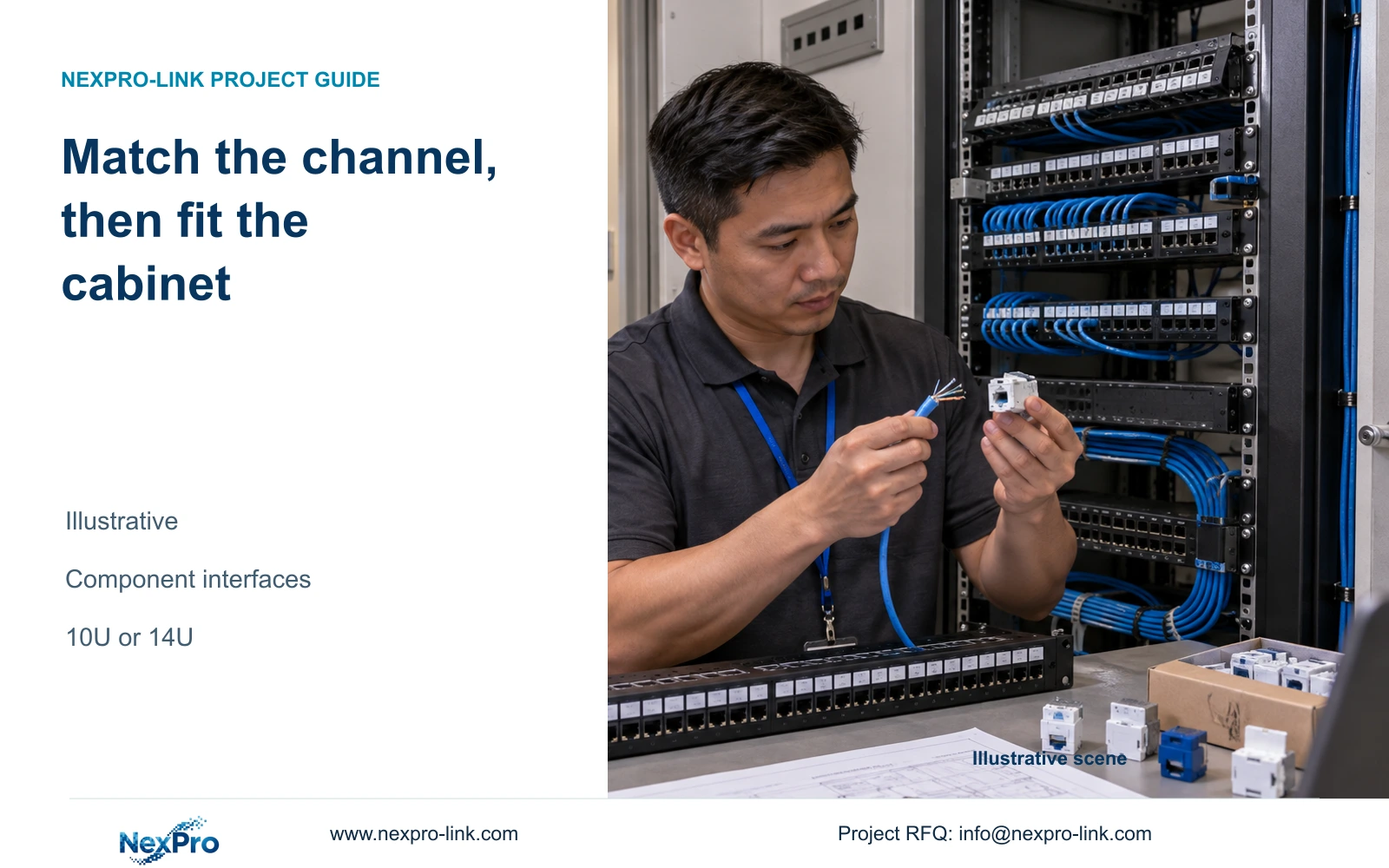
Describe both ends of every link before assigning a termination allowance. At the cabinet, identify the patch-panel port and associated connection. At the camera, identify the specified module or connector arrangement. The chosen design determines the materials and labour. A quotation saying only 'one termination per point' leaves the other end's treatment unclear.
SP5648 is a Cat6 48-port data patch panel, and DT968MX is a Cat6 tool-free module in the supplied product record. Neither is a bulk cable SKU. Their inclusion should follow the actual cabinet and endpoint schedule. A shared panel is counted as equipment once; the work on its individual ports can still be measured separately when the description makes that distinction clear.
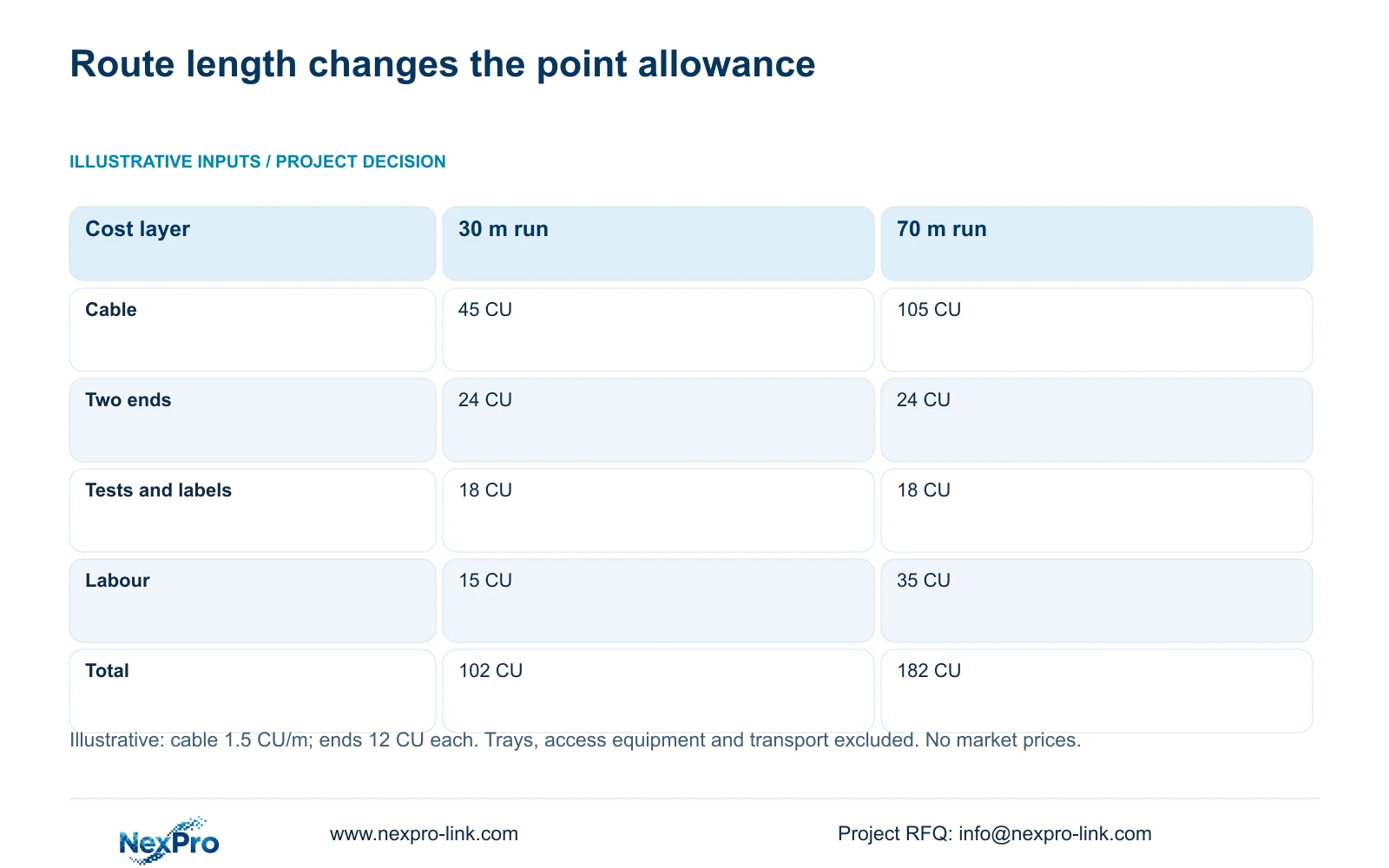
For the illustration used below, each end costs 12 teaching cost units, giving 2 × 12 = 24 CU per point. This is a modeling allowance, not a price for either named product. Patch cords and other accessories must be checked against the quotation inclusions before being added. Repeating a kit component in a separate accessories section would distort the evaluated rate.
Section 04
Include testing and labeling
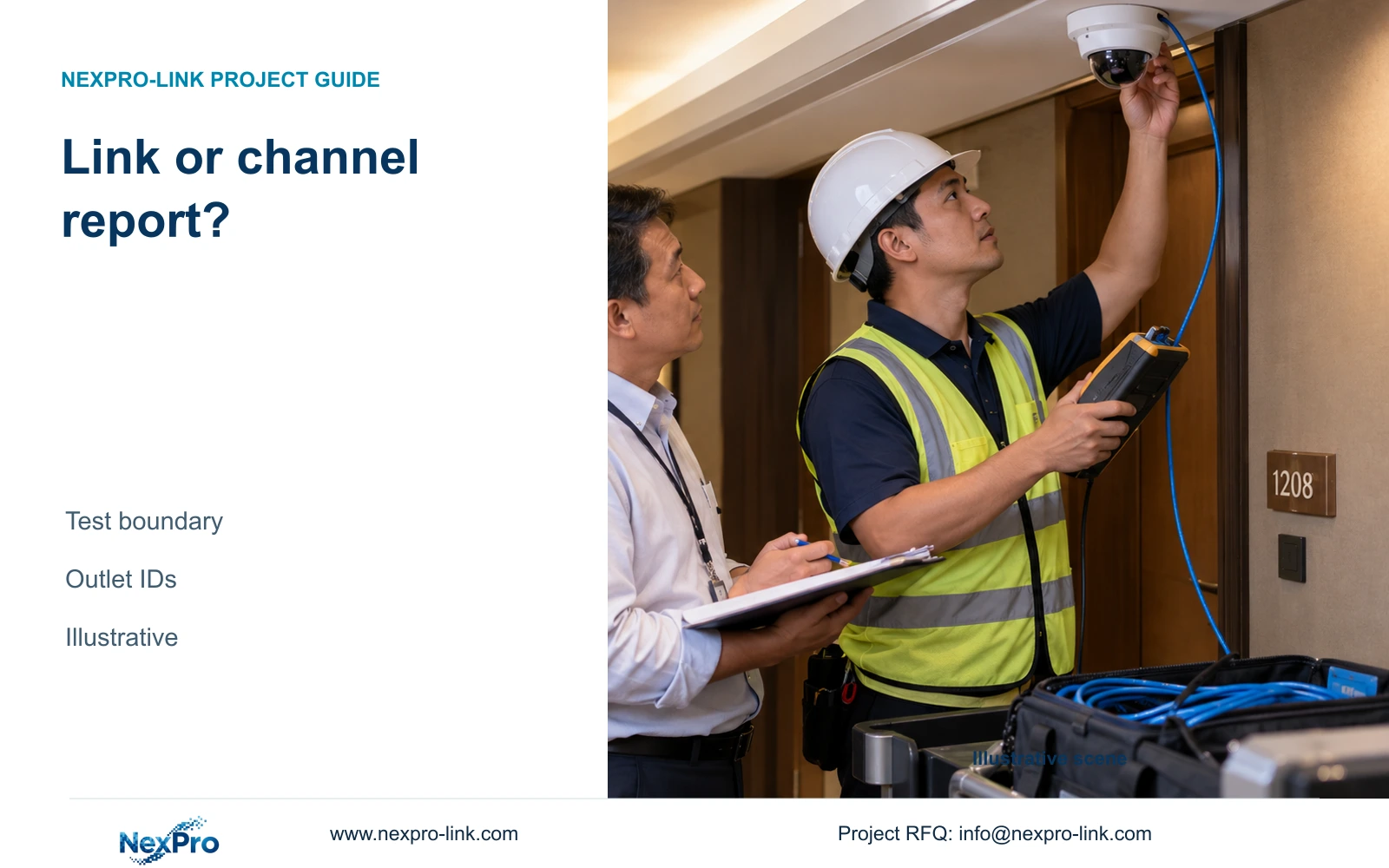
Specify the records that complete the point: a result for the agreed test object, an endpoint identity that matches the schedule, and a documented response to failed results. A tester brand or a screenshot of a passing result cannot establish that the required installed links were tested under the correct conditions.
The narrow illustration assigns 18 CU per point to testing and labels. Its formula is point CU = cable length × 1.5 CU/m + 2 × 12 CU/end + 18 CU/point + scenario labour. The 30 m route totals 102 CU; the 70 m route totals 182 CU. The difference is 60 CU of cable and 20 CU of labour.
Both options retain the same termination and testing allowances. Their different totals therefore do not show that one installer is cheaper for an equivalent point. Trays, access equipment and transport are excluded from this illustration. Those costs need their own treatment before either figure can become part of a complete hotel installation comparison.
| Metric / condition | 30 m teaching run | 70 m teaching run |
|---|---|---|
| Cable length (m) | 30 | 70 |
| Cable cost (CU) | 45 | 105 |
| Ends (CU) | 24 | 24 |
| Testing/labels (CU) | 18 | 18 |
| Scenario labour (CU) | 15 | 35 |
| Illustrative point total (CU) | 102 | 182 |
Section 05
Compare installation conditions
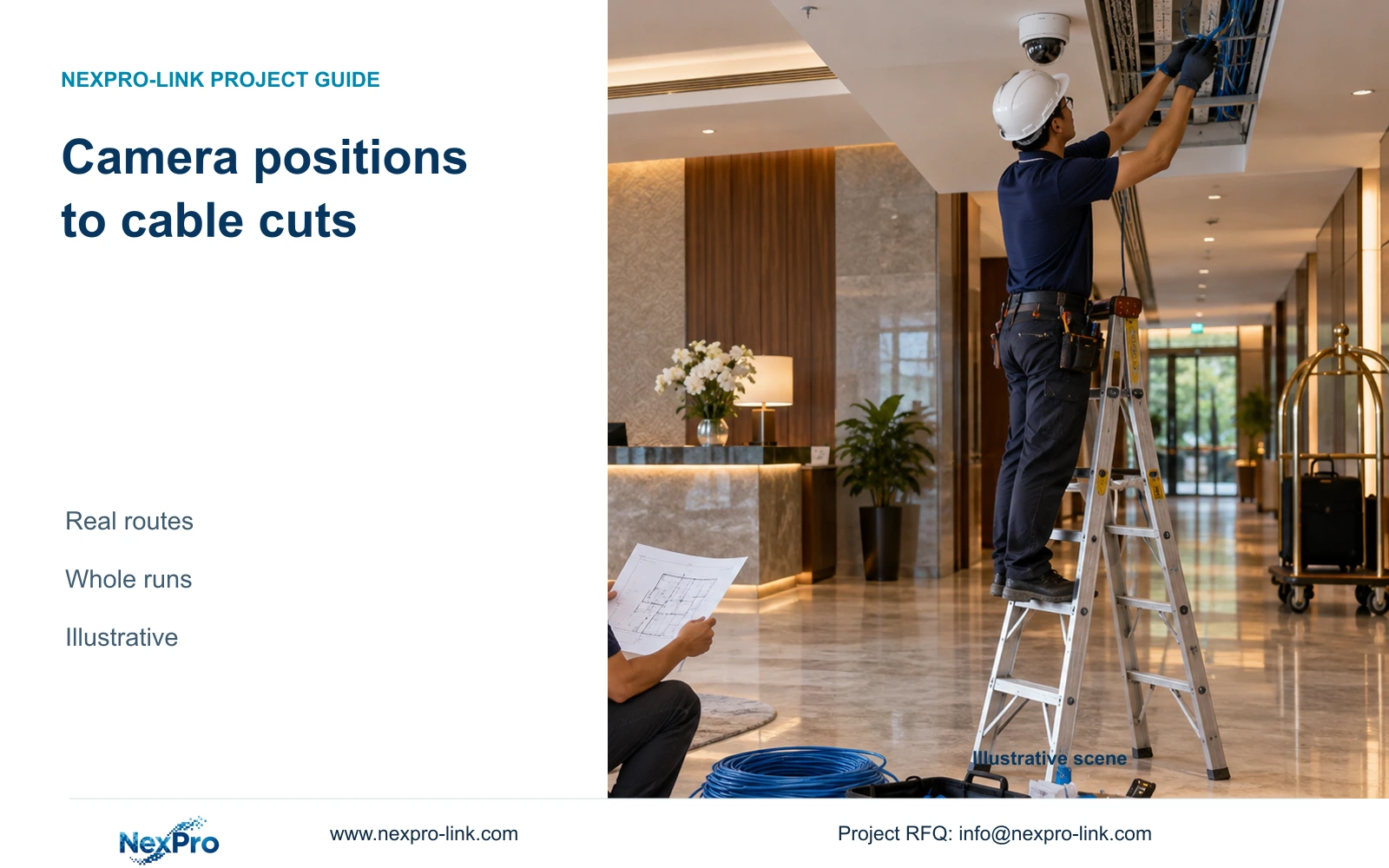
A cable route through an accessible service area and a route above a finished lobby ceiling can require different work arrangements. Identify access restrictions, permitted working periods and responsibility for opening and reinstating finishes. These are quotation inputs. They should not be hidden inside a universal hotel point rate.
Compare shared access equipment and pathway work separately from repeatable point work. If the main contractor supplies an approved tray, ask whether the cabling offer assumes its availability and usable capacity. If an installer must provide the pathway, include that scope in the evaluated package. An excluded item remains unresolved until its quantity and commercial treatment are known.
Pay for additional access or coordination work when it is needed to deliver the same accepted link under the actual site conditions. Remove that allowance only when another named party provides the work. A shorter cable route through a newly added cabinet also needs evaluation of the cabinet's power, network and maintenance responsibilities; cable savings alone cannot establish the cheaper system.
Section 06
Calculate an evaluated point cost
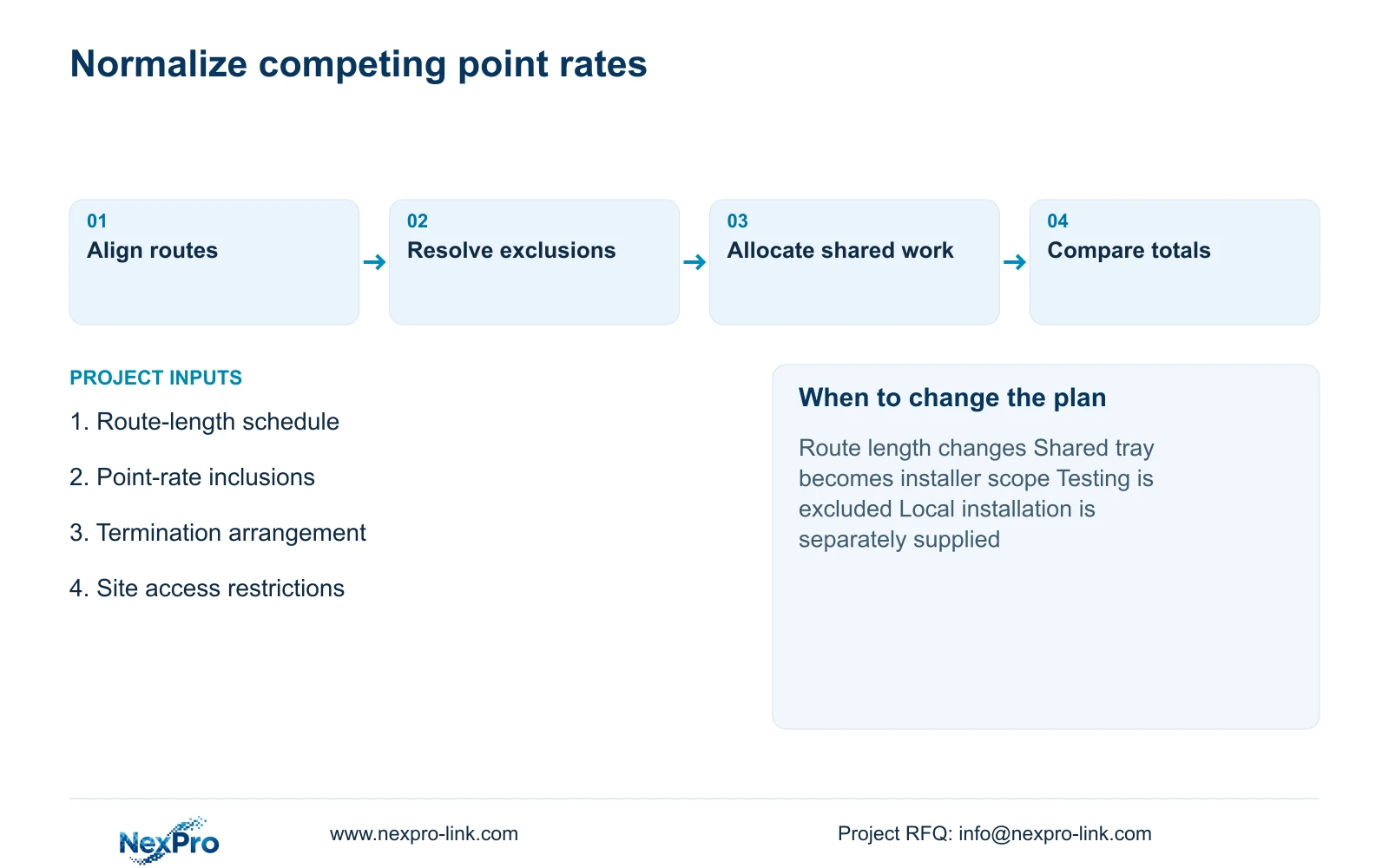
Build the evaluation from the agreed installed quantity and scope-matched rates, then add required exclusions once. Keep equipment supply, site work, freight and taxes distinguishable. Where a charge serves several points, show its allocation without presenting the allocation as a new physical quantity. Keep optional improvements outside the required baseline.
Recommend the lowest complete evaluated offer after route lengths, endpoint materials, tests and site conditions are aligned. Recalculate when the route schedule changes, an exclusion receives a price, or responsibility for shared work moves between contractors. The teaching 102 CU and 182 CU figures cannot rank suppliers, and they must not be multiplied into the independent CASE01 hotel quantities.
For a scoped review, send info@nexpro-link.com the route-length schedule, proposed reel format and point-rate inclusions, together with the installed-link test requirement. State the destination and whether local installation is included in the requested quotation. The hotel project equipment and BOQ support entries provide routes for discussing the supply boundary without requiring guest footage or access credentials.
Section 07
Buyer questions
Can we compare a cable-only rate with an installed point rate? Only after adding the missing required scope to the cable-only offer. Keep unknown installation or testing charges unresolved until priced; treating them as zero would create a false advantage.
Should unused reel tails be deducted from the point price? Check the agreed measurement basis. Installed-metre pricing and purchased-reel pricing treat tails differently. A deduction needs a contractual basis and a usable stock record, not simply a total of leftover metres.
What should a first quotation request contain? Provide endpoint IDs, route lengths and the required termination and test arrangement. Include the competing inclusion descriptions if price normalization is the immediate decision, with confidential commercial details removed where unnecessary.
Engineering references
These sources support the general planning principles. Always use the selected product's current datasheet and applicable project standards for final design.