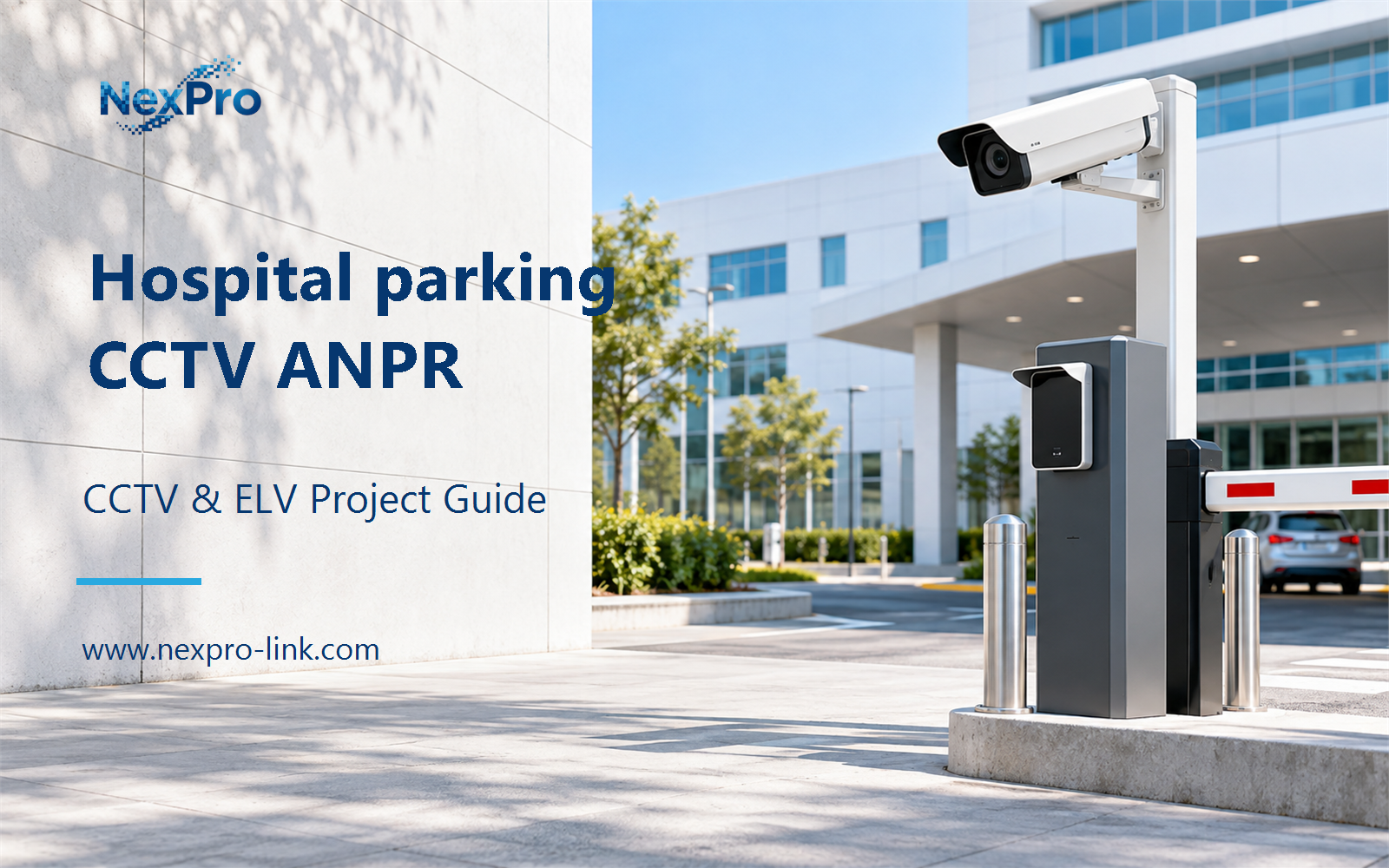
Plan hospital parking CCTV ANPR with practical guidance on separate traffic classes and priorities and allocate recording and retention. NexPro-Link project guide.
Section 01
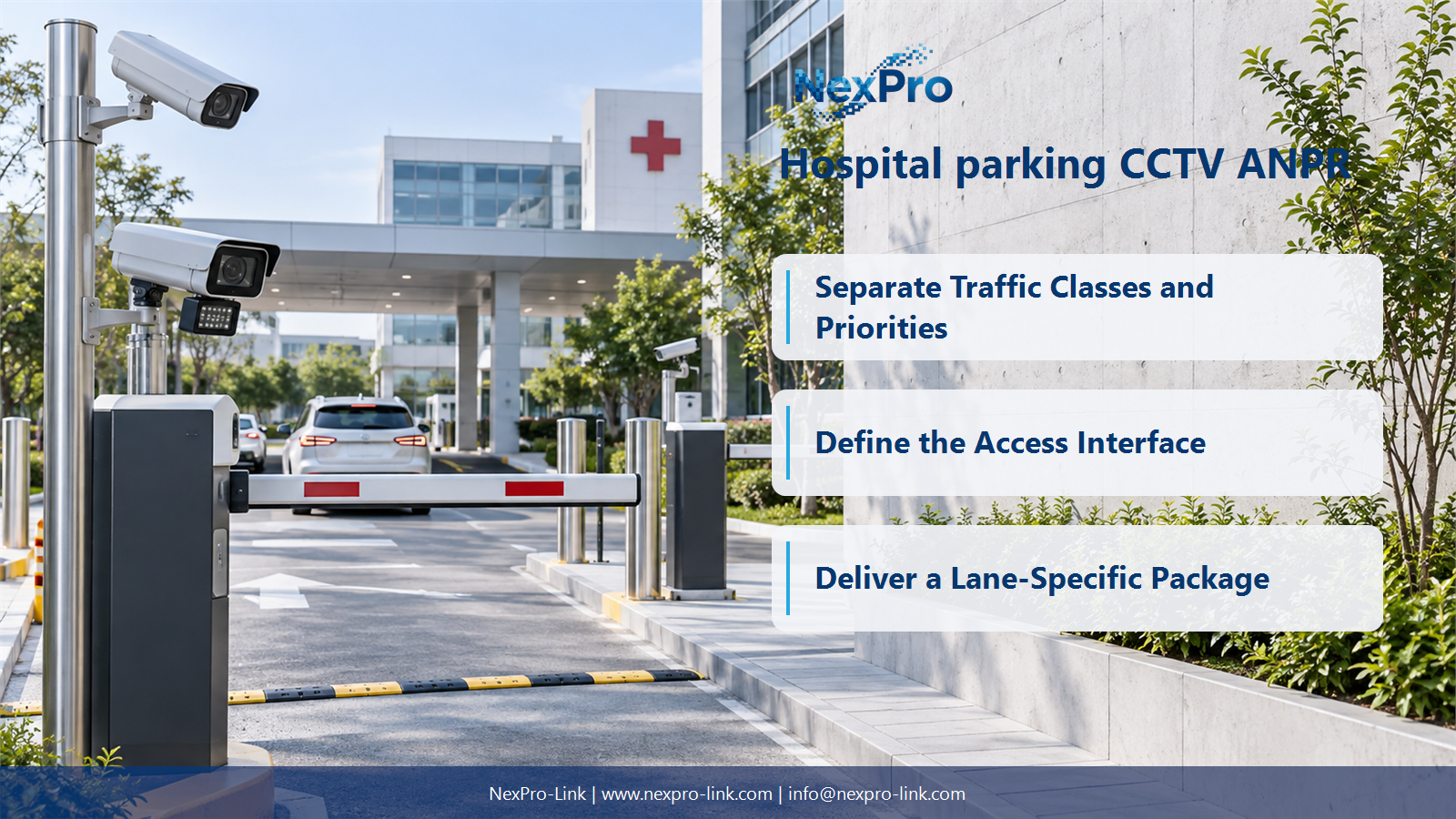
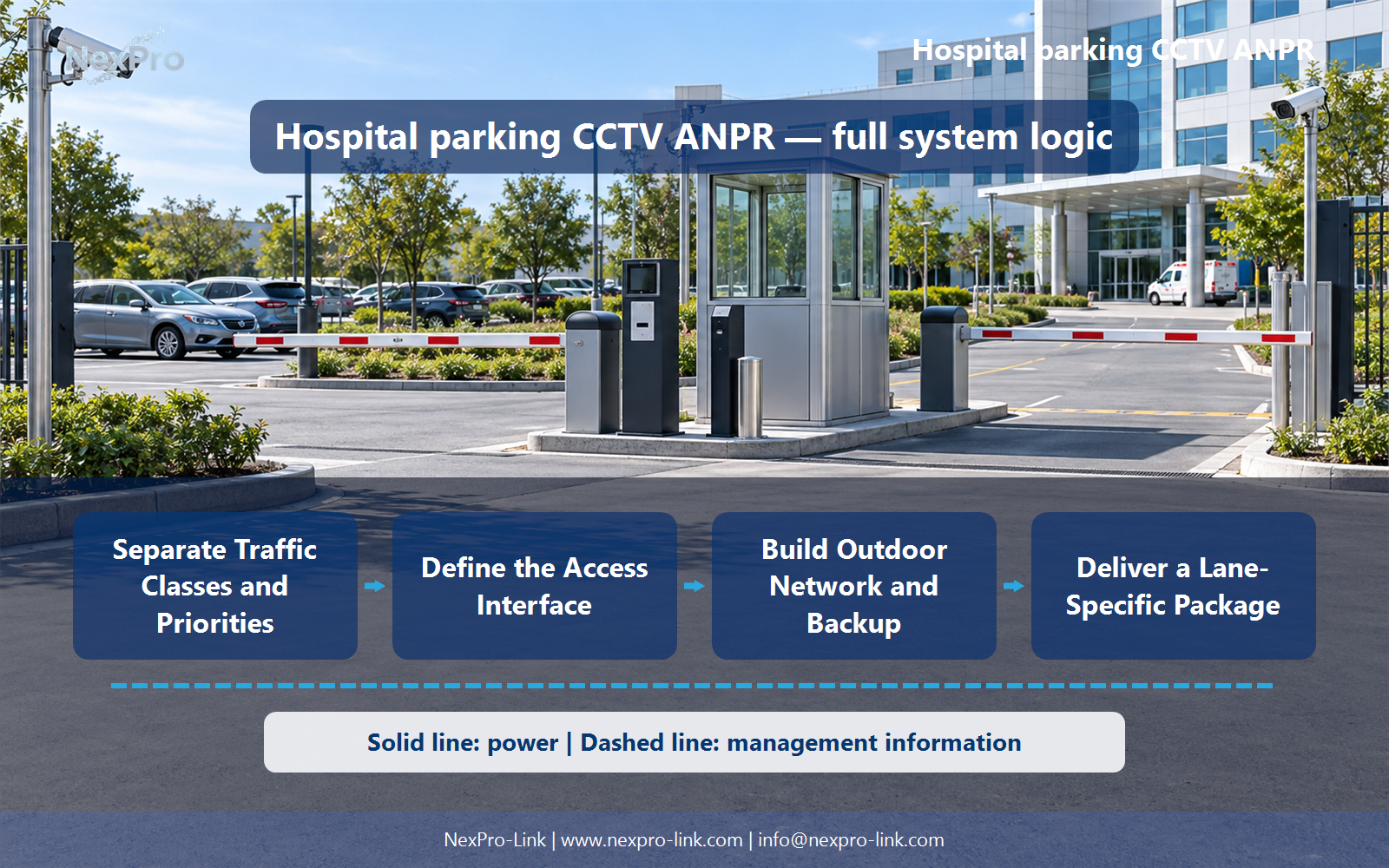
Separate Traffic Classes and Priorities
Distinguish public, staff, service and emergency vehicle routes and their operational priorities. Their permissions and response requirements may differ. Design monitoring and interfaces around those flows rather than applying one gate rule to every vehicle approaching the hospital.
Turn the answer into a working record using Route, Vehicle class, Access purpose, Priority, Owner.
| Decision area | Buyer question | Required output |
|---|---|---|
| Separate Traffic Classes and Priorities | How should hospital parking access be divided? | Distinguish public, staff, service and emergency vehicle routes and their operational priorities. |
| Design Plate and Context Views | What camera roles are needed at an access lane? | A plate-focused view records a constrained target, while a context view shows vehicle movement and surrounding events. |
| Define the Access Interface | Does a recognized plate automatically authorize entry? | No. |
Section 02
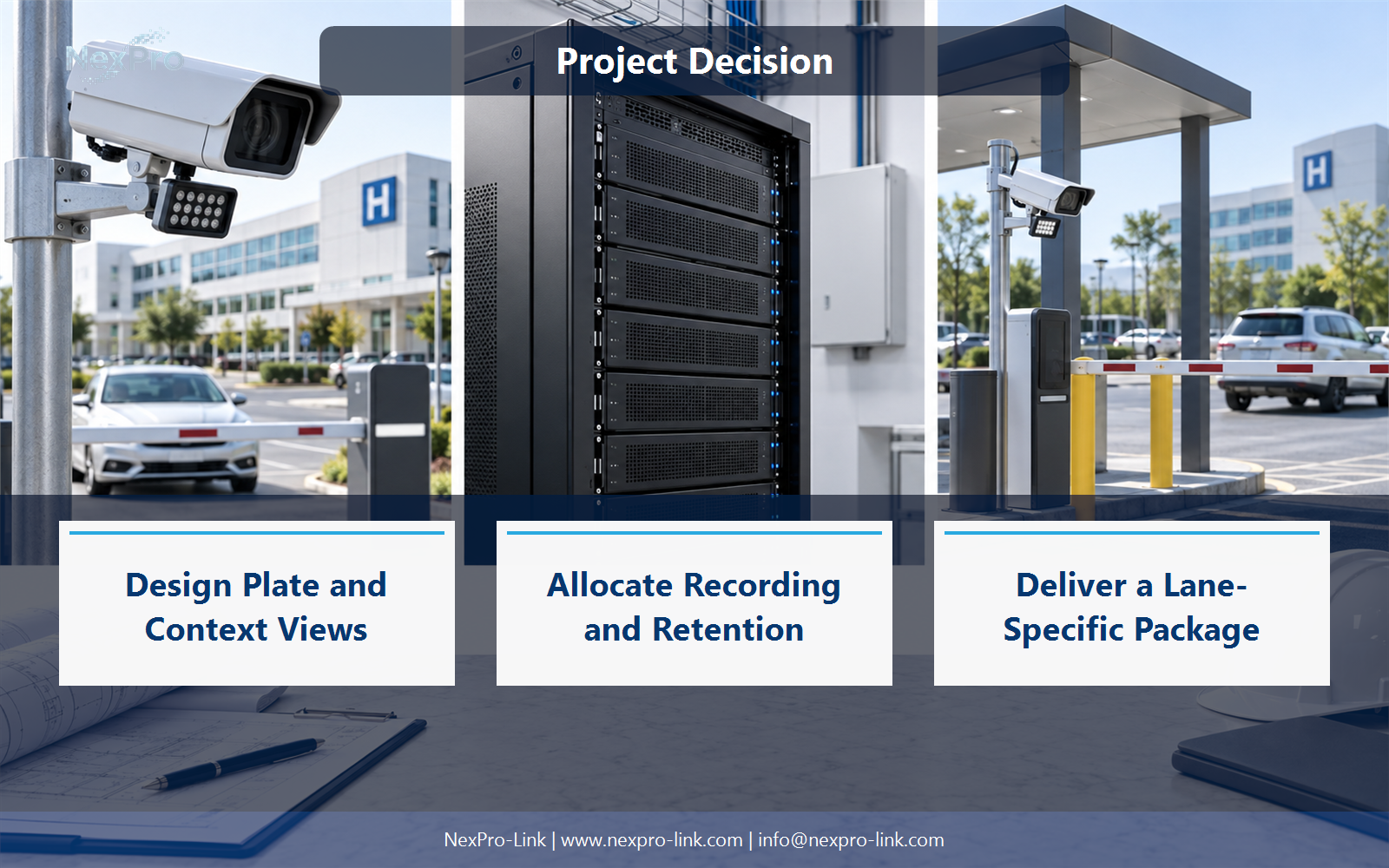
Design Plate and Context Views
A plate-focused view records a constrained target, while a context view shows vehicle movement and surrounding events. Use the actual lane geometry, speed and lighting when selecting the arrangement. A general varifocal camera should not be labelled an ANPR product merely because it can zoom.
Use Lane, Plate view, Context view, Speed, Lighting to compare options on the same basis. Keep product capability, project assumption and operating responsibility in separate columns.
Section 03
Define the Access Interface
No. Recognition identifies an input that the access system must evaluate under the site's rules. Define permissions, exceptions and operator intervention, including uncertain readings. Keep physical gate safety and emergency access decisions with the appropriate systems and responsible teams.
The project output should make Recognition, Permission source, Gate action, Exception traceable from input to acceptance.
- Confirm the answer to: Does a recognized plate automatically authorize entry?
- Record the project fields: Recognition / Permission source / Gate action / Exception.
- Keep product capability, project assumptions and site responsibility in separate records.
Section 04
Allocate Recording and Retention
Use the owner's purpose and applicable requirements for plate records and video, which may have different handling rules. A 90-day example is not a universal legal period. Calculate video capacity and define how relevant incidents are exported or preserved.
Record Data type, Purpose, Retention, Access, Export before selecting a product family. That makes later substitutions possible without silently changing the operational requirement.
Section 05
Build Outdoor Network and Backup
Identify camera, illuminator, local network, recording and any essential interface equipment. Coordinate gate-system power separately where required. An optical backbone still needs local power and backup; a UPS beside the central NVR does not necessarily protect the entrance lane.
Review Lane, Field loads, Fiber, Local backup, Central recording with the party that will operate or maintain the system.
Section 06
Deliver a Lane-Specific Package
Group plate, context and perimeter views by lane and connect them to their network, storage, display and power requirements. Include interfaces and mounting or cabling scope. Separate equipment supply from access-policy decisions and local gate installation responsibilities.
Use Lane, Camera role, Integration, Infrastructure, Scope as the handoff between design and procurement.
Engineering references
These sources support the general planning principles. Always use the selected product's current datasheet and applicable project standards for final design.