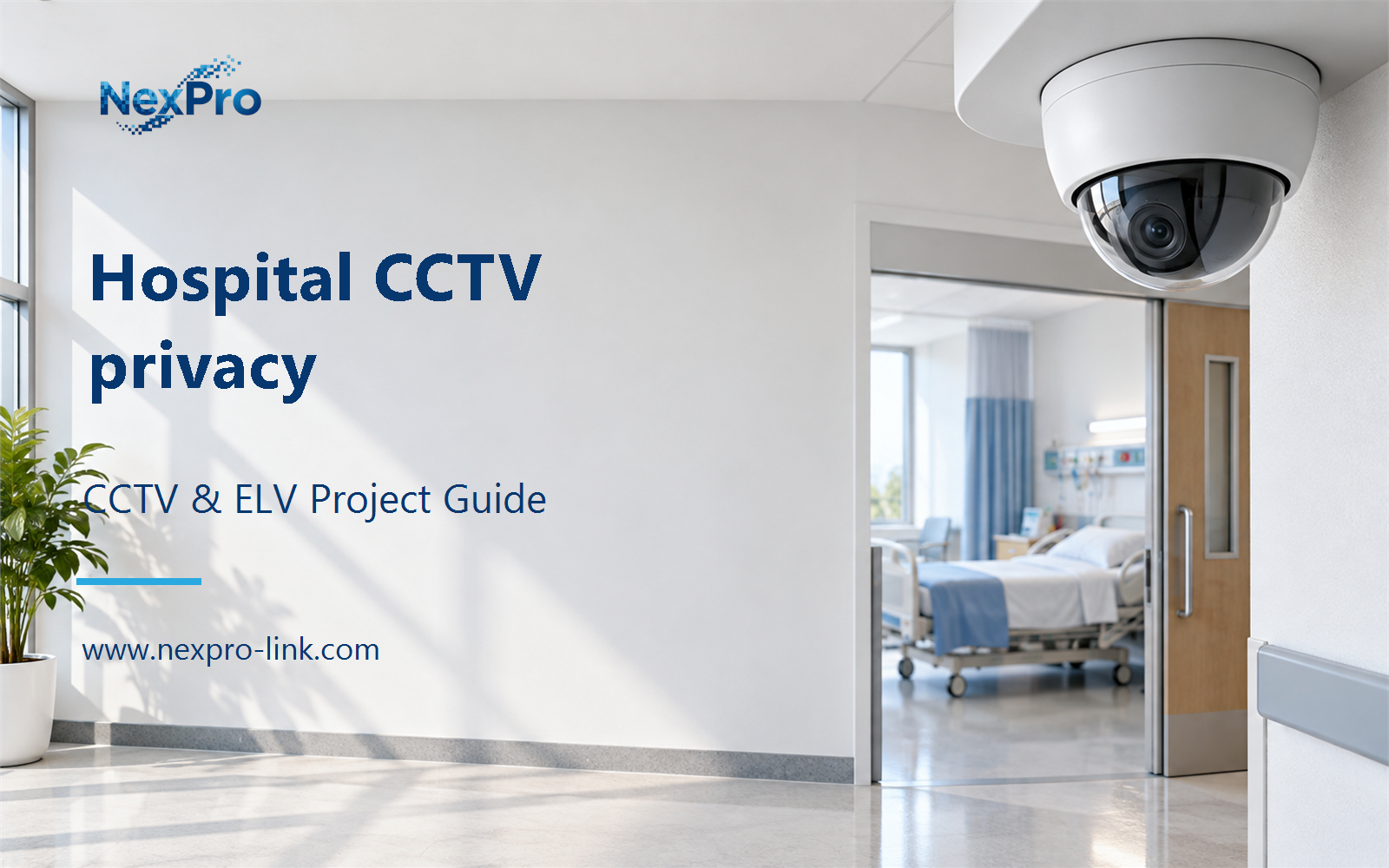
Plan hospital CCTV privacy with practical guidance on define a specific monitoring purpose and treat audio as a separate decision. NexPro-Link project guide.
Section 01
Define a Specific Monitoring Purpose
Begin with a defined purpose and assess whether the proposed view is necessary and proportionate under the site's applicable requirements. Public access does not remove privacy considerations. Avoid treating all hospital spaces as equivalent merely because they belong to one organization.
Turn the answer into a working record using Purpose, Area, People affected, Less intrusive option.
| Decision area | Buyer question | Required output |
|---|---|---|
| Define a Specific Monitoring Purpose | How should hospital privacy affect camera placement? | Begin with a defined purpose and assess whether the proposed view is necessary and proportionate under the site's applicable requirements. |
| Review Sensitive Clinical Boundaries | Should treatment rooms be treated like public corridors? | No. |
| Use Framing Before Masking | Is a privacy mask sufficient on its own? | It can be one supported measure, but camera position, framing and system behavior also matter. |
Section 02
Review Sensitive Clinical Boundaries
No. Clinical and intimate spaces raise different expectations and requirements from public circulation. Any proposal for such areas needs the responsible organization's specific assessment and authorization. Define the permitted viewing boundary before camera placement, and do not extend a corridor coverage plan into sensitive interiors without that decision.
Use Space, Sensitivity, View boundary, Responsible decision to compare options on the same basis. Keep product capability, project assumption and operating responsibility in separate columns.
Section 03
Use Framing Before Masking
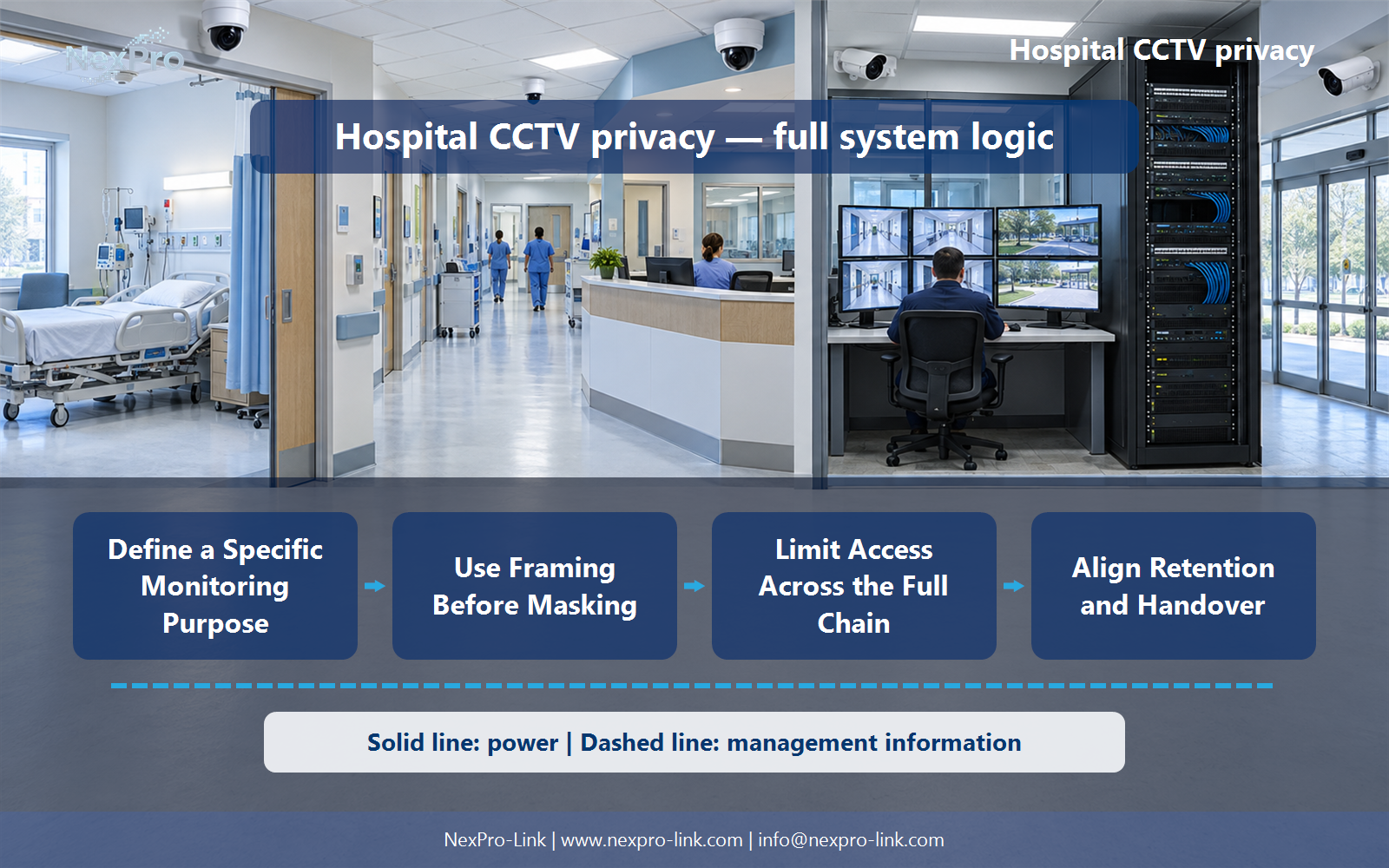
It can be one supported measure, but camera position, framing and system behavior also matter. Check whether the mask applies to the required live, recorded and exported views. A software feature should not be assumed to correct every intrusive camera placement.
The project output should make View, Avoided area, Mask behavior, Recording, Export traceable from input to acceptance.
- Confirm the answer to: Is a privacy mask sufficient on its own?
- Record the project fields: View / Avoided area / Mask behavior / Recording / Export.
- Keep product capability, project assumptions and site responsibility in separate records.
Section 04
Treat Audio as a Separate Decision
No. Audio can reveal sensitive conversations beyond what the visual purpose requires. Make it a separate explicit decision under applicable policy and requirements. A camera's two-way-audio capability does not mean microphones should automatically be enabled throughout a care environment.
Record Audio purpose, Area, Default setting, Authorization before selecting a product family. That makes later substitutions possible without silently changing the operational requirement.
Section 05
Limit Access Across the Full Chain
Apply them to recording, live displays, remote access, exports and administrative rights as appropriate. A restricted camera view can still be exposed through an unrestricted control-room screen or shared account. Map who can perform each action and where footage can leave the system.
Review Role, Live, Playback, Export, Administration, Location with the party that will operate or maintain the system.
Section 06
Align Retention and Handover
Document approved view boundaries, recording and audio settings, authorized roles and the retention and export process. Keep credentials and sensitive plans controlled. The equipment supplier's documentation can support operation, but it should not claim to replace the hospital's applicable privacy obligations or professional advice.
Use Setting, Installed state, Owner, Change process as the handoff between design and procurement.
Engineering references
These sources support the general planning principles. Always use the selected product's current datasheet and applicable project standards for final design.