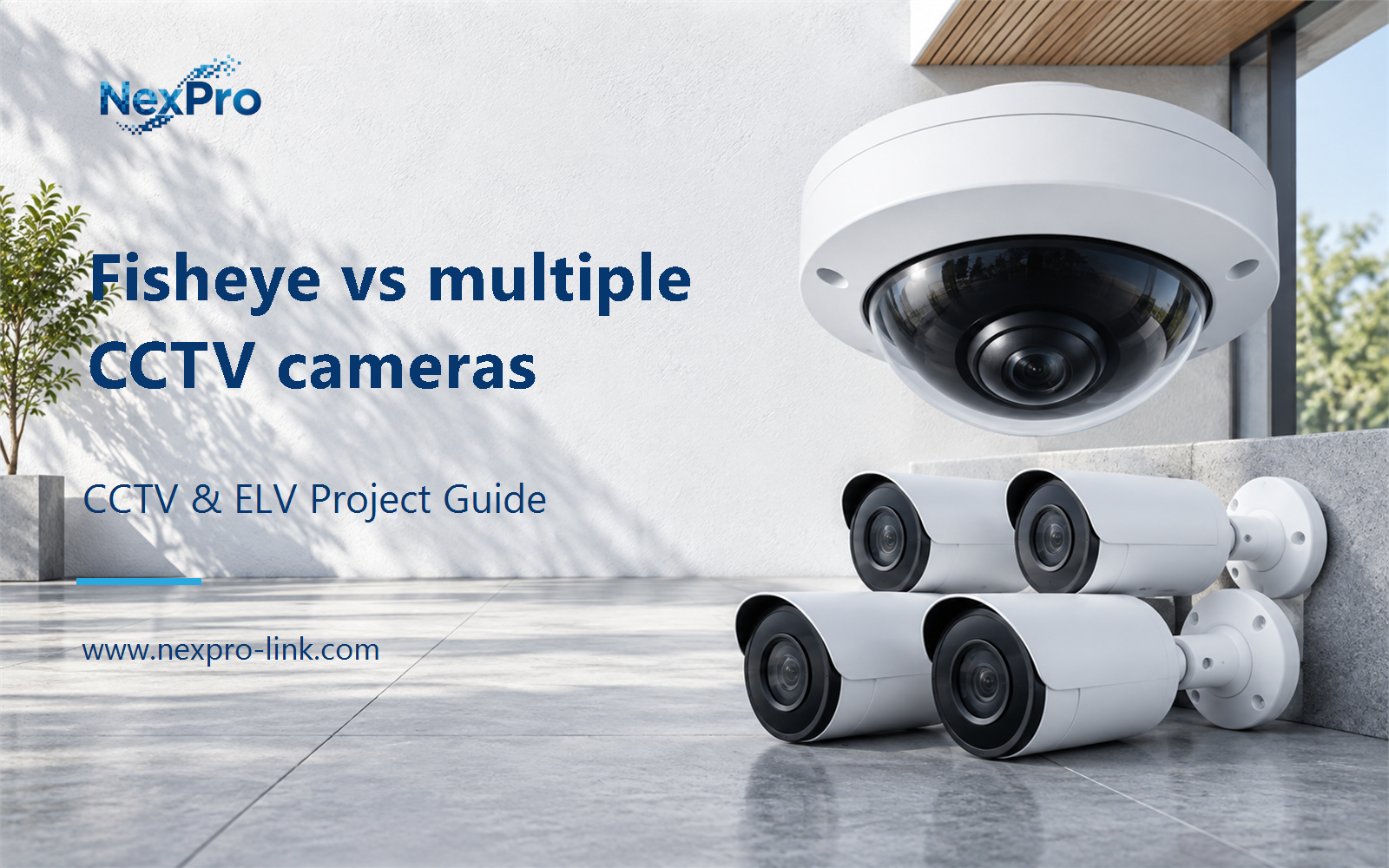
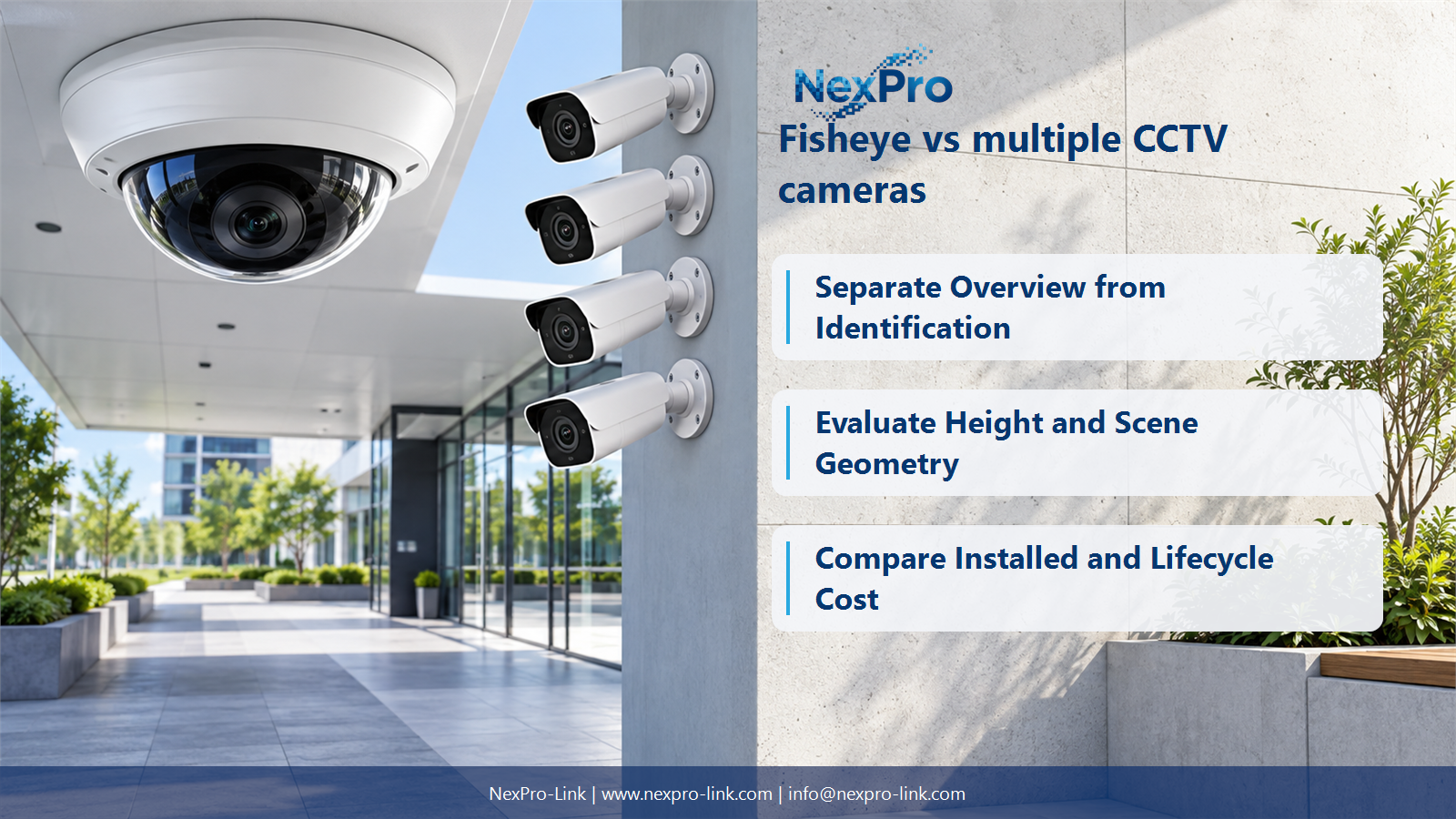
Plan fisheye vs multiple CCTV cameras with practical guidance on separate overview from identification and compare multi-sensor alternatives. NexPro-Link project guide.
Section 01
Separate Overview from Identification
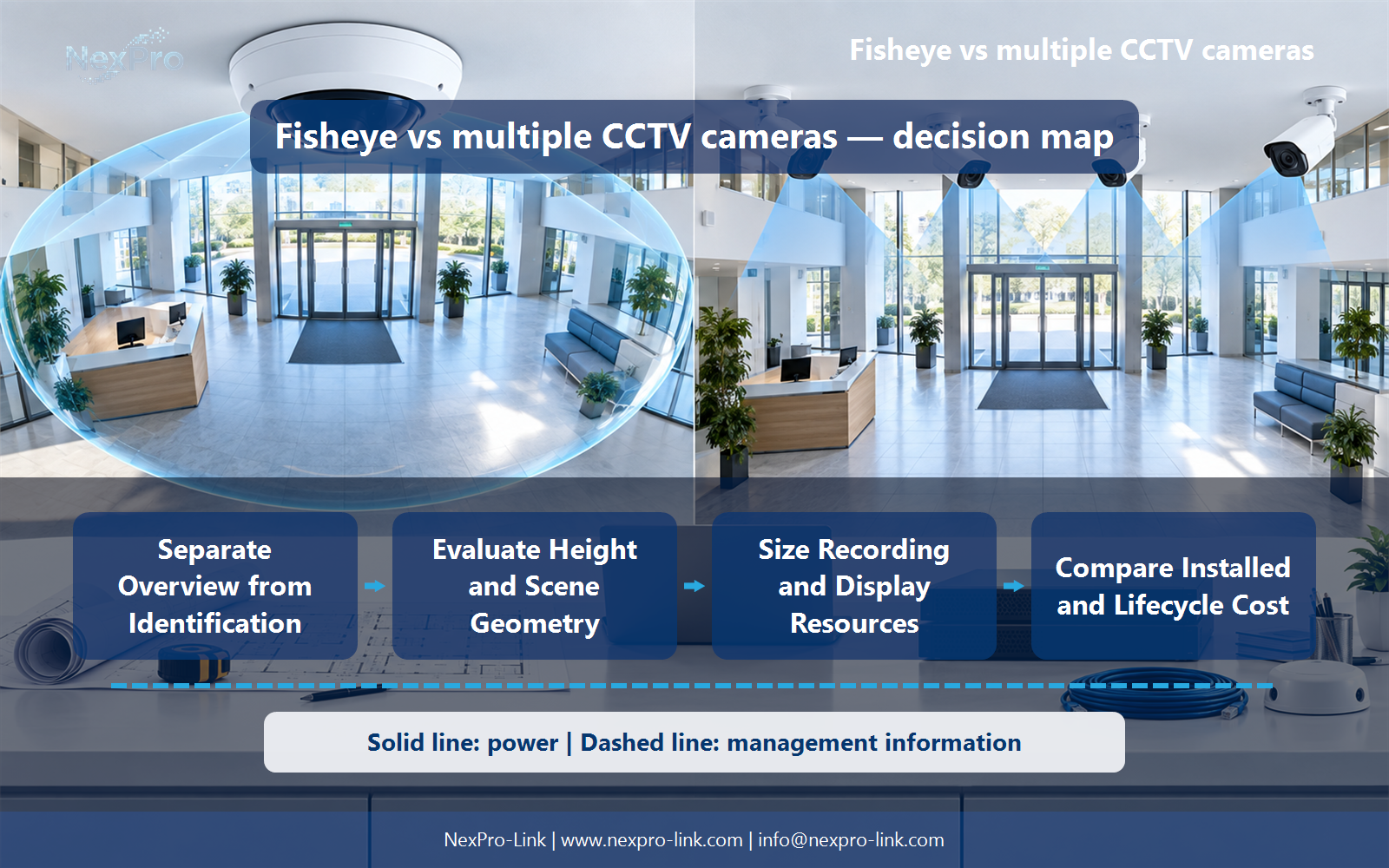
It may replace several overview views, but not necessarily the close detail needed at every entrance or transaction point. Pixels are distributed across a wide scene and the useful detail changes with position. Compare the actual target tasks before equating a wider field of view with equivalent evidence from several directed cameras.
Turn the answer into a working record using Task, Scene location, Detail requirement, Suitable view.
| Decision area | Buyer question | Required output |
|---|---|---|
| Separate Overview from Identification | Can one fisheye replace several fixed cameras? | It may replace several overview views, but not necessarily the close detail needed at every entrance or transaction point. |
| Understand Fisheye Dewarping | Does dewarping improve the original recorded detail? | Dewarping changes how a distorted image is presented; it does not create scene information that the sensor did not capture. |
| Evaluate Height and Scene Geometry | Why does mounting height matter for panoramic cameras? | Height changes the distance to targets and how scene regions are represented in the image. |
Section 02
Understand Fisheye Dewarping
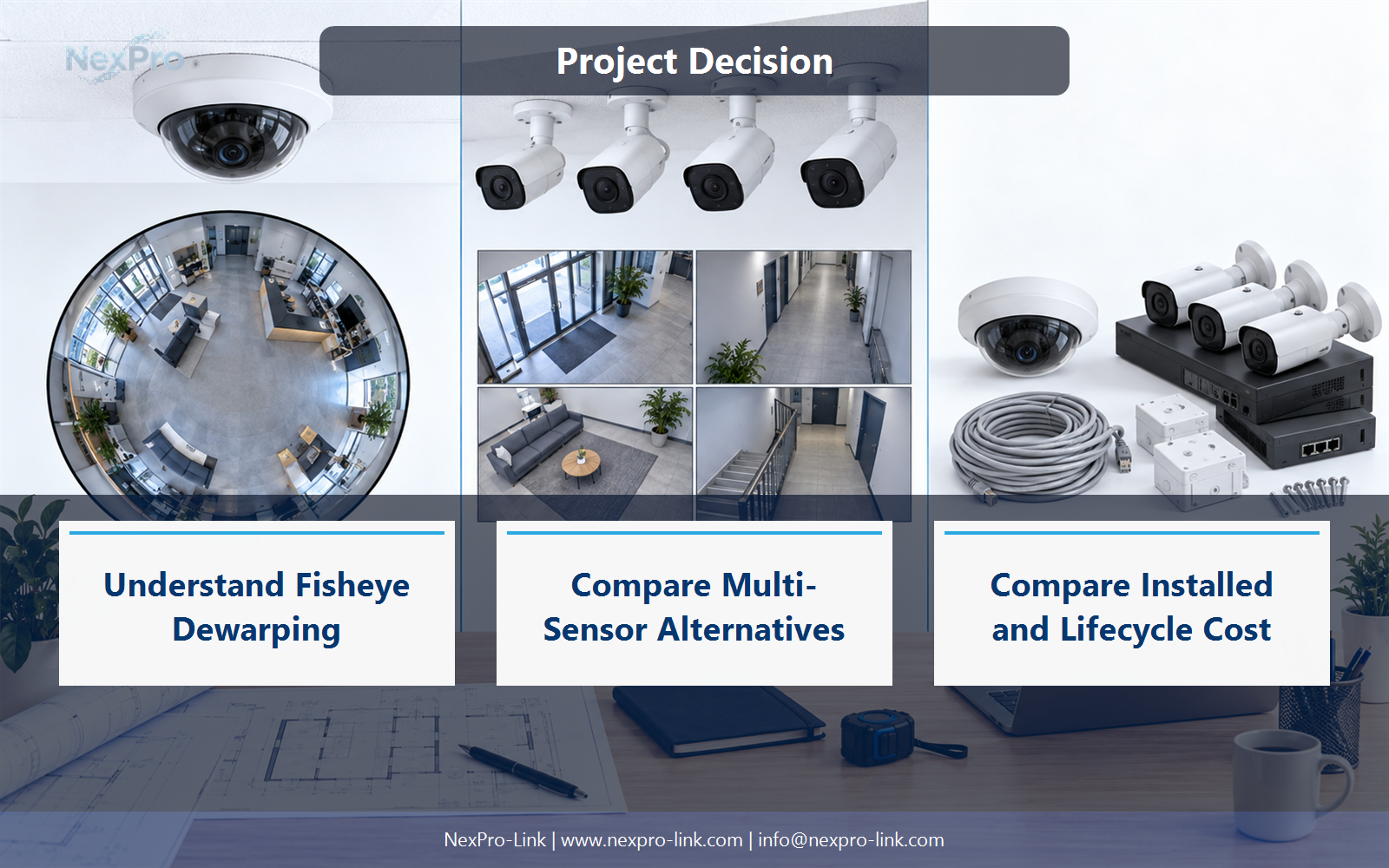
Dewarping changes how a distorted image is presented; it does not create scene information that the sensor did not capture. Decide whether correction occurs in the camera, recorder or client and whether the original or transformed stream is retained. The chosen workflow affects viewing flexibility, integration and client processing demand.
Use Dewarp location, Recorded stream, Client demand, Export behavior to compare options on the same basis. Keep product capability, project assumption and operating responsibility in separate columns.
Section 03
Evaluate Height and Scene Geometry
Height changes the distance to targets and how scene regions are represented in the image. Furniture, shelving and architectural features can block views even inside a nominally wide coverage area. Use the actual mounting position and target locations to assess detail and obstruction rather than selecting a height from a universal fisheye rule.
The project output should make Height, Target position, Obstruction, Effective detail traceable from input to acceptance.
- Confirm the answer to: Why does mounting height matter for panoramic cameras?
- Record the project fields: Height / Target position / Obstruction / Effective detail.
- Keep product capability, project assumptions and site responsibility in separate records.
Section 04
Compare Multi-Sensor Alternatives
No. Multiple imaging sensors may provide several directed views, while a fisheye commonly uses one wide-angle imaging path with substantial geometric distortion. Compare independent stream counts, lens arrangements and recording licenses where relevant. A shared housing can simplify mounting but can also concentrate multiple views in one failure point.
Record Camera type, Sensors, Streams, Recording channels, Shared failure before selecting a product family. That makes later substitutions possible without silently changing the operational requirement.
Section 05
Size Recording and Display Resources
A panoramic camera may generate high-resolution or multiple streams that place substantial demands on recording and client decoding. Count the actual streams, bitrate and simultaneous dewarped views. Physical camera count alone does not establish NVR channel allocation, display performance or network capacity.
Review Source, Streams, Mbps, Decode views, Storage input with the party that will operate or maintain the system.
Section 06
Compare Installed and Lifecycle Cost
Include mounting, cable routes, powered ports, software support, recording resources and maintenance access. Also consider which views disappear when a shared unit fails. NexPro-Link can discuss a mixed package in which broad overview comes from panoramic equipment and important capture points retain dedicated cameras, without forcing a single form across the whole site.
Use Option, Installed paths, Recording cost driver, Failure scope as the handoff between design and procurement.
Engineering references
These sources support the general planning principles. Always use the selected product's current datasheet and applicable project standards for final design.