Plan dormitory library CCTV privacy with practical guidance on separate public circulation from private use and control recording, displays and exports. NexPro-Link project guide.
Section 01
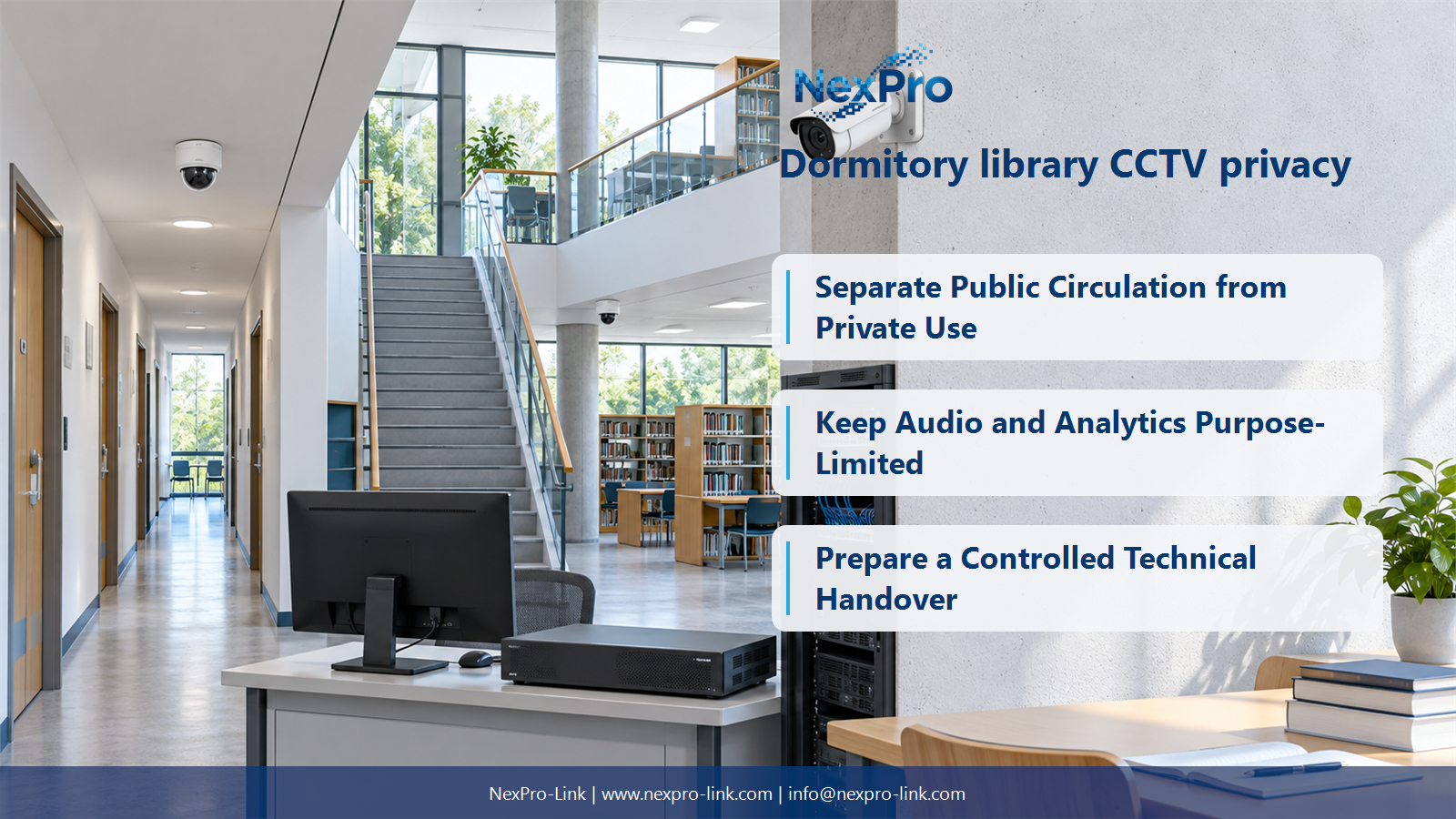
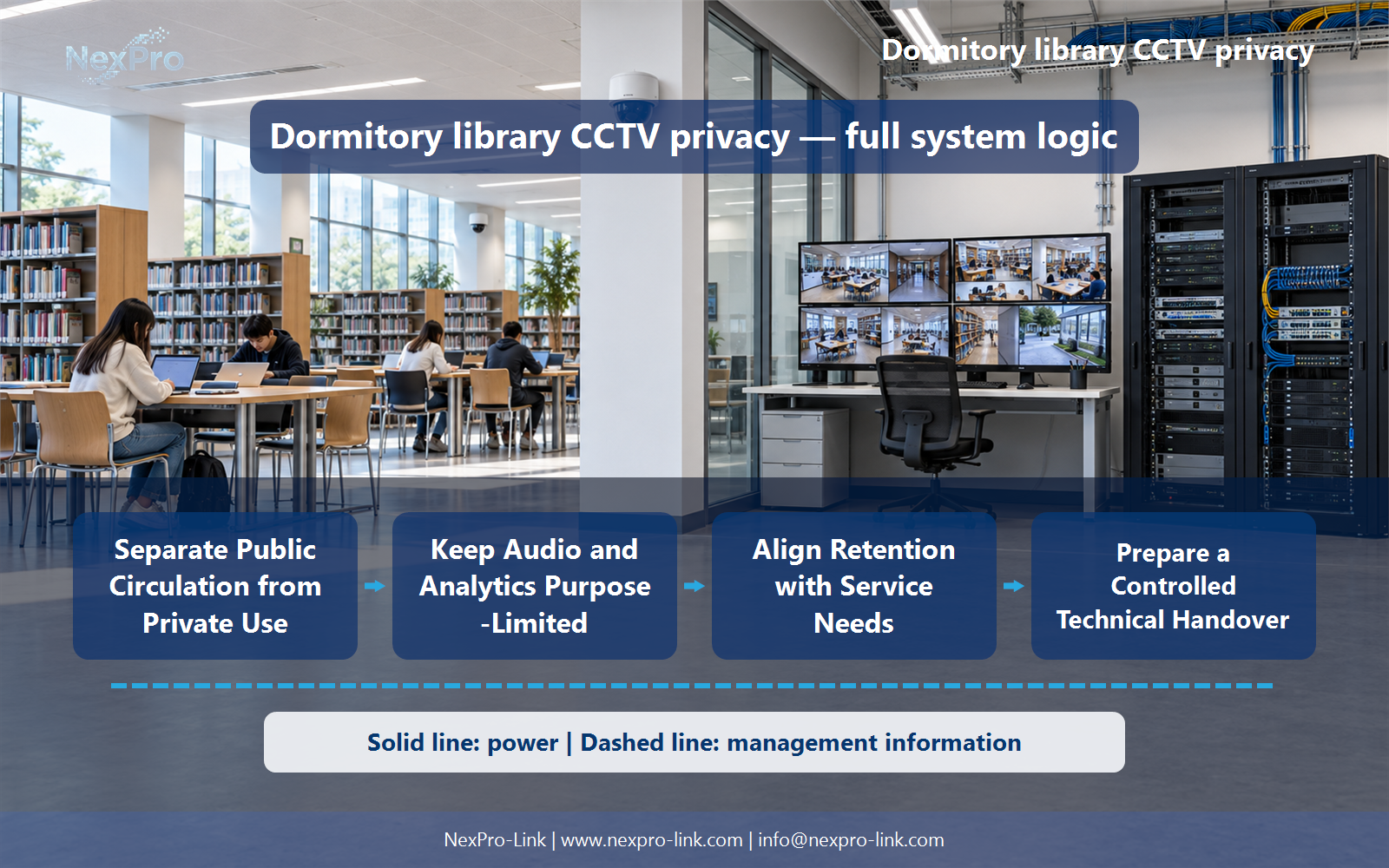
Separate Public Circulation from Private Use
Distinguish public access and circulation from private living and intimate spaces, then define the authorized purpose for each proposed view. Do not turn a general campus-security objective into unrestricted monitoring. The institution's applicable requirements and responsible decisions govern any sensitive placement.
Turn the answer into a working record using Space, Use, Purpose, View boundary, Responsible decision.
| Decision area | Buyer question | Required output |
|---|---|---|
| Separate Public Circulation from Private Use | How should dormitory camera zones be defined? | Distinguish public access and circulation from private living and intimate spaces, then define the authorized purpose for each proposed view. |
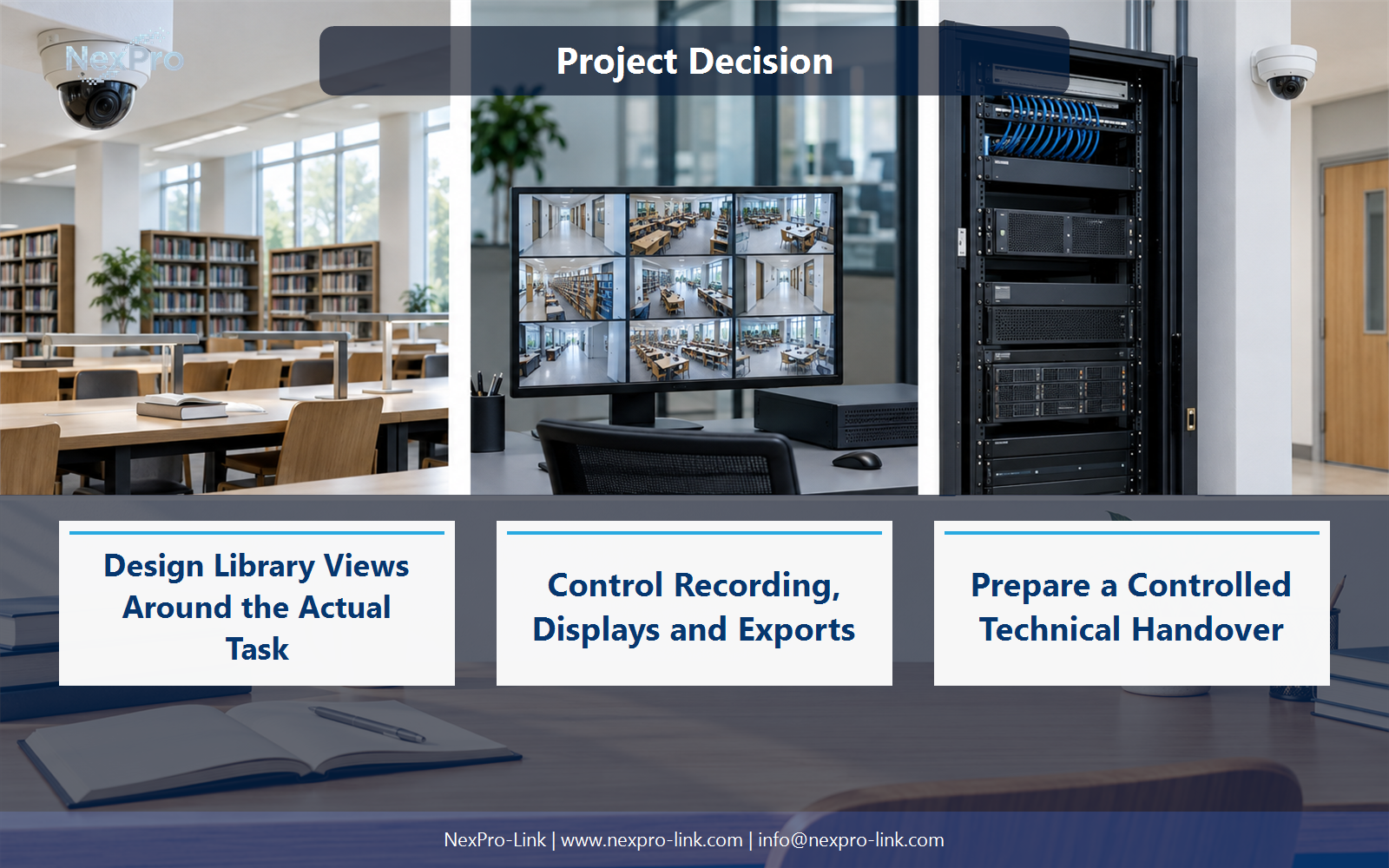
| Design Library Views Around the Actual Task | What should library CCTV focus on? | Focus on authorized access, public movement or incident context rather than unnecessarily collecting reading, account or personal-device information. |
| Keep Audio and Analytics Purpose-Limited | Should audio or identity analytics be enabled by default? | No. |
Section 02
Design Library Views Around the Actual Task
Focus on authorized access, public movement or incident context rather than unnecessarily collecting reading, account or personal-device information. Position and framing can reduce unrelated capture. A wide room view should not be treated as a licence to monitor every individual activity in detail.
Use Task, Target area, Unnecessary detail, Framing to compare options on the same basis. Keep product capability, project assumption and operating responsibility in separate columns.
Section 03
Keep Audio and Analytics Purpose-Limited
No. Each adds a different form of collection and requires an explicit purpose and supported, authorized arrangement. Basic camera analytics should not be represented as identity recognition. Keep technical capability separate from the institution's decision to use it in student environments.
The project output should make Feature, Purpose, Data effect, Authorized setting traceable from input to acceptance.
- Confirm the answer to: Should audio or identity analytics be enabled by default?
- Record the project fields: Feature / Purpose / Data effect / Authorized setting.
- Keep product capability, project assumptions and site responsibility in separate records.
Section 04
Control Recording, Displays and Exports
They can be lost through shared accounts, unrestricted displays, exports or remote access. Apply role-specific controls across the actual platform and workflow. A restricted camera position does not help if footage is later exposed to people without an authorized task.
Record Role, Live, Playback, Export, Remote access before selecting a product family. That makes later substitutions possible without silently changing the operational requirement.
Section 05
Align Retention with Service Needs
Use the authorized purpose and applicable institutional requirements rather than a generic campus duration. Calculate the resulting storage and preserve selected incidents separately where needed. Define who can request changes so retention is not silently lengthened during routine maintenance.
Review Purpose, Retention, Storage, Event copy, Change owner with the party that will operate or maintain the system.
Section 06
Prepare a Controlled Technical Handover
Document approved views, relevant settings, recording and access arrangements, and the equipment and power paths. Keep sensitive drawings and credentials controlled. NexPro-Link can support equipment documentation while the institution remains responsible for its permitted uses and privacy decisions.
Use View, Setting, Recorder, Network, Power, Access owner as the handoff between design and procurement.
Engineering references
These sources support the general planning principles. Always use the selected product's current datasheet and applicable project standards for final design.