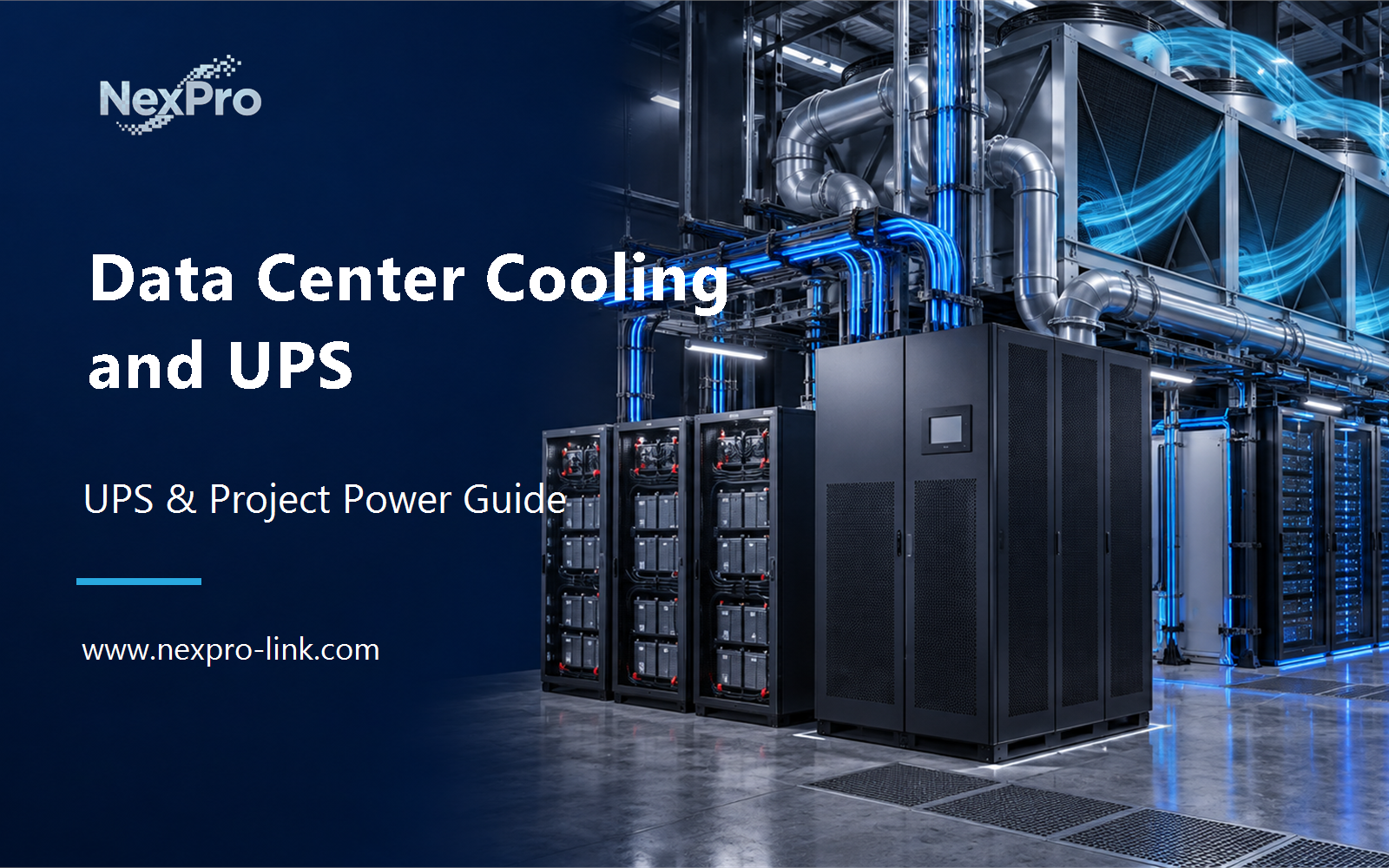
Explain the different supply needs of IT, cooling and controls using the single-line and dependency relationships, without assuming all air conditioners share one bus.
Section 01
Start from the Actual Single-Line
Explain the different supply needs of IT, cooling and controls using the single-line and dependency relationships, without assuming all air conditioners share one bus.
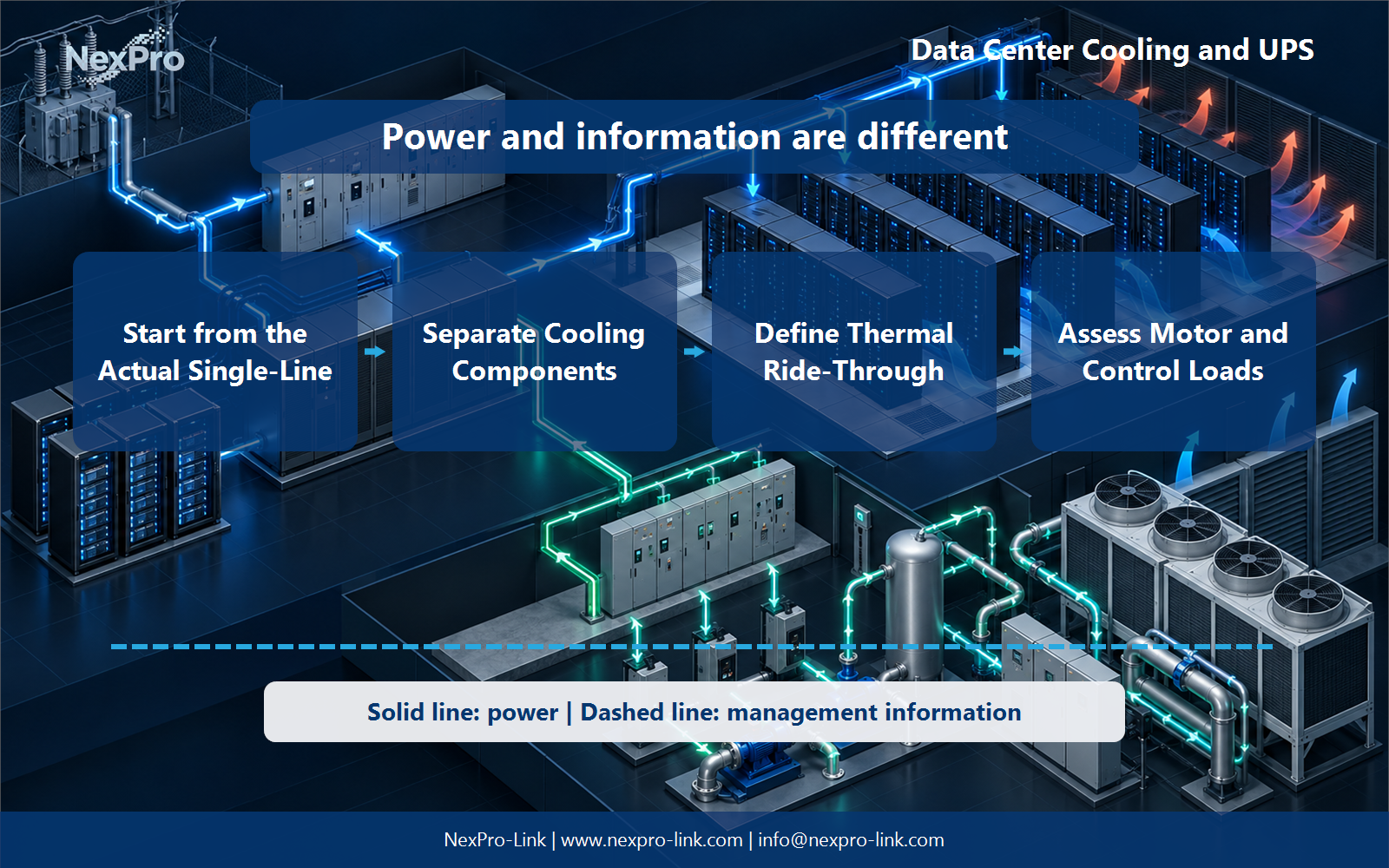
No. Identify the actual incoming supplies, distribution paths and shared points in the facility. IT and cooling may remain functionally dependent even when their electrical routes differ. The UPS plan should address that relationship without assuming that every room has one common bus or that all cooling belongs on UPS output.
The working question is simple: Do IT and cooling always share the same power bus? Record the answer as a service requirement before comparing UPS ratings or battery options.
| Decision area | Project question | Required output |
|---|---|---|
| Start from the Actual Single-Line | Do IT and cooling always share the same power bus? | Approved service objective |
| Separate Cooling Components | Why should cooling equipment be split into components? | Defined load and dependency boundary |
| Define Thermal Ride-Through | Why may electrical runtime exceed useful operating time? | Reviewed power-path decision |
Section 02
Separate Cooling Components
Fans, pumps, compressors and controls can have different operating demand and supply requirements. Some cooling arrangements do not use a local compressor in the same way as others. List the actual equipment rather than assign one generic air-conditioning startup load.
Keep the load list, operating state and supporting dependencies in the same schedule. This makes omissions visible before runtime or capacity is discussed.
- Confirm the answer to: Why should cooling equipment be split into components?
- Separate measured demand, nameplate limits and committed growth.
- Identify the owner of each external service or approval.
Section 03
Define Thermal Ride-Through and Assess Motor and Control Loads
If required cooling is unavailable, the thermal operating window can be shorter than the battery interval. Use the facility's thermal design and workload policy to define the permitted response. For a project-specific decision, record IT state, cooling state and permitted action in the dependency table. This keeps the equipment inputs and intended service outcome aligned.
No. Include them only when the engineered design specifies that scope and the UPS is compatible with their load behavior. Controls or selected auxiliaries may have a different support path. Preserve these distinctions in both diagrams and procurement schedules.
Draw power delivery as a solid path and management information as a separate dashed path. That distinction prevents an alarm or software command from being mistaken for an electrical protection function.
Section 04
Coordinate Restart Sequencing
Follow the approved facilities and platform sequence, ensuring prerequisite services are ready before demand is released. Consider source limits and operating state changes. The goal is a coordinated recovery plan, not a blanket instruction to start every cooling and IT load simultaneously.
Assign the action, acknowledgement, timeout and escalation owner before commissioning. The useful battery interval is the time needed for this approved sequence plus reserve, not an arbitrary marketing duration.
Section 05
Prepare a Cross-Discipline Brief
Provide the approved IT UPS scope, auxiliary loads and relevant interface requirements. NexPro-Link can discuss equipment within that boundary. Cooling design, protection coordination and high-energy installation remain assigned to the project's qualified teams rather than inferred from a general room-power package.
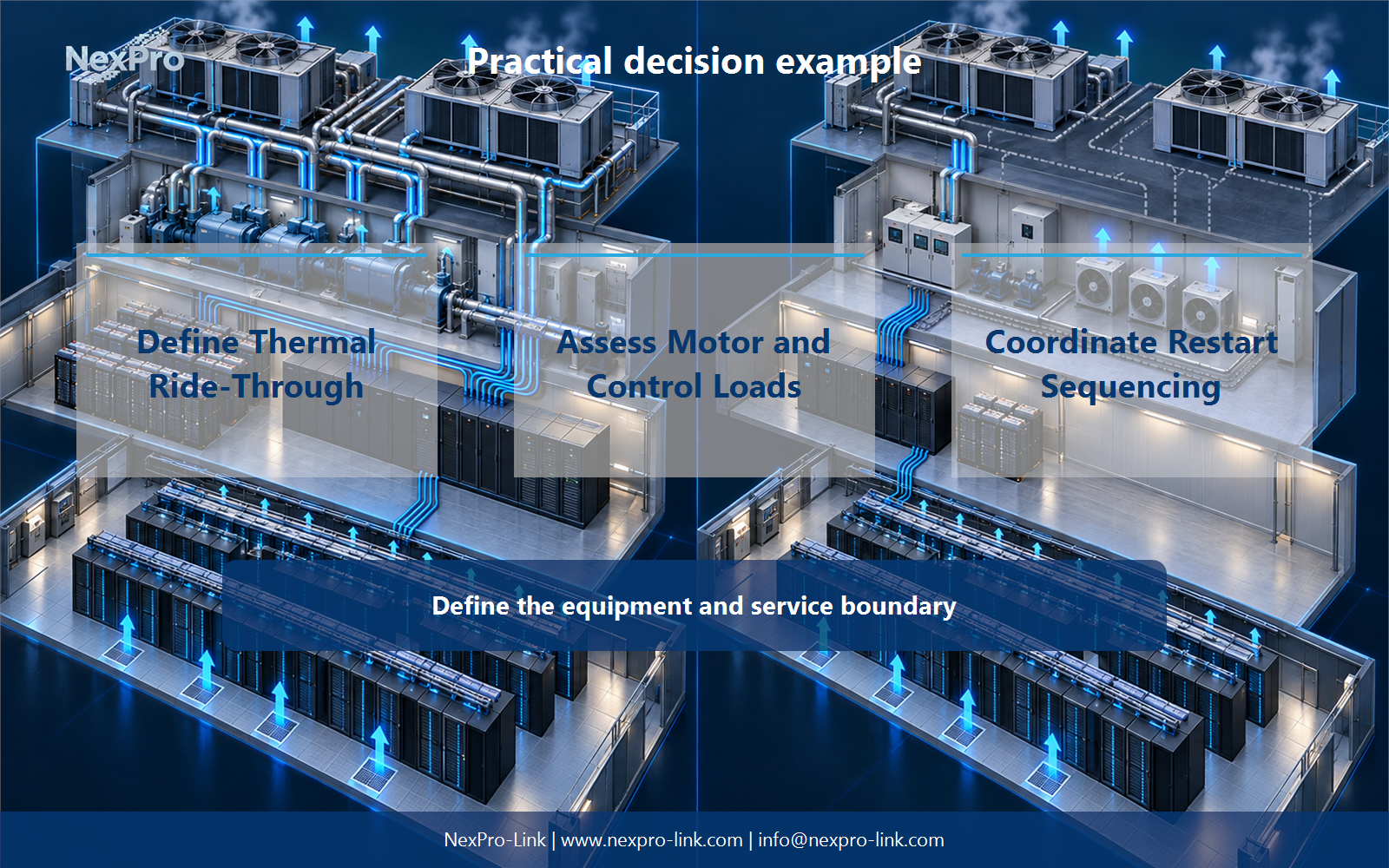
For the article's practical example, the stated teaching inputs are: Define Thermal Ride-Through. Assess Motor and Control Loads. Coordinate Restart Sequencing. Define the equipment and service boundary. Treat these figures as planning assumptions, then replace them with measured or manufacturer-supported project data.
Engineering references
These sources support the general planning principles. Always use the selected product's current datasheet and applicable project standards for final design.