Monitoring continuity and refrigeration continuity are different objectives; size the compressor and the alarm platform against separate targets.
Section 01
Separate Temperature from Data
Monitoring continuity and refrigeration continuity are different objectives; size the compressor and the alarm platform against separate targets.
The first question is whether a logger and a cooling unit should share a power boundary. They should not be treated as one load just because they sit in the same cabinet. The logger and its alarm path need to survive a short outage so the record stays continuous. The compressor needs a backup arrangement that can carry its running current and its startup surge. Those are different requirements.
The boundary table separates the two services and keeps each supply next to the outcome it supports.
Filling the table forces a useful distinction. A logger that records a warm excursion while the compressor is down is working correctly. It is not a sign that the small UPS failed. The record and the cooling have different jobs, and each job has its own supply.
| Decision area | Project question | Required output |
|---|---|---|
| Separate Temperature from Data | Does powering the temperature logger keep vaccines cold? | Boundary table: refrigeration / logger / alarm / network |
| Use Refrigeration Requirements | How should compressor demand be treated? | Load profile: running / startup / defrost / input interface |
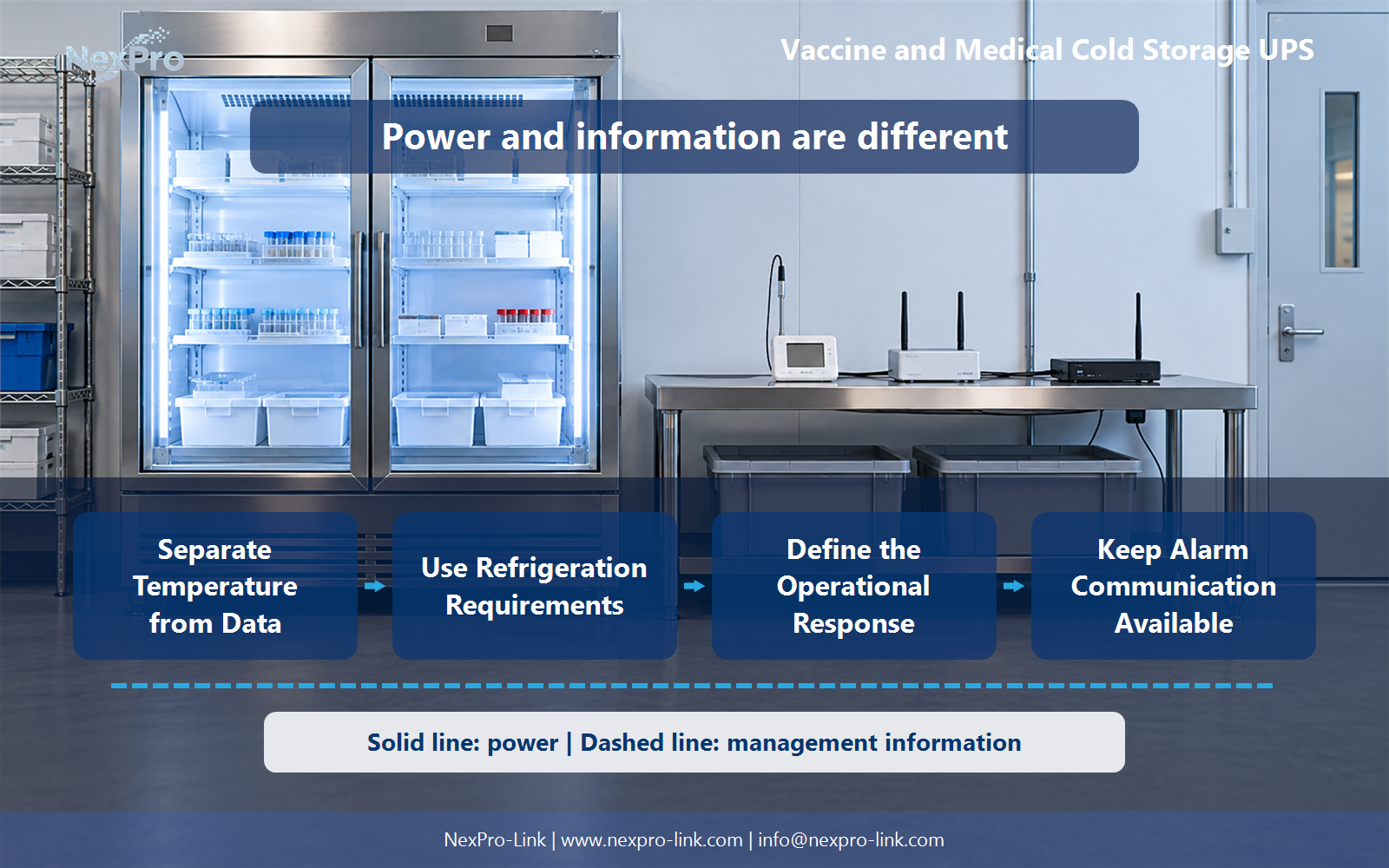
| Define the Operational Response | What should the backup objective include? | Response map: event / monitoring / escalation / approved action |
Section 02
Use Refrigeration Requirements
For the refrigeration side, average energy consumption is the wrong number to size from. A compressor draws a steady running load, a higher current at startup, and extra load during defrost. The backup arrangement that carries those states has to come from the approved cold-chain plan, not from a wattage read off a nameplate and averaged.
A small UPS that fits a logger is unlikely to fit the cooling equipment. The load profile keeps that mismatch visible before a quote is prepared, instead of discovering it at startup.
Section 03
Define the Operational Response
UPS runtime is one input to the cold-chain plan, and it is the easiest one to overstate. The plan also has to say who watches the alarm, who can act, and where product moves if the cabinet cannot hold temperature. None of those steps should be invented from a generic "safe duration" for vaccines or other medical products. The responsible facility plan defines them.
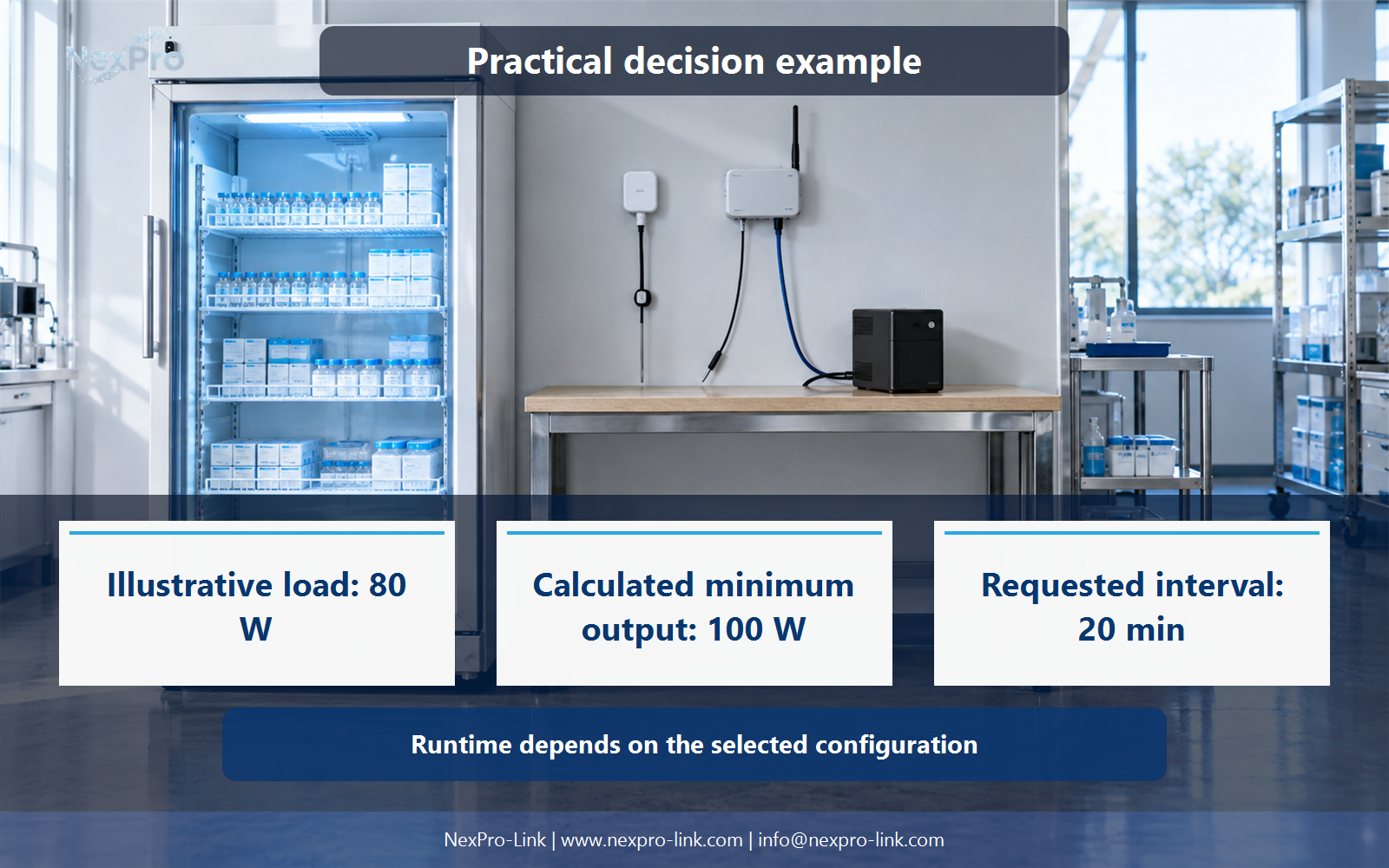
The map shows why runtime alone cannot define the response. A 20-minute UPS does not make 20 minutes safe for every material. It only keeps the monitoring and alarm path working while the plan takes over.
- Confirm the answer to: What should the backup objective include?
- Draw electrical power as a solid path and management information as a separate dashed path.
- Keep external services and specialist approvals outside the UPS equipment claim.
Section 04
Keep Alarm Communication Available
Remote alarms only work if the whole chain stays up. That chain runs from the sensor inside the cabinet through the controller and gateway to the network and finally to a person. The UPS can protect the site-side devices. It cannot protect the carrier network that carries the message out.
A sensor with its own battery can keep recording locally while the remote route is down. The record survives, the alert does not. Writing the carrier dependency into the design lets the team plan for that gap instead of assuming the alarm always arrives.
Section 05
Confirm Recovery Beyond Electricity
Power coming back is not the same as storage returning to normal. Cooling has to recover, the temperature record has to be checked, and the affected inventory has to be assessed by the responsible team. A UPS that returns to normal input has done its electrical job. It has not made a release decision for vaccines or other temperature-sensitive products.
Keeping these four records separate stops an electrical confirmation from being read as a product-release confirmation.
Section 06
Prepare a Two-Part RFQ
When the request goes to a supplier, the two services should stay separate. Sending one combined "protect the cold room" line hides the difference between the compressor and the logger. NexPro-Link can discuss equipment once the scope is split.
On its catalog, the rack-mounted online range NX-UP-RM-001 includes configuration C1KR(S) rated 1,000 VA and 900 W with internal VRLA batteries. That line shows how a series, a configuration and a rating fit together, but it is not a preselected answer here. The monitoring load and the runtime objective determine the fitting.
Engineering references
These sources support the general planning principles. Always use the selected product's current datasheet and applicable project standards for final design.