Plan CCTV warranty SLA with practical guidance on separate warranty from service level and plan spares and local work. NexPro-Link project guide.
Section 01
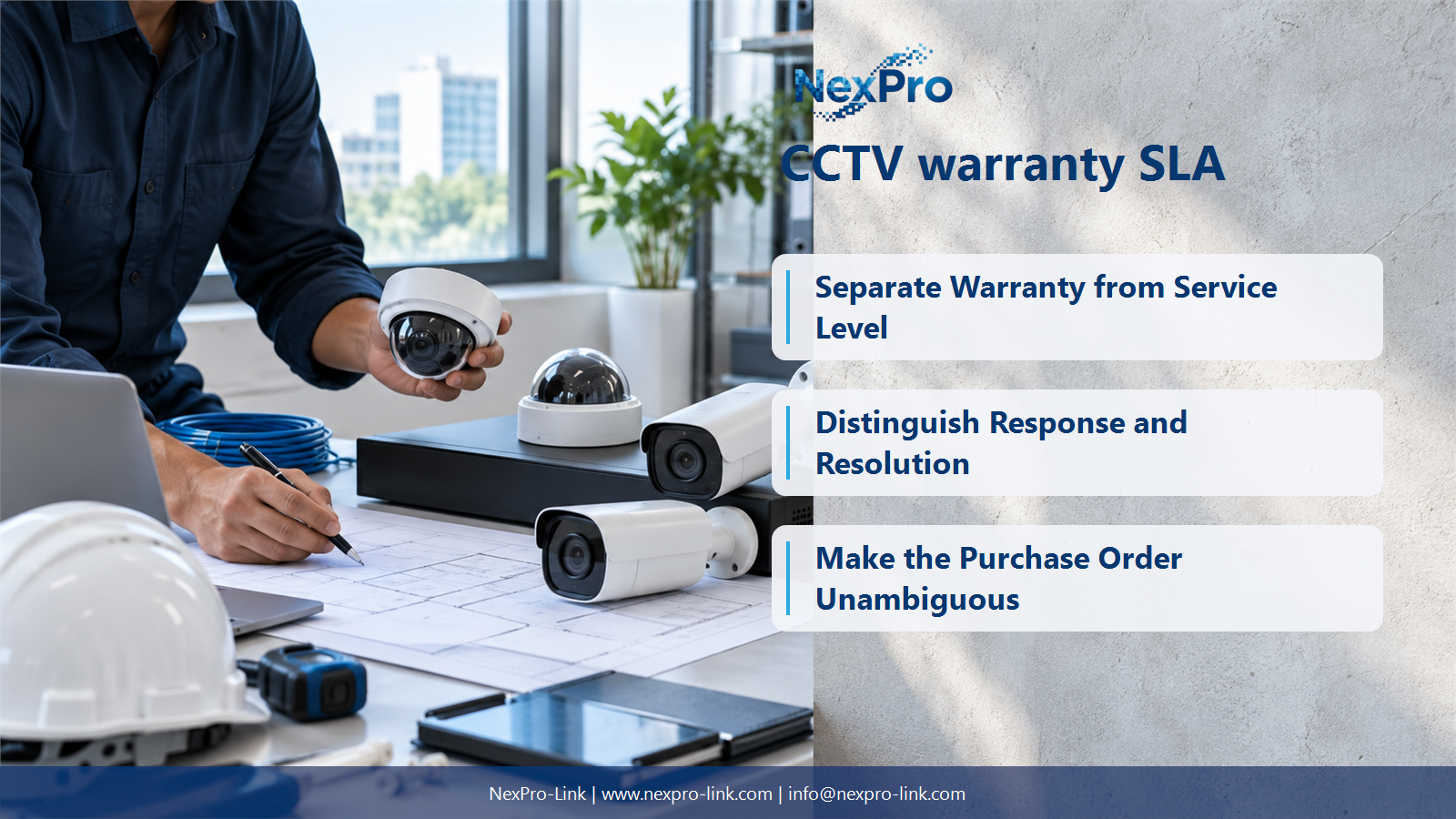
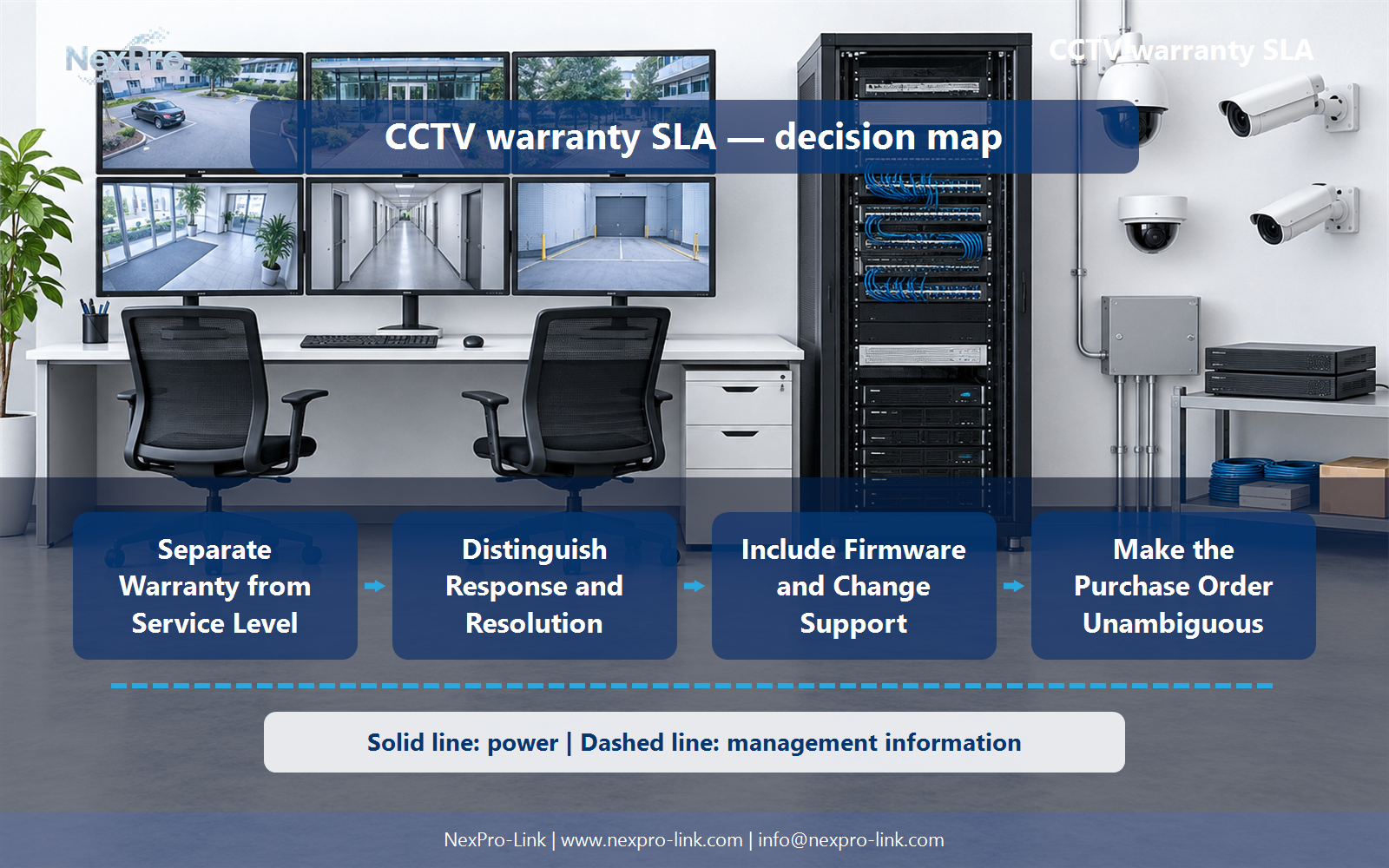
Separate Warranty from Service Level
No. A warranty defines specified product obligations and remedies, while a service-level arrangement can define support activities and timing. Read them separately. A long warranty period does not automatically promise rapid diagnosis, local attendance or immediate restoration of recording.
Turn the answer into a working record using Obligation, Warranty, Service level, Responsible party.
| Decision area | Buyer question | Required output |
|---|---|---|
| Separate Warranty from Service Level | Is a warranty the same as an SLA? | No. |
| Define Covered Equipment and Conditions | What should warranty scope identify? | Identify the supplied models or configuration, applicable period and start condition, relevant exclusions and the remedy process. |
| Distinguish Response and Resolution | Does a response-time promise guarantee restored service? | Not necessarily. |
Section 02
Define Covered Equipment and Conditions
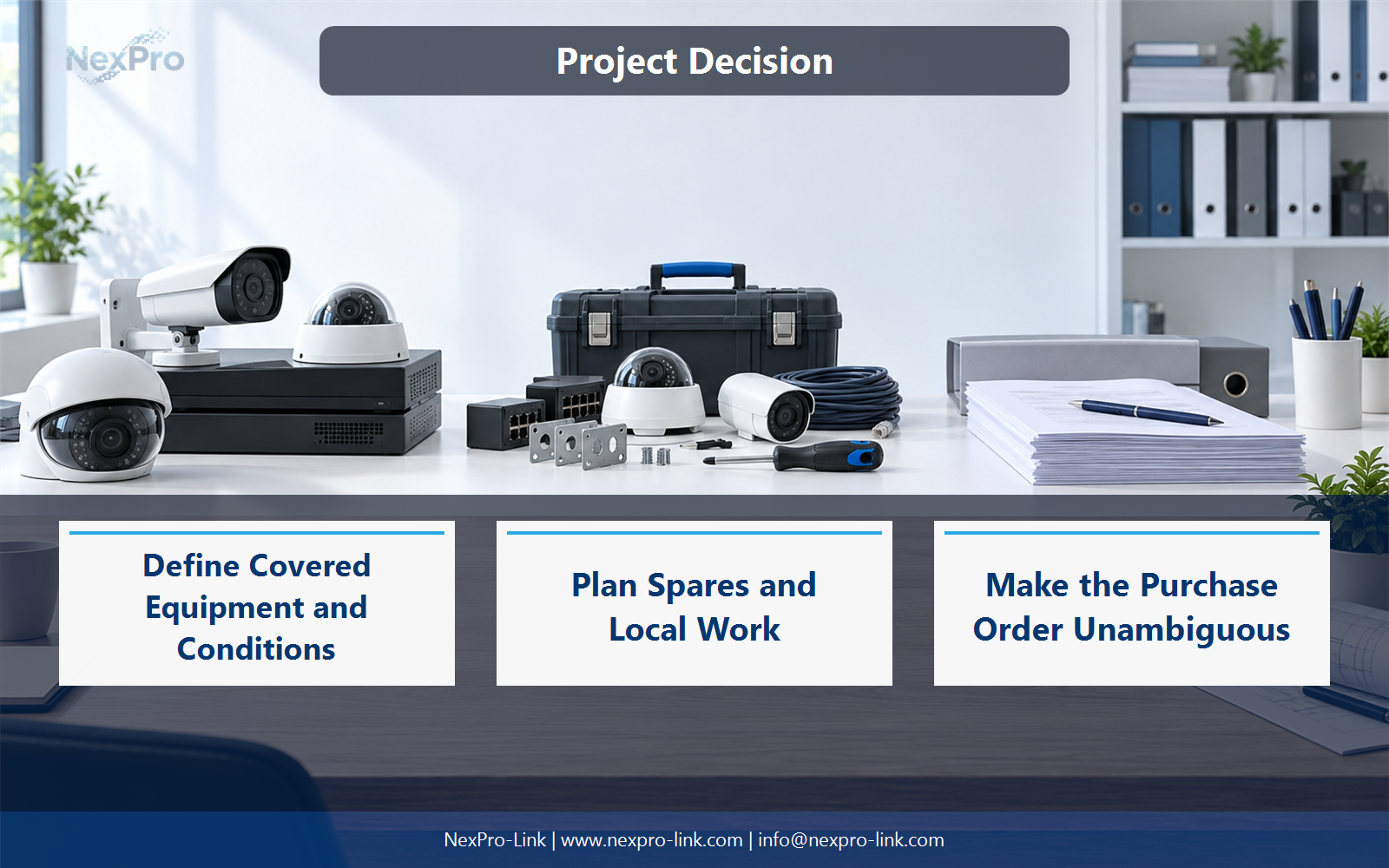
Identify the supplied models or configuration, applicable period and start condition, relevant exclusions and the remedy process. Accessories, storage and batteries may have different terms. Do not extend one product's terms to every item in a multi-category CCTV package without an actual agreement.
Use Item, Coverage, Start, Exclusions, Remedy to compare options on the same basis. Keep product capability, project assumption and operating responsibility in separate columns.
Section 03
Distinguish Response and Resolution
Not necessarily. Initial acknowledgement, technical diagnosis, replacement dispatch and restored operation are different milestones. Define which one a stated time covers and the conditions required from each party. Avoid a single vague support time that buyers interpret as full recovery.
The project output should make Milestone, Start trigger, Target, Dependency, Owner traceable from input to acceptance.
- Confirm the answer to: Does a response-time promise guarantee restored service?
- Record the project fields: Milestone / Start trigger / Target / Dependency / Owner.
- Keep product capability, project assumptions and site responsibility in separate records.
Section 04
Plan Spares and Local Work
The agreement should identify the local installation or service party and the supplier's role. Remote product support and replacement supply are not the same as site attendance. A compatible spare strategy can help recovery, but its quantity and location should follow the project's needs.
Record Failure, Remote support, Spare, Site labor, Cost owner before selecting a product family. That makes later substitutions possible without silently changing the operational requirement.
Section 05
Include Firmware and Change Support
Discuss update notices, supported versions, relevant compatibility and how required changes are communicated. Do not assume a lifetime feature roadmap or unlimited free upgrades. The agreement should reflect the actual product and platform support scope rather than a general statement that firmware is available.
Review Software, Supported baseline, Notice, Change, Scope with the party that will operate or maintain the system.
Section 06
Make the Purchase Order Unambiguous
Reference the agreed equipment configuration and applicable warranty and service documents, including their versions and any project-specific terms. Keep commercial differences visible before ordering. For an order with NexPro-Link, reference the terms agreed for that equipment package instead of assuming that every item has the same service coverage.
Use PO item, Terms version, Project exception, Contact, Process as the handoff between design and procurement.
Engineering references
These sources support the general planning principles. Always use the selected product's current datasheet and applicable project standards for final design.