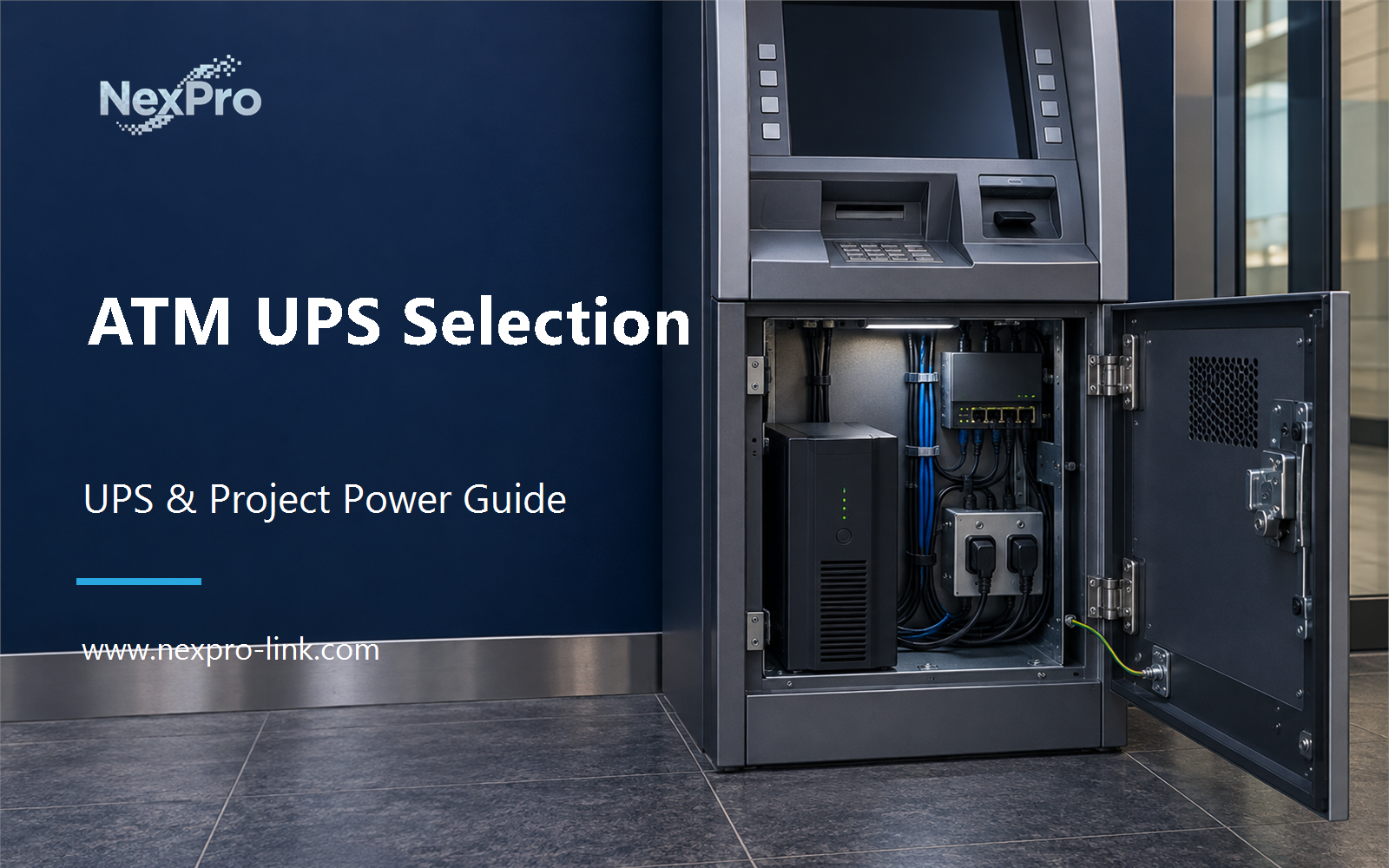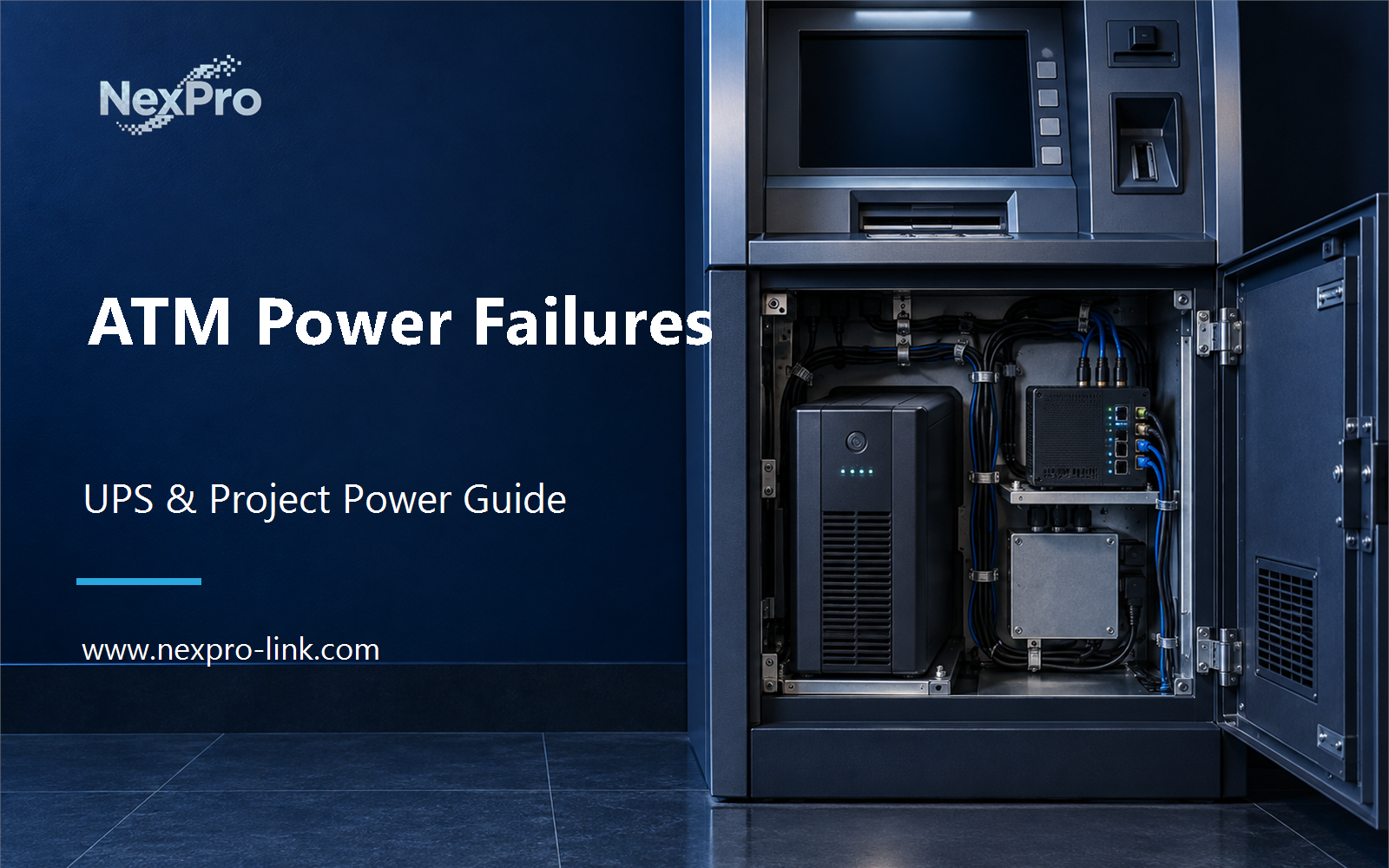
An ATM that loses power in the middle of a transaction does not fail in one fixed way. The terminal design, the stage of the transaction, and the bank's own recovery process decide whether a card comes back.
Section 01
Map transaction states before writing the power response
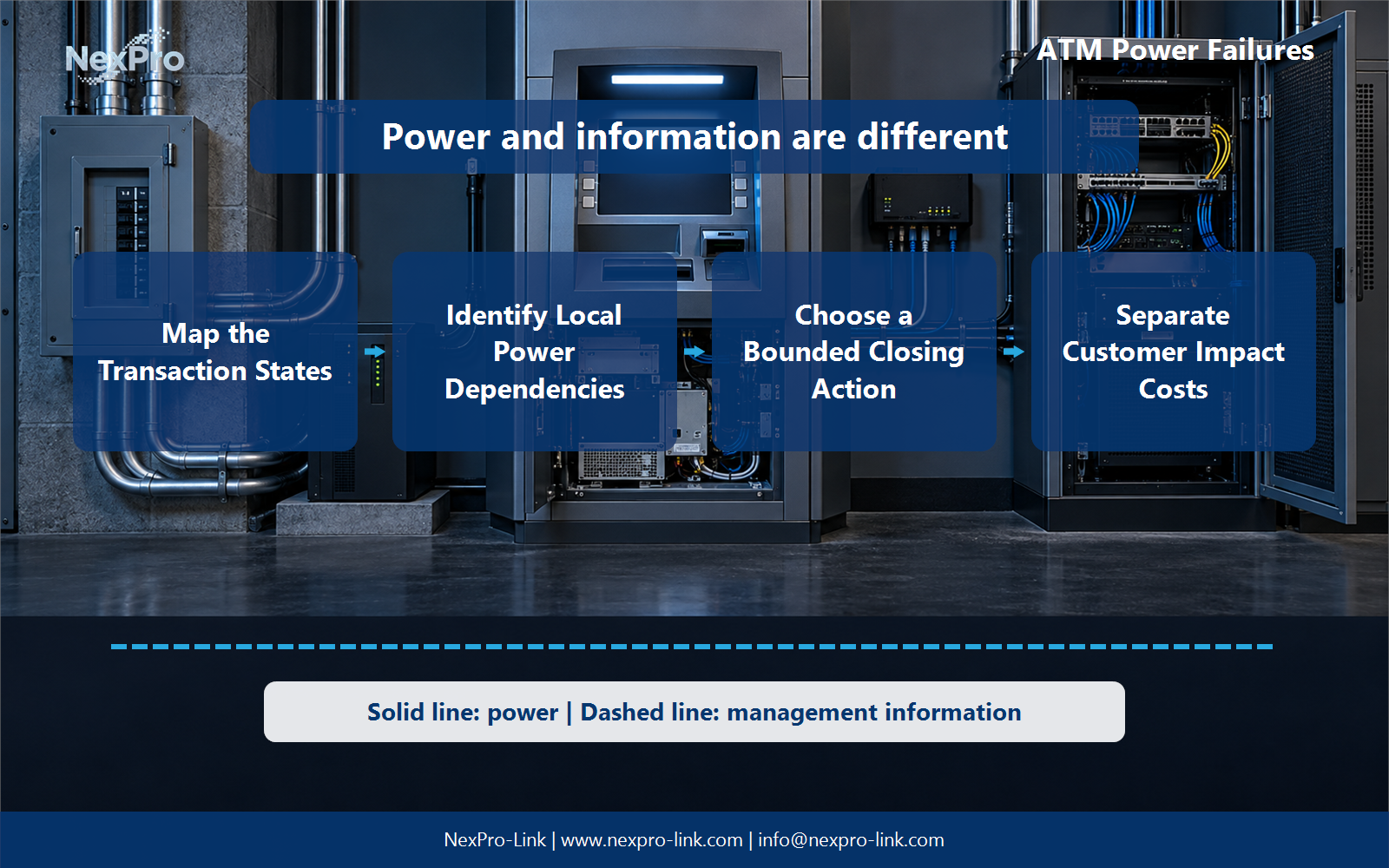
An ATM that loses power in the middle of a transaction does not fail in one fixed way. The terminal design, the stage of the transaction, and the bank's own recovery process decide whether a card comes back to the customer, a receipt prints, or a ledger entry stays open. When a branch operations manager treats every outage as a trapped card and a lost transaction, backup power ends up sized against the wrong risks. The cleaner starting point is to separate an interrupted customer session from cash handling, card handling, and ledger reconciliation. Those are four different problems that happen to share a timeline.
An ATM can lose power while idle, during authentication, after authorization, during cash handling or while printing. Each state can have a different application and reconciliation response. The UPS plan should support the approved action instead of assuming every interruption has the same effect.
Document what the terminal, host and operator records show after an interrupted state. Keep this operational map free of real account, customer and security data.
| State | Power objective | Recovery check |
|---|---|---|
| Idle | Close or remain available | Terminal and network status |
| Transaction in progress | Reach the approved bounded state | Host and terminal records agree |
| Local device action | Preserve the required controller sequence | Device and application status |
| Restart | Return only after stable dependencies | Communications, device and alert health |
Section 02
Identify local power and communication dependencies
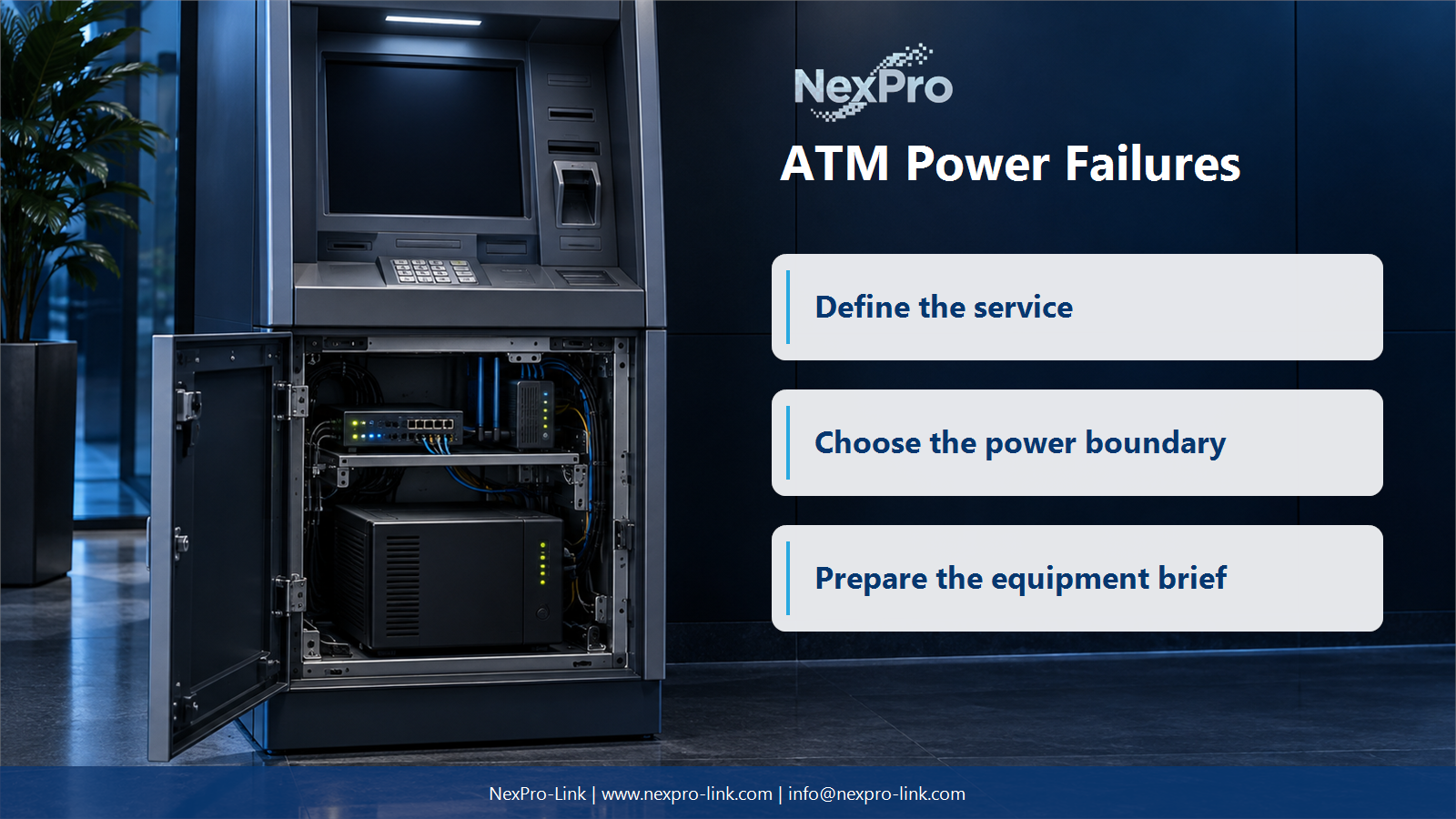
Trace the ATM controller, local network device, router, branch switch and any required security or monitoring interface. A transaction may stop because communication disappeared even while the terminal remains powered.
Separate power delivery from messages, host decisions and alarms. Both may be required for recovery, but they fail in different ways and need different tests.
- List every local device needed for the closing action.
- Mark external carrier and host availability as separate assumptions.
- Keep monitoring data free of customer transaction details.
Section 03
Choose a bounded closing action
A useful UPS objective has a start event, an action and an end state. For example, ignore a very short disturbance, complete the approved local close, send an alert and stop before the battery reserve is consumed.
The sequence should still be safe when the wider network is unavailable. Test local behavior, alarm delay and restart controls rather than treating a visible UPS indicator as proof of recovery readiness.
Section 04
Separate customer impact from recovery effort
Customer interruption, lost contribution, technician time and reconciliation effort are different cost categories. Present them with named assumptions instead of converting one incident into a universal industry statistic.
After supply returns, verify stable power, communications, device state, host reconciliation and alarm clearance before reopening the ATM. Record the sequence so recovery does not depend on one technician's memory.
Section 05
Buyer questions for ATM Power Failures: Recovery States, Customer Impact and UPS Planning
For Bank branch operations manager, these six checks separate ATM outage transaction state recovery decisions from assumptions that belong to the wider project.
| Buyer question | Practical answer | Project output |
|---|---|---|
| Does every ATM outage trap a card or lose a transaction? | No. The outcome depends on the terminal design, transaction stage and bank recovery process. Separate an interrupted customer session from cash handling, card handling and ledger reconciliation. This avoids turning a possible failure example into a universal description of ATM behavior. | State map: session / authorization / cash / receipt / reconciliation |
| What parts of the local ATM service can lose power independently? | The terminal, network device, enclosure auxiliaries and monitoring equipment may have different feeds. Map them before attributing an incident to the UPS. An energized ATM with no communication can behave differently from one that loses its own supply. | Power map: terminal / network / auxiliaries / monitoring |
| What should battery time allow the ATM to do? | Use the manufacturer's and operator's supported process to close or suspend service and preserve required state. Define a time budget and fallback. UPS equipment provides the opportunity for that action, while the software and business process determine what the terminal actually does. | Action sequence: event / terminal state / closure / confirmation |
| How can customer impact be discussed without invented statistics? | Use an illustrative scenario or the buyer's own service records for visits, support effort and reconciliation work. State the inputs and avoid presenting one incident as an industry average. For a project-specific decision, record incident, staff time, visit and reconciliation in the impact worksheet. This keeps the equipment inputs and intended service outcome aligned. | Impact worksheet: incident / staff time / visit / reconciliation |
| What should be confirmed before reopening service? | Follow the approved operational checks for terminal readiness, communications and unresolved transactions. Review power status and remaining reserve separately. For a project-specific decision, record power, terminal, communication and operator release in the recovery tracker. This keeps the equipment inputs and intended service outcome aligned. | Recovery tracker: power / terminal / communication / operator release |
| What equipment information supports a useful follow-up? | Provide the observed sequence, operating loads, UPS state and required recovery objective. NexPro-Link can discuss capacity, batteries and monitoring options on that basis. Distinguish a proposed change from a proven root cause and preserve the terminal manufacturer's recovery responsibilities. | Follow-up table: observation / design gap / equipment option / owner |
Section 06
Build a transparent recovery-cost example
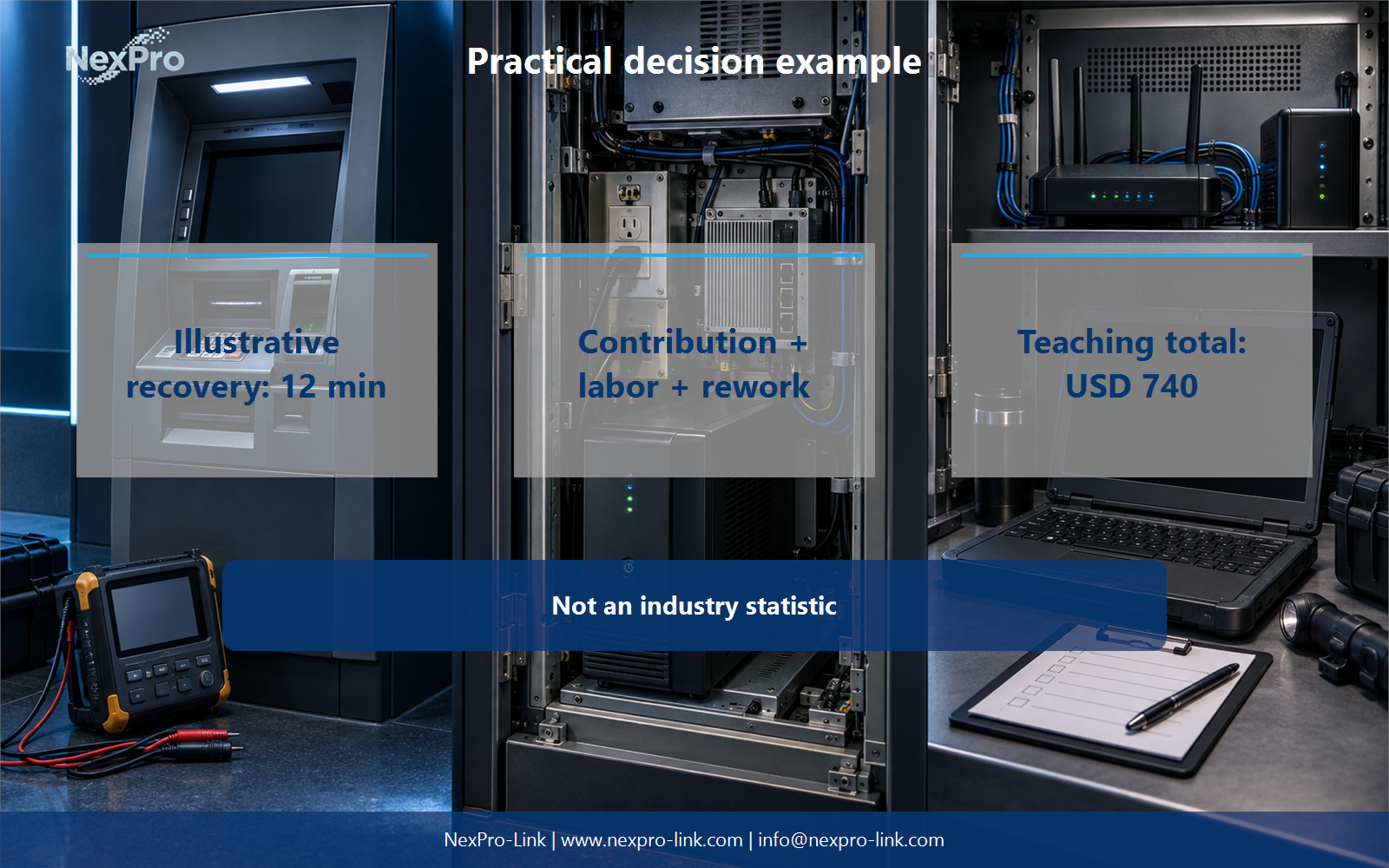
Assume a 12-minute interruption at an illustrative contribution rate of USD 50 per minute, two people spending 0.5 hour each at USD 40 per hour, and USD 100 of rework. The teaching total is USD 600 plus USD 40 plus USD 100, or USD 740.
This figure is not an industry statistic and does not justify a particular UPS by itself. It shows how to keep duration, labor and rework visible while the technical team defines the closing and recovery states.
Engineering references
These sources support the general planning principles. Always use the selected product's current datasheet and applicable project standards for final design.