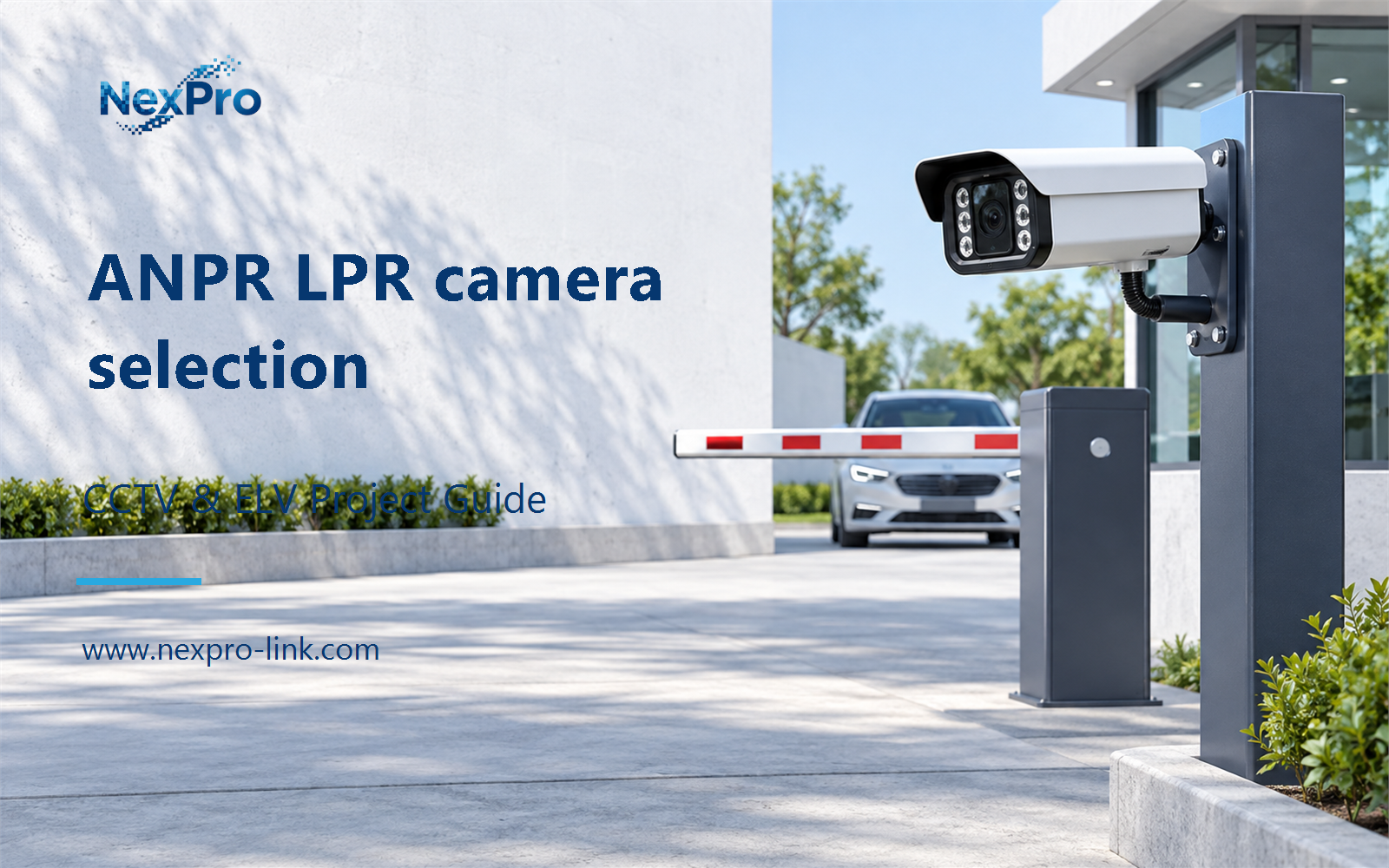
Plan ANPR LPR camera selection with practical guidance on separate capture, recognition and access decisions and connect the recognition workflow. NexPro-Link project guide.
Section 01
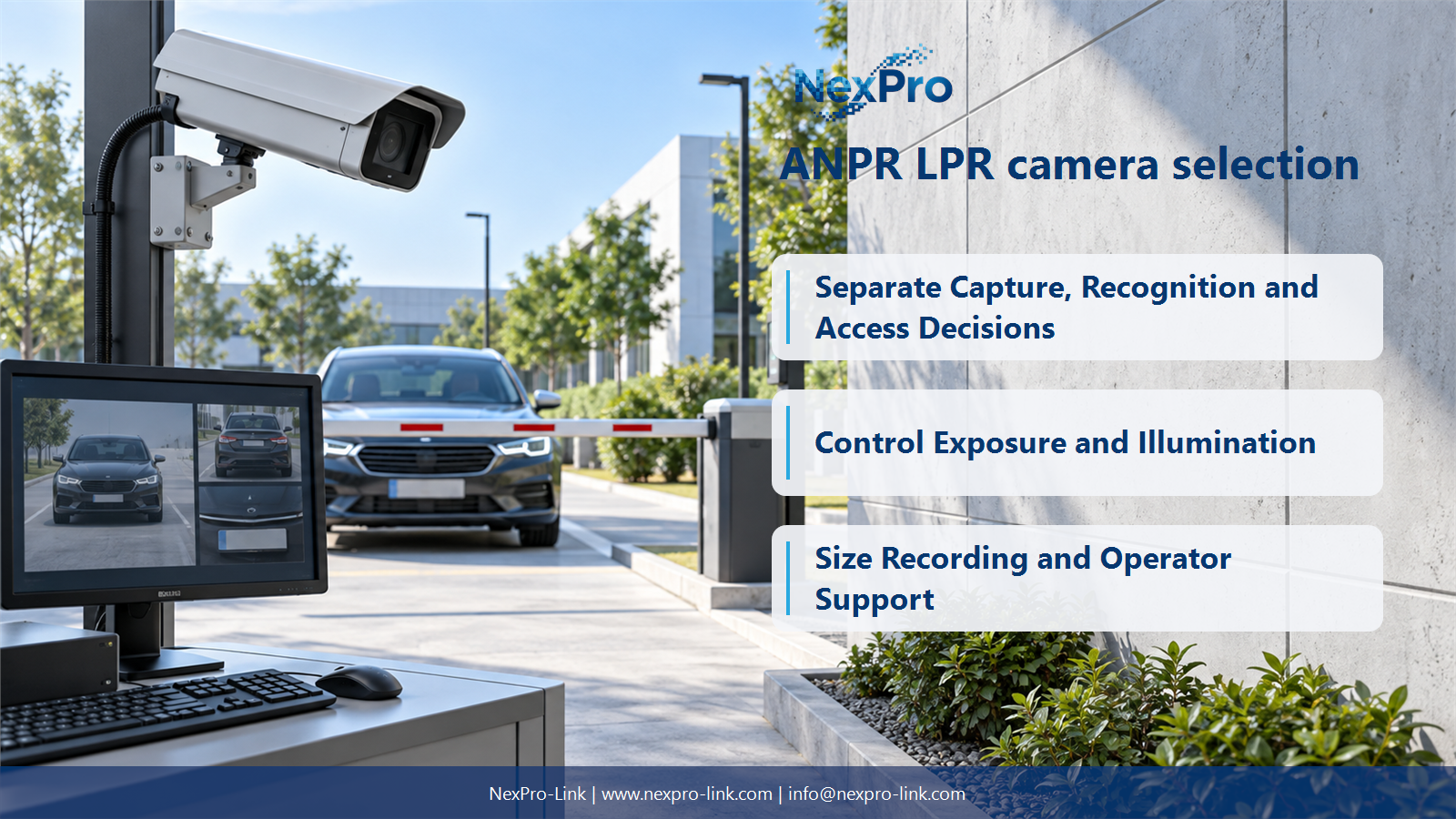
Separate Capture, Recognition and Access Decisions
No. Capturing a readable plate, converting it into text and deciding whether a vehicle may enter are separate functions. A camera can support one without the others. Specify where recognition runs and which system owns the authorization decision before selecting an NVR, camera or barrier interface.
Turn the answer into a working record using Stage, Required output, Processing device, Owner.
| Decision area | Buyer question | Required output |
|---|---|---|
| Separate Capture, Recognition and Access Decisions | Does a clear image of a plate mean ANPR is available? | No. |
| Define Plate and Traffic Conditions | What site information drives LPR camera selection? | The lane arrangement, target plate region, vehicle speed, travel direction and mounting geometry are important inputs. |
| Control Exposure and Illumination | Why can plates be unreadable at night despite a bright image? | Headlights, reflective plates and motion can exceed the settings that produce a pleasant general scene. |
Section 02
Define Plate and Traffic Conditions
The lane arrangement, target plate region, vehicle speed, travel direction and mounting geometry are important inputs. Plate appearance and operating conditions affect the recognition task. Do not assume a general parking overview lens will deliver the required plate image across every lane and distance.
Use Lane, Plate format, Direction, Speed range, Capture zone to compare options on the same basis. Keep product capability, project assumption and operating responsibility in separate columns.
Section 03
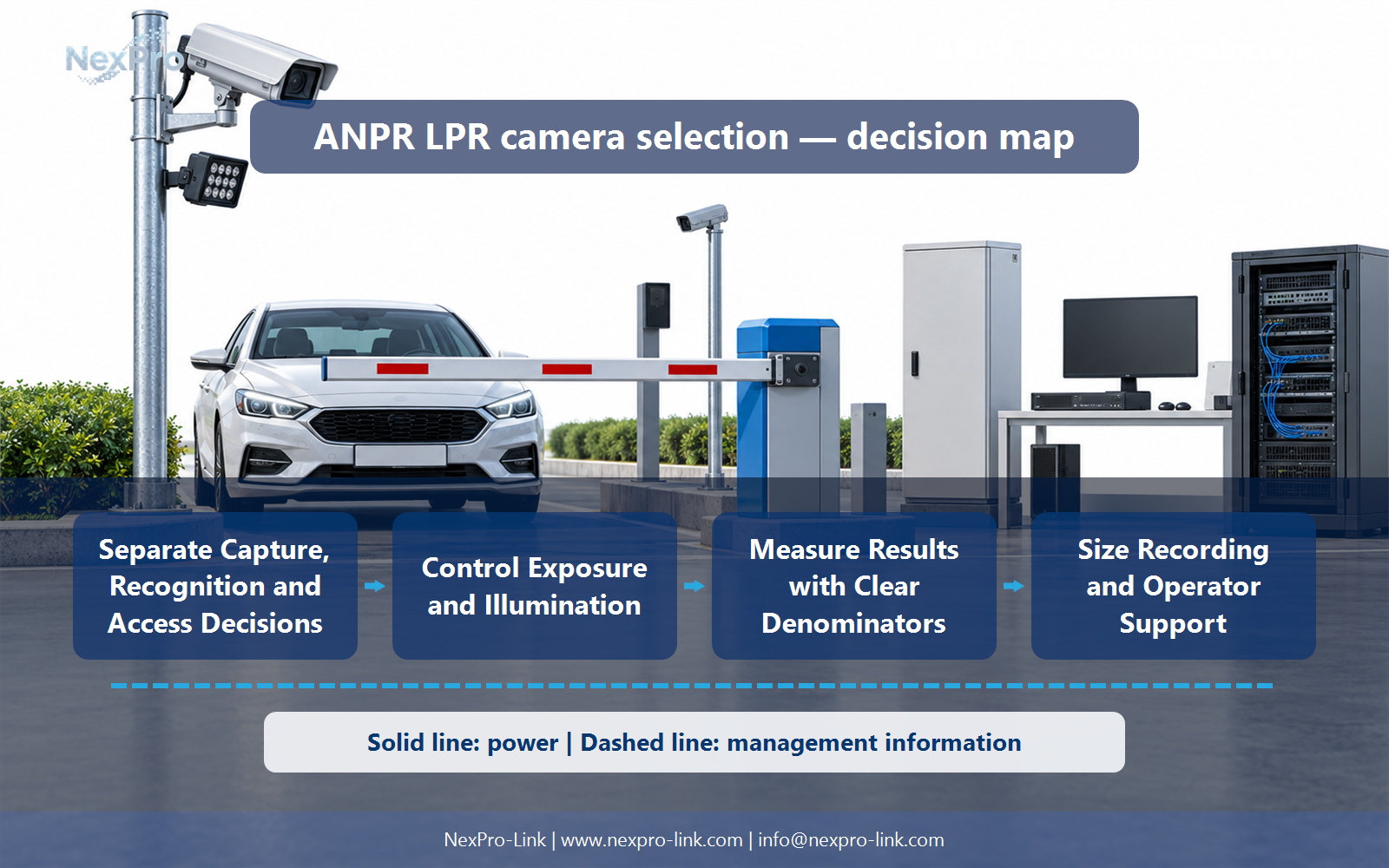
Control Exposure and Illumination
Headlights, reflective plates and motion can exceed the settings that produce a pleasant general scene. The capture view may need a different exposure and illumination strategy from the overview camera. Evaluate moving vehicles in the actual capture zone and judge plate readability, not the overall brightness of the frame.
The project output should make Condition, Motion, Glare source, Capture setting, Result traceable from input to acceptance.
- Confirm the answer to: Why can plates be unreadable at night despite a bright image?
- Record the project fields: Condition / Motion / Glare source / Capture setting / Result.
- Keep product capability, project assumptions and site responsibility in separate records.
Section 04
Connect the Recognition Workflow
Define the event interface, vehicle authorization source and command path to the barrier controller. Include manual override and communication-failure behavior. Recognition should not bypass the barrier system's safety functions, and an available relay output alone does not prove compatibility with the entire access workflow.
Record Event, Authorization source, Command, Fallback, Safety boundary before selecting a product family. That makes later substitutions possible without silently changing the operational requirement.
Section 05
Measure Results with Clear Denominators
Ask what vehicles were included, how unreadable captures were counted and whether the metric means readable images, correct plate text or correct access decisions. A percentage without test conditions and denominators is not comparable. Use representative traffic periods and record the reasons for missed or incorrect results.
Review Attempt, Capture readable, Text correct, Access correct, Reason with the party that will operate or maintain the system.
Section 06
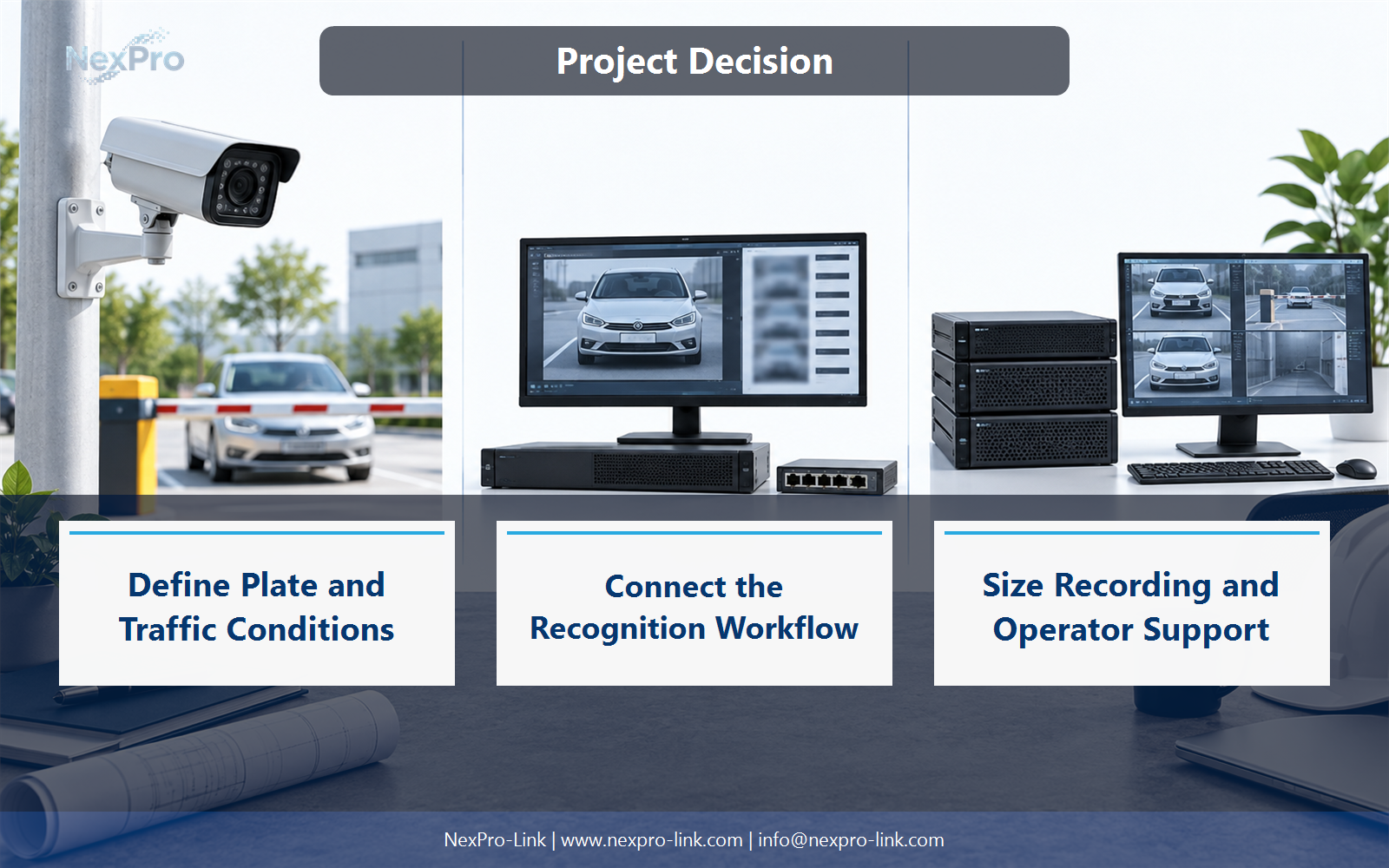
Size Recording and Operator Support
Include the required recording and event storage, network and power connections, barrier interface, operator display and fallback controls. Preserve overview footage where it is needed to understand an incident. NexPro-Link can discuss the full package using the lane and workflow requirements rather than only a requested camera resolution.
Use Subsystem, Required role, Capacity input, Interface as the handoff between design and procurement.
Engineering references
These sources support the general planning principles. Always use the selected product's current datasheet and applicable project standards for final design.