Discuss support power against specified aviation equipment requirements without calling a general-purpose UPS aviation-grade.
Section 01
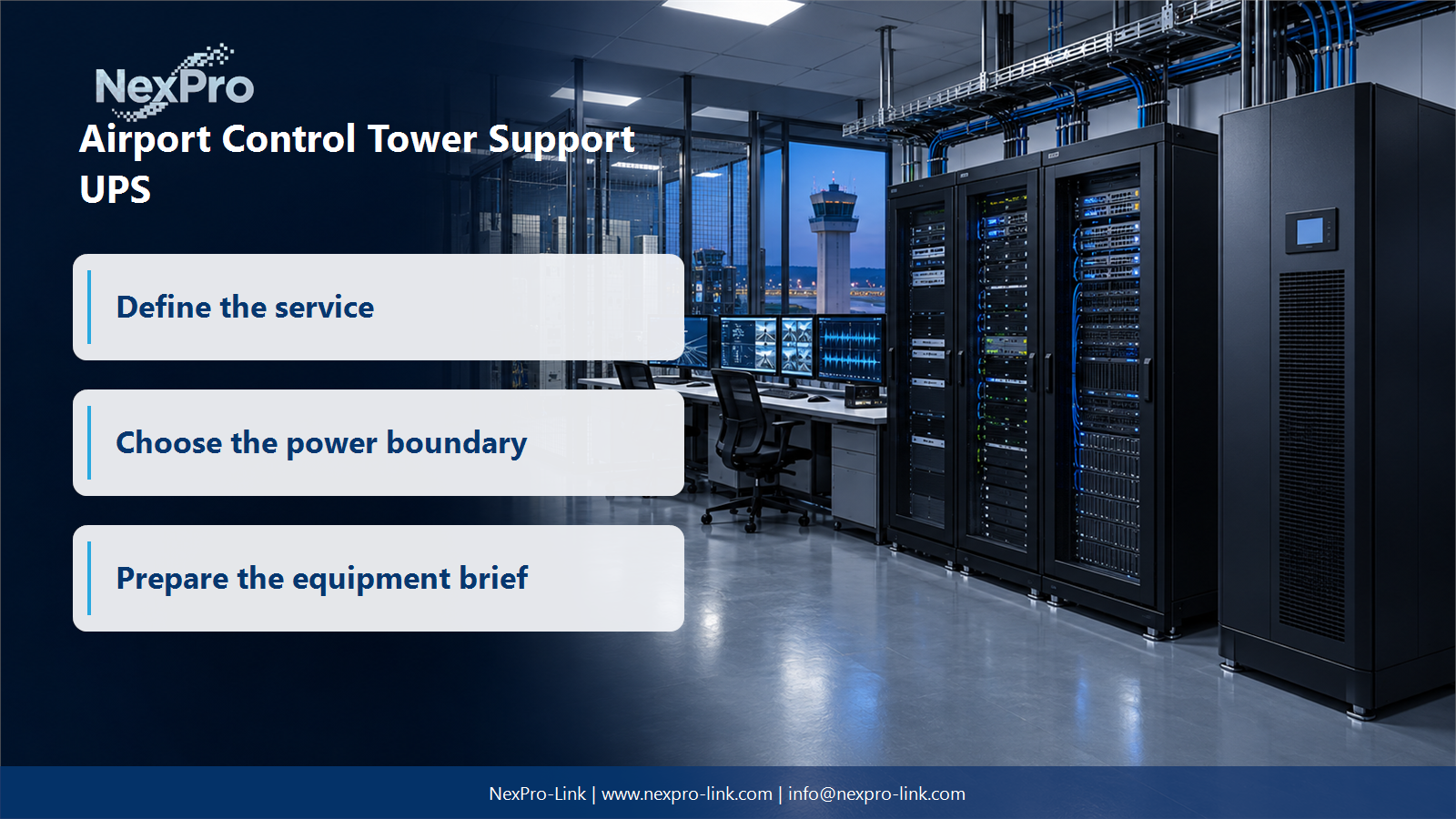
Separate Approved Aviation Systems
Discuss support power against specified aviation equipment requirements without calling a general-purpose UPS aviation-grade.
No. Identify the exact support equipment and applicable project requirements. Specialized aviation systems may have dedicated qualification and integration conditions. For a project-specific decision, record support IT, specialist system, requirement and owner in the scope table. This keeps the equipment inputs and intended service outcome aligned.
Capture the answer in the scope table: support it / specialist system / requirement / owner before equipment is compared. This gives the project team a concrete service target and exposes missing dependencies early.
| Decision area | Project question | Required output |
|---|---|---|
| Separate Approved Aviation Systems | Does a commercial UPS family imply aviation suitability? | Scope table: support IT / specialist system / requirement / owner |
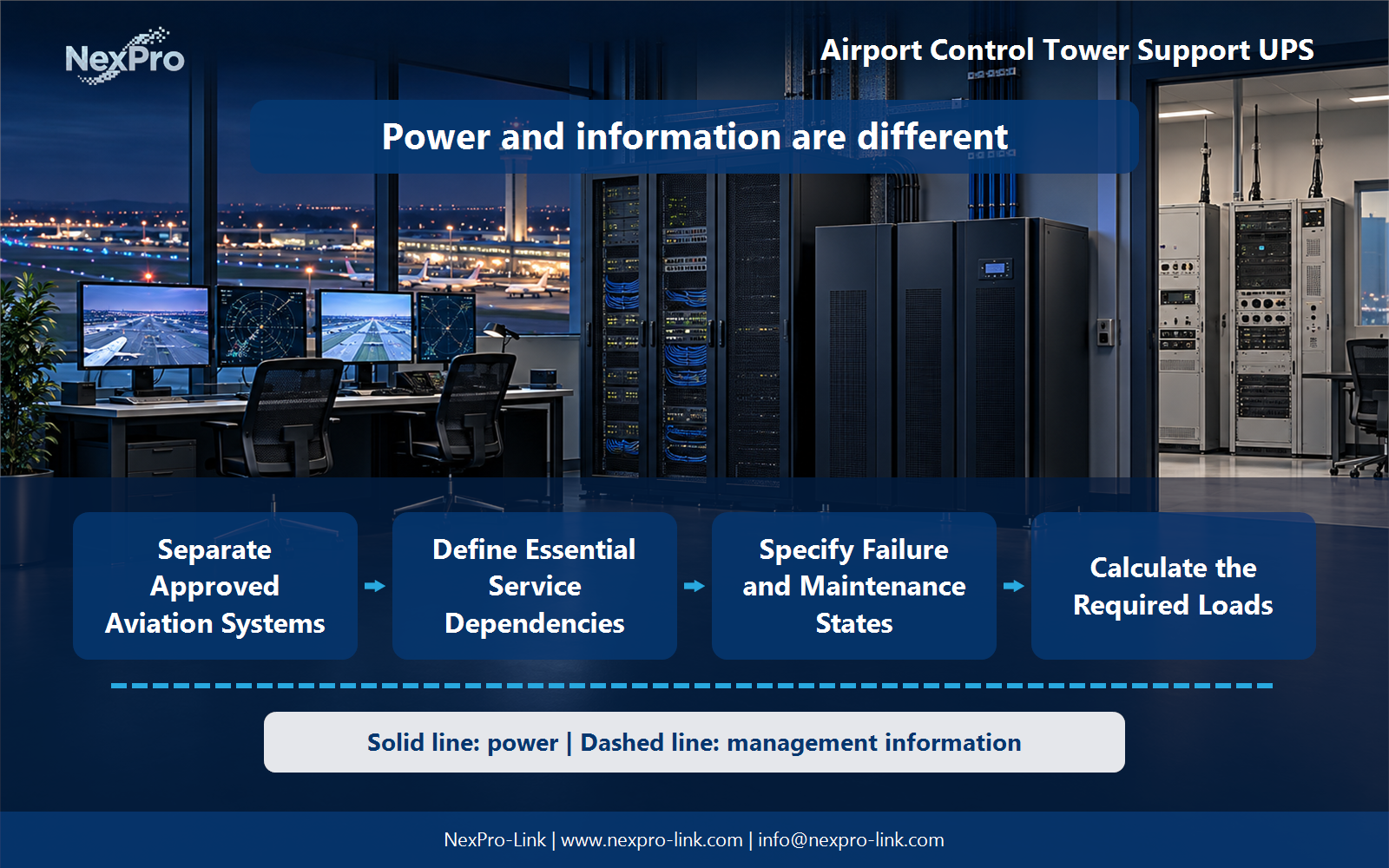
| Define Essential Service Dependencies | What belongs in the continuity map? | Service chain: support device / network / source / external boundary |
| Specify Failure and Maintenance States | Why distinguish a fault from planned maintenance? | State table: normal / fault / maintenance / retained service |
Section 02
Define Essential Service Dependencies
Map the designated communications support, data services, networks and operator interfaces. Trace each required supply path. Keep external services and specialist equipment as explicit interfaces rather than assume the local UPS guarantees their availability.
Use the service chain: support device / network / source / external boundary to keep real interfaces and operating states visible. Measured demand, equipment limits and future allowances should remain separate entries.
Section 03
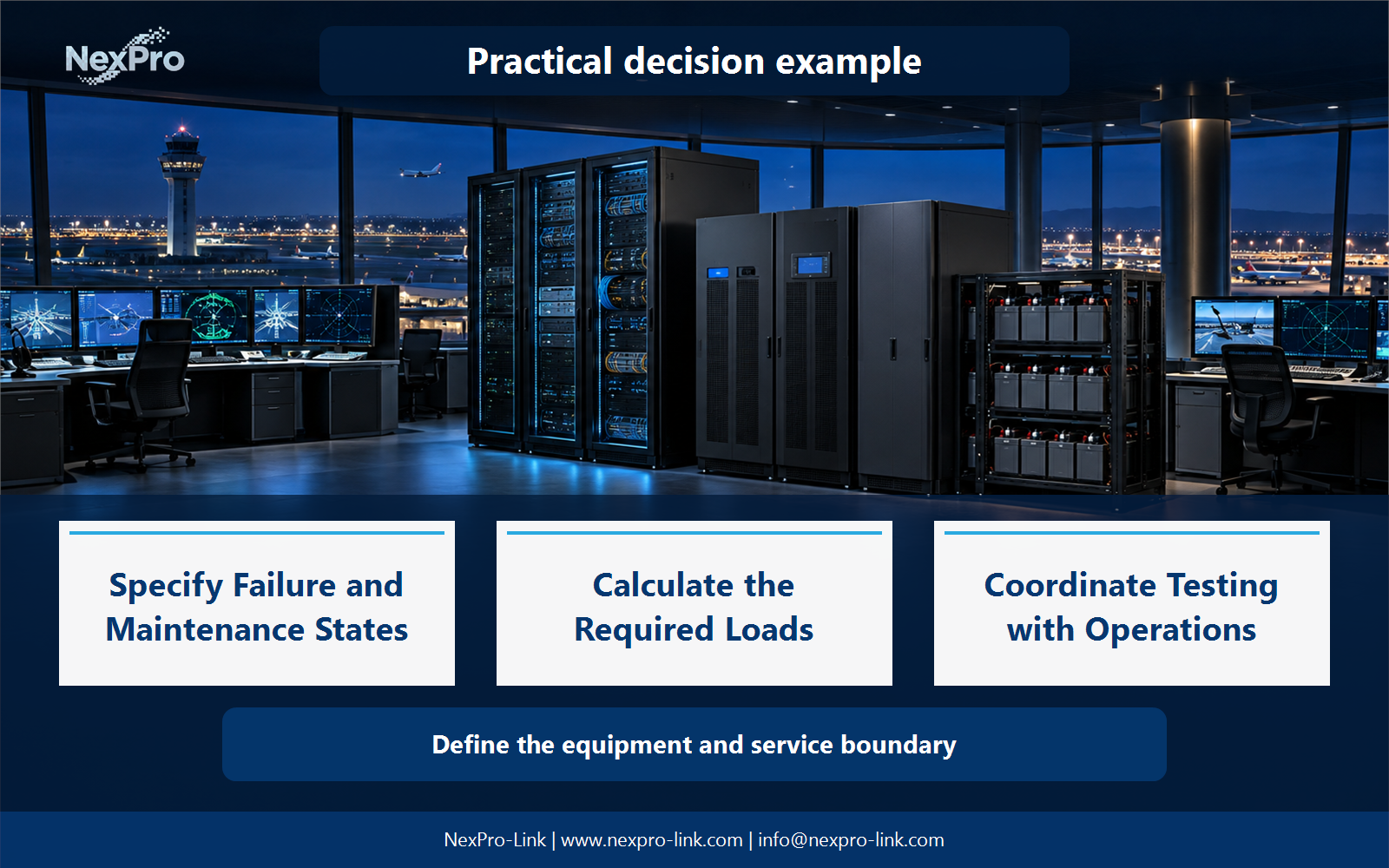
Specify Failure and Maintenance States
They can place different demands on surviving equipment and operational arrangements. Define each required state and retained service separately. Redundancy labels alone do not demonstrate that work can occur safely while the relevant service remains available.
Review the state table: normal / fault / maintenance / retained service with the owners of the connected systems. Power continuity only supports the functions that remain connected and available during the event.
- Confirm the answer to: Why distinguish a fault from planned maintenance?
- Draw electrical power as a solid path and management information as a separate dashed path.
- Keep external services and specialist approvals outside the UPS equipment claim.
Section 04
Calculate the Required Loads
Use the specified equipment configuration, input requirements and operating states. Include future additions only when the growth assumption is explicit. Avoid choosing a rating from the facility name or an unsupported universal interruption-tolerance statement.
Document this choice in the capacity sheet: device / w-va / state / growth / interfaces, including the condition that triggers it and the person responsible for the response.
Section 05
Coordinate Testing with Operations
The responsible airport and system teams must define authorization, scope and operational protections. For a project-specific decision, record authority, scope, observation and restoration condition in the test plan. This keeps the equipment inputs and intended service outcome aligned.
Test the sequence represented by the test plan: authority / scope / observation / restoration condition during an approved maintenance window. Record the observations needed to confirm recovery.
Section 06
Prepare an Aviation-Support RFQ
Provide the approved support scope, electrical requirements, source architecture and applicable qualification requirements. NexPro-Link can discuss relevant equipment options. For a project-specific decision, record scope, configuration, operating states and applicable requirements in the rfq. This keeps the equipment inputs and intended service outcome aligned.
Send the completed rfq: scope / configuration / operating states / applicable requirements with the project request. It is more useful than a capacity number without interfaces, operating states or a defined service boundary.
Engineering references
These sources support the general planning principles. Always use the selected product's current datasheet and applicable project standards for final design.