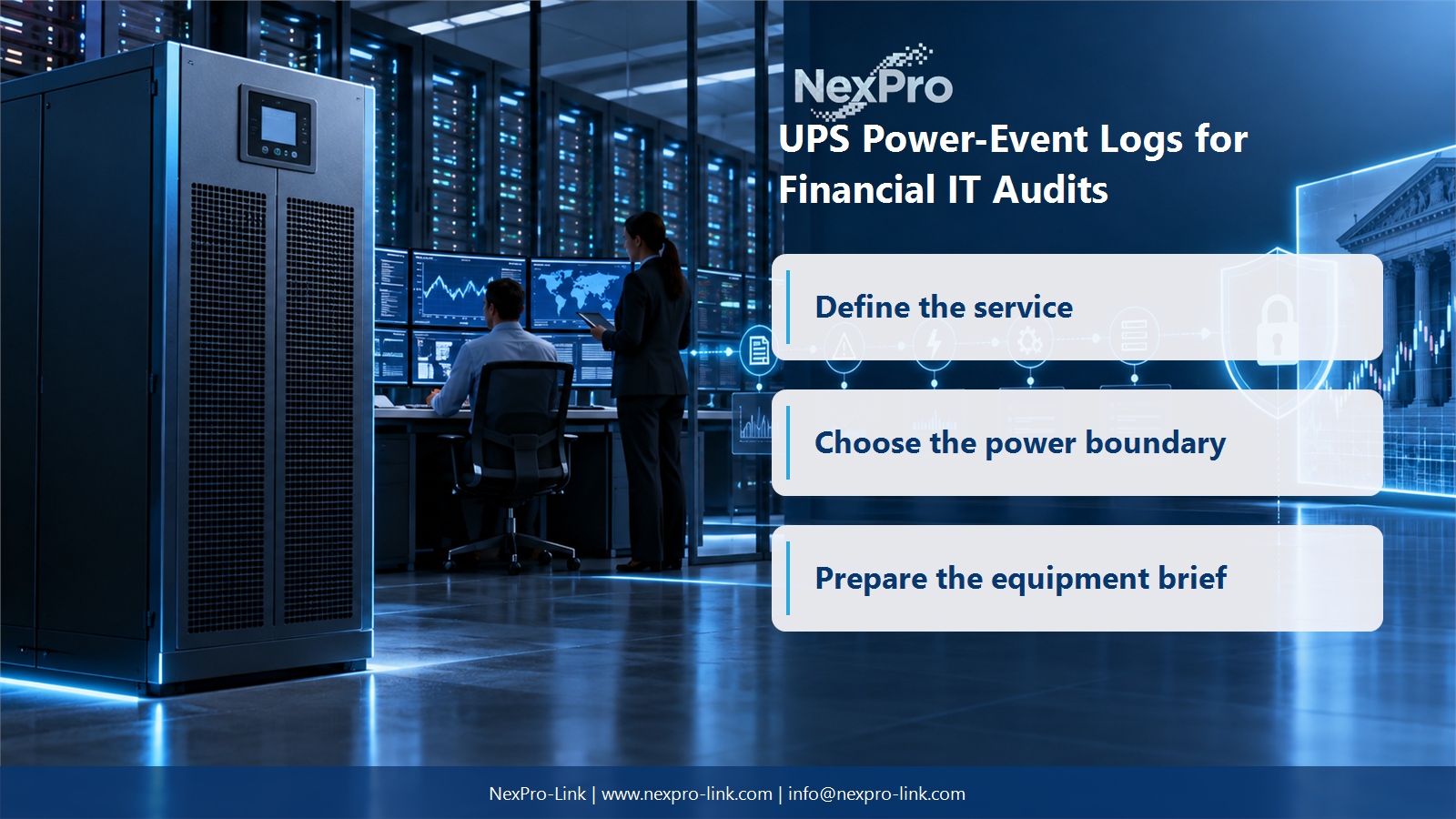
Treat UPS logs as part of an event timeline without treating the existence of a log as compliance or fault assignment. Plan the project from the required event fields, retention policy and monitoring architecture.
Section 01
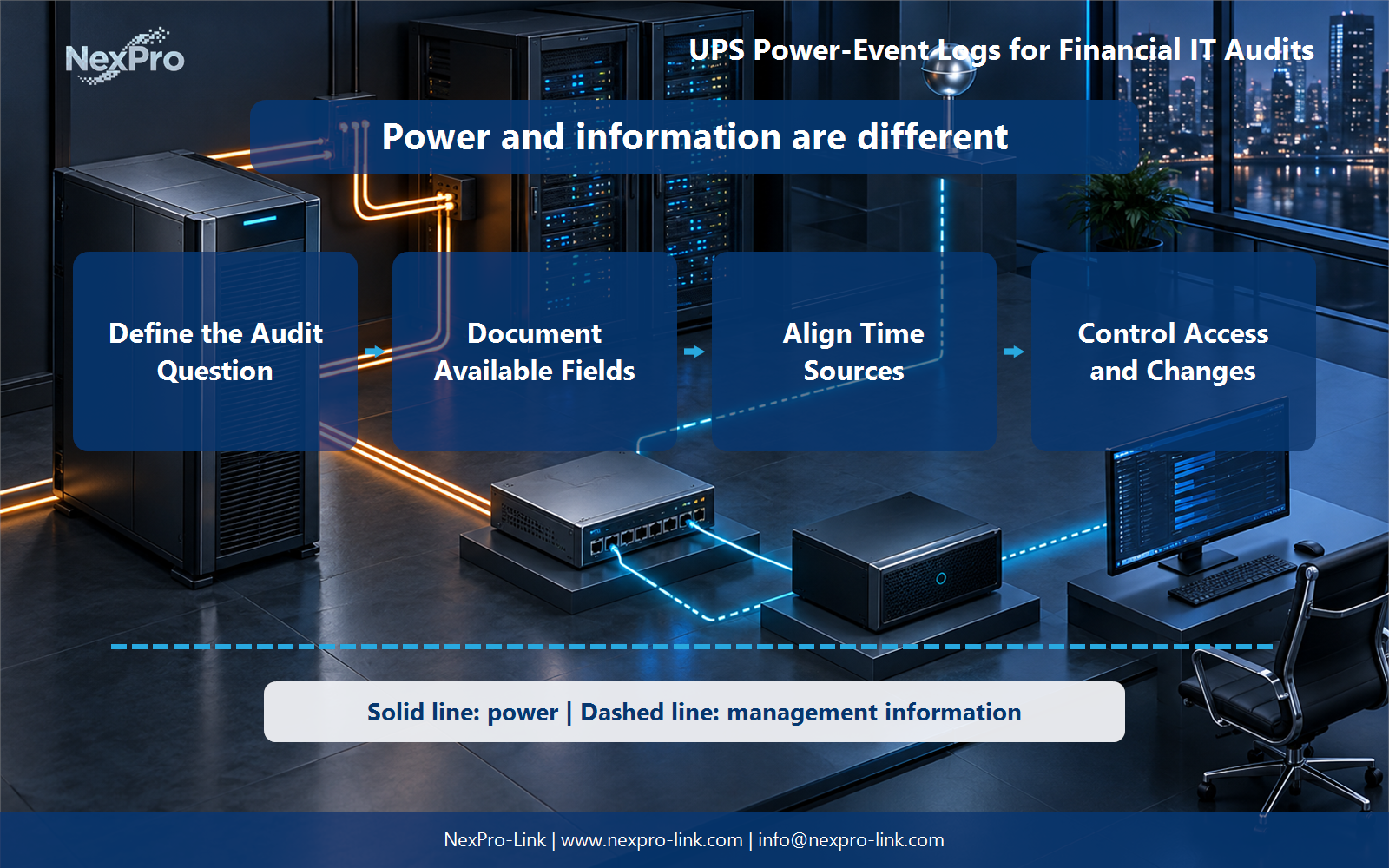
Define the Audit Question
Treat UPS logs as part of an event timeline without treating the existence of a log as compliance or fault assignment.
They can show recorded power states, alarms and operator actions available in the specific system. Start with the question being investigated, such as service interruption or battery readiness. A log feature alone does not establish compliance or prove why an application failed.
The working question is simple: What can UPS logs contribute to an IT review? Record the answer as a service requirement before comparing UPS ratings or battery options.
| Decision area | Project question | Required output |
|---|---|---|
| Define the Audit Question | What can UPS logs contribute to an IT review? | Approved service objective |
| Document Available Fields | Which log fields should the buyer request? | Defined load and dependency boundary |
| Align Time Sources | Why is clock alignment important for event reconstruction? | Reviewed power-path decision |
Section 02
Document Available Fields
Request the actual available timestamp, event type, device identity, operating mode and action fields. Identify export format and access method. Avoid inventing retention depth or audit functionality for an unspecified card; compare the selected interface with the institution's requirements.
Keep the load list, operating state and supporting dependencies in the same schedule. This makes omissions visible before runtime or capacity is discussed.
- Confirm the answer to: Which log fields should the buyer request?
- Separate measured demand, nameplate limits and committed growth.
- Identify the owner of each external service or approval.
Section 03
Align Time Sources and Control Access and Changes
Events from UPS, servers and networks must be compared on a known time basis. Record clock source, time zone and uncertainty when these differ. For a project-specific decision, record system, zone, synchronization and uncertainty in the time basis. This keeps the equipment inputs and intended service outcome aligned.
Assign administration separately from review where the platform supports it. Protect exported records through the organization's storage and access process. UPS monitoring is only one source; preserving integrity and change history across the review workflow is a wider governance responsibility.
Draw power delivery as a solid path and management information as a separate dashed path. That distinction prevents an alarm or software command from being mistaken for an electrical protection function.
Section 04
Keep Jurisdiction-Specific Rules Distinct
No. Required records depend on the institution, system scope and applicable jurisdiction. Establish which events, timestamps, retention periods and access arrangements support the actual duty. UPS logs can contribute useful operational information, but they do not constitute a complete regulatory compliance record for every financial service.
Assign the action, acknowledgement, timeout and escalation owner before commissioning. The useful battery interval is the time needed for this approved sequence plus reserve, not an arbitrary marketing duration.
Section 05
Prepare a Management-Interface Request
Send the required events, export format, retention workflow and integration platform alongside the UPS load scope. NexPro-Link can discuss available management options for the configuration. Do not promise that every series supports identical logging, remote control or integration behavior.
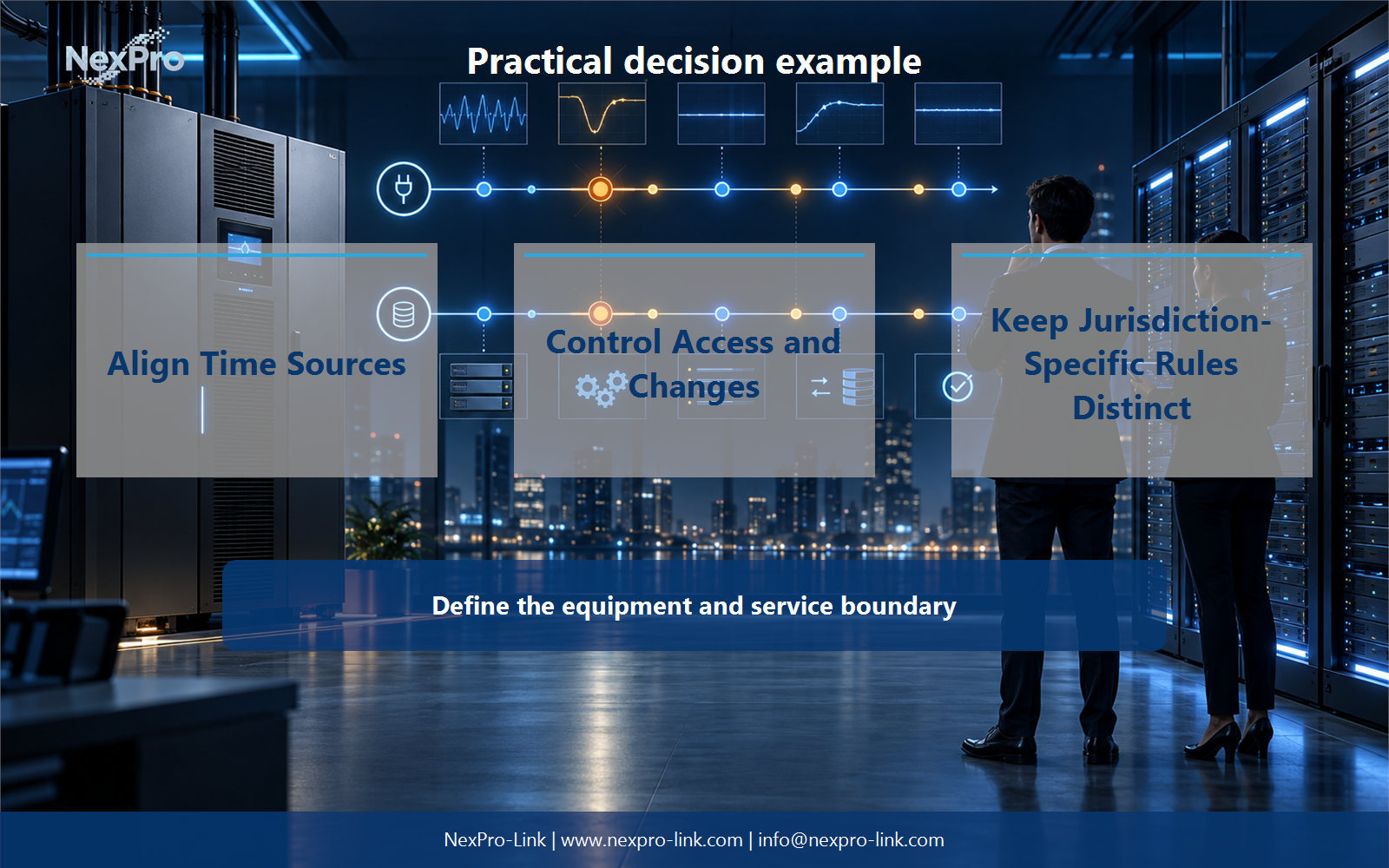
For the article's practical example, the stated teaching inputs are: Align Time Sources. Control Access and Changes. Keep Jurisdiction-Specific Rules Distinct. Define the equipment and service boundary. Treat these figures as planning assumptions, then replace them with measured or manufacturer-supported project data.
Engineering references
These sources support the general planning principles. Always use the selected product's current datasheet and applicable project standards for final design.