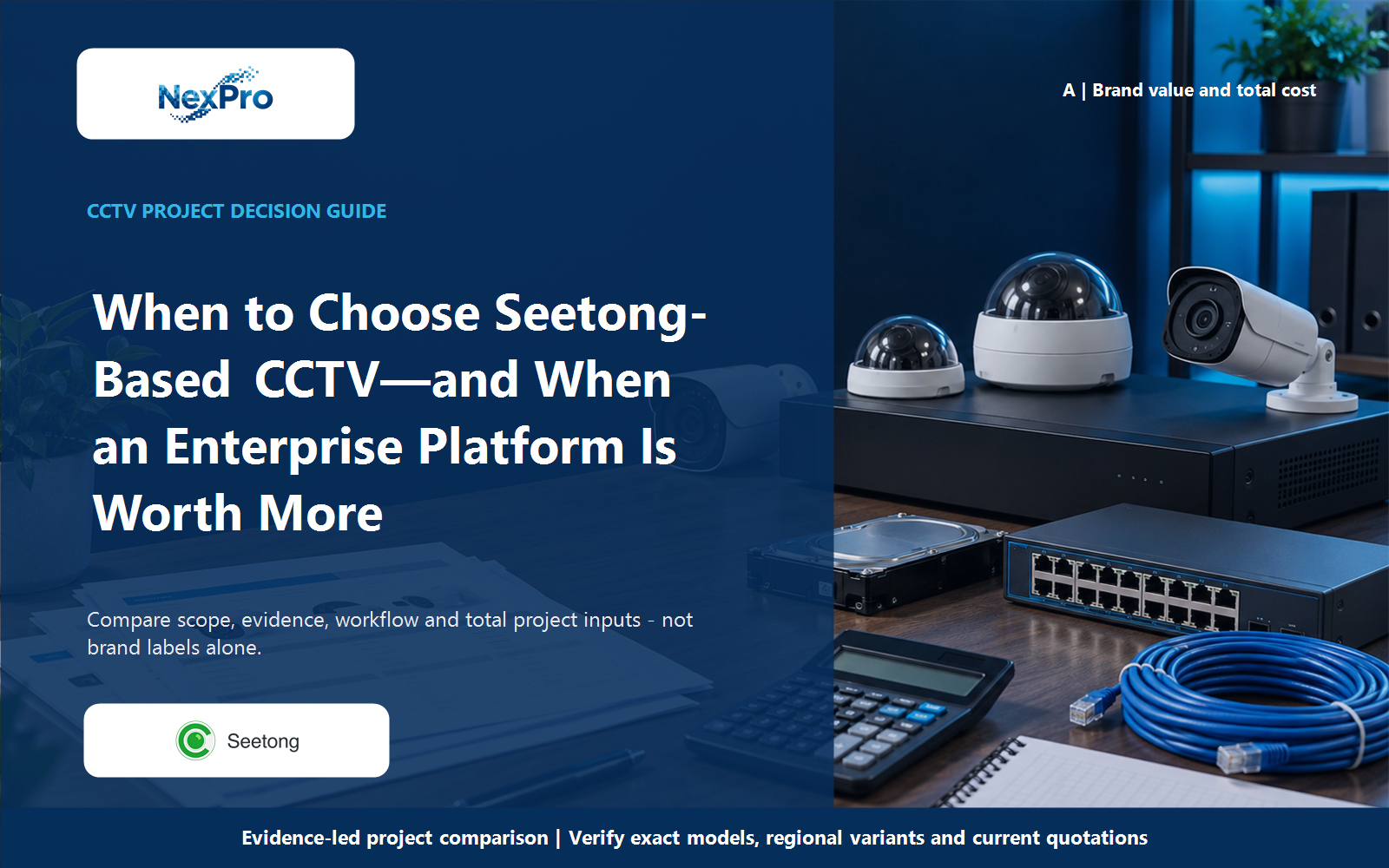
Cost-effective CCTV is not the same as the smallest management platform. A Seetong-compatible system deserves consideration when its verified workflows match the project. Where centralized permissions, integrations, audit or resilience are mandatory, evaluate a suitable enterprise platform and the full transition cost before removing it from the design.
Section 01
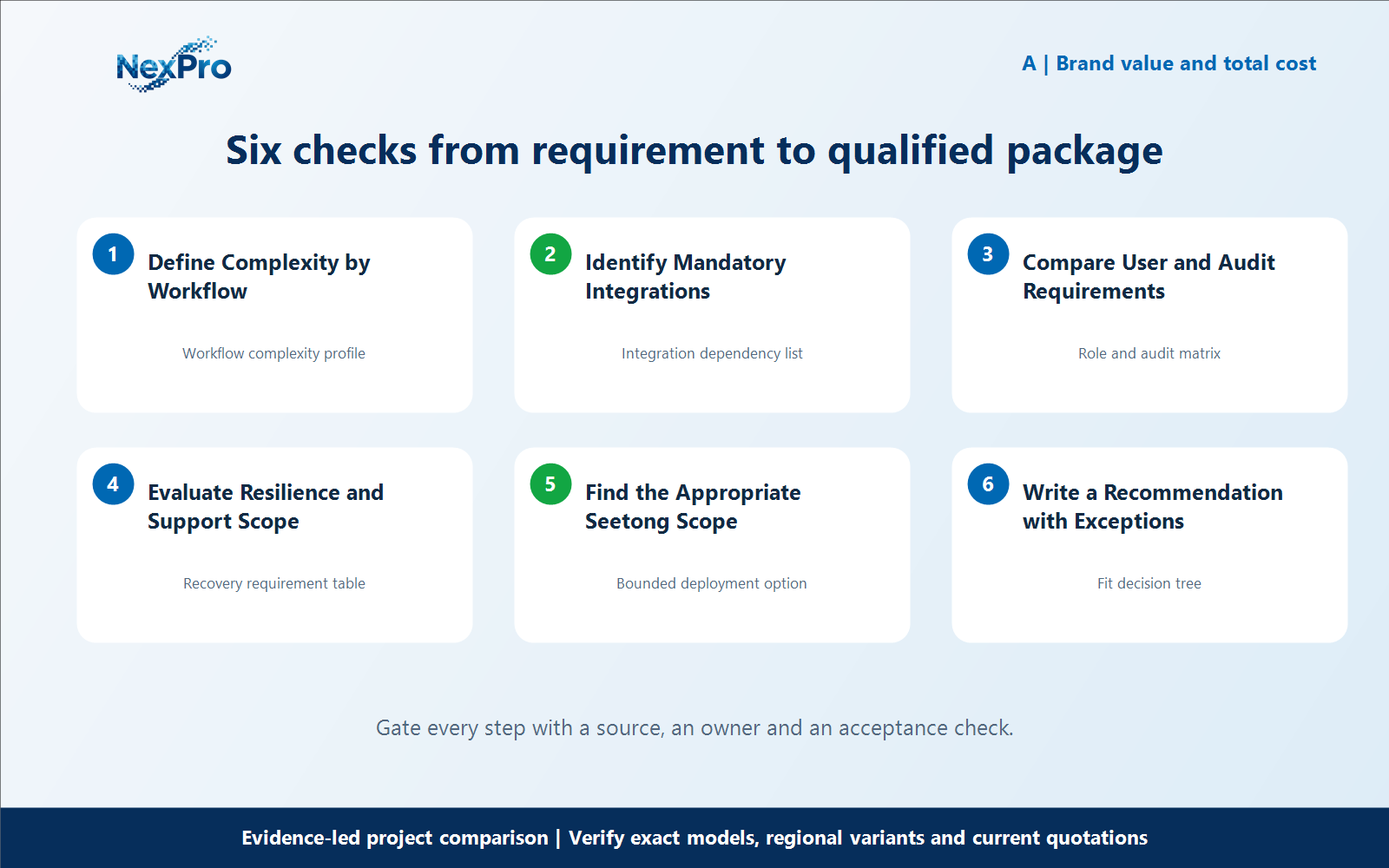
Define Complexity by Workflow
Cost-effective CCTV is not the same as the smallest management platform. A Seetong-compatible system deserves consideration when its verified workflows match the project. Where centralized permissions, integrations, audit or resilience are mandatory, evaluate a suitable enterprise platform and the full transition cost before removing it from the design. Does camera count determine the need for enterprise software? No single channel threshold answers that question. A modest system may require complex permissions or integration, while a larger standalone recorder may serve a simple task. Describe users, sites, event handling and recovery requirements before using scale as a selection shortcut.
For define complexity by workflow, build a working record around Workflow complexity profile. For when to choose Seetong CCTV, record the current project condition, candidate response, evidence source and unresolved boundary before comparing offers.
Review Workflow complexity profile separately from the downstream workflow. This prevents one attractive specification from deciding the complete when to choose Seetong CCTV question without considering recording, installation, operation and support consequences.
Carry the Workflow complexity profile record into the RFQ, BOQ review or pilot checklist. For when to choose Seetong CCTV, keep product capability, project assumptions and supplier responsibility beside the define complexity by workflow decision; site measurements, network policy, installation safety and acceptance remain project inputs unless the signed scope says otherwise.
- Record workflow complexity profile with a named source, owner or acceptance check; do not leave it as an unqualified brochure phrase.
Section 02
Identify Mandatory Integrations
Which integrations can justify keeping an existing platform? Consider the interfaces that the customer actually operates, such as access events, incident workflows or an established control room. Record the required data and operator actions. The cost of rebuilding a functioning integration belongs in the comparison even when alternative camera hardware is less expensive.
For identify mandatory integrations, build a working record around Integration dependency list. For when to choose Seetong CCTV, record the current project condition, candidate response, evidence source and unresolved boundary before comparing offers.
Review Integration dependency list separately from the downstream workflow. This prevents one attractive specification from deciding the complete when to choose Seetong CCTV question without considering recording, installation, operation and support consequences.
Carry the Integration dependency list record into the RFQ, BOQ review or pilot checklist. For when to choose Seetong CCTV, keep product capability, project assumptions and supplier responsibility beside the identify mandatory integrations decision; site measurements, network policy, installation safety and acceptance remain project inputs unless the signed scope says otherwise.
- Record integration dependency list with a named source, owner or acceptance check; do not leave it as an unqualified brochure phrase.
Section 03
Compare User and Audit Requirements
What should a multi-organization buyer check? Define who may view, export, configure and administer each group of devices. Include how changes and access are recorded if that is a project requirement. Verify the proposed software edition and deployment model rather than assuming all products from a brand provide the same controls.
For compare user and audit requirements, build a working record around Role and audit matrix. For when to choose Seetong CCTV, record the current project condition, candidate response, evidence source and unresolved boundary before comparing offers.
Review Role and audit matrix separately from the downstream workflow. This prevents one attractive specification from deciding the complete when to choose Seetong CCTV question without considering recording, installation, operation and support consequences.
Carry the Role and audit matrix record into the RFQ, BOQ review or pilot checklist. For when to choose Seetong CCTV, keep product capability, project assumptions and supplier responsibility beside the compare user and audit requirements decision; site measurements, network policy, installation safety and acceptance remain project inputs unless the signed scope says otherwise.
- Record role and audit matrix with a named source, owner or acceptance check; do not leave it as an unqualified brochure phrase.
| Comparison factor | Object or condition | Evidence-led action | Do not infer |
|---|---|---|---|
| Simple recording workflow | Consider a scoped NVR/client package | Verify actual client tasks | Compare complete cost |
| Existing enterprise integration | Retain or evaluate migration | Document dependency and rework | Do not ignore sunk training |
| Multiple organizations | Compare roles and audit | Check edition and deployment | No channel-only threshold |
| Required failover | Compare tested recovery design | Price supporting components | No automatic redundancy claim |
Section 04
Evaluate Resilience and Support Scope
When does resilience change the economic comparison? When losing a server, recorder or link would interrupt a required service beyond its tolerated limit. Describe the failure and the expected recovery behavior, then price the supported architecture. Hardware duplication alone does not establish a working failover design or guarantee uninterrupted operation.
For evaluate resilience and support scope, build a working record around Recovery requirement table. For when to choose Seetong CCTV, record the current project condition, candidate response, evidence source and unresolved boundary before comparing offers.
Review Recovery requirement table separately from the downstream workflow. This prevents one attractive specification from deciding the complete when to choose Seetong CCTV question without considering recording, installation, operation and support consequences.
Carry the Recovery requirement table record into the RFQ, BOQ review or pilot checklist. For when to choose Seetong CCTV, keep product capability, project assumptions and supplier responsibility beside the evaluate resilience and support scope decision; site measurements, network policy, installation safety and acceptance remain project inputs unless the signed scope says otherwise.
- Record recovery requirement table with a named source, owner or acceptance check; do not leave it as an unqualified brochure phrase.
Section 05
Find the Appropriate Seetong Scope
Can Seetong-compatible equipment still have a role in a complex estate? Potentially, within a clearly bounded site or workflow that meets the organization’s requirements. Verify compatibility and ownership before introducing a second system. An economical subsystem can be useful, but splitting platforms can also add training and maintenance work that must be acknowledged.
For find the appropriate seetong scope, build a working record around Bounded deployment option. For when to choose Seetong CCTV, record the current project condition, candidate response, evidence source and unresolved boundary before comparing offers.
Review Bounded deployment option separately from the downstream workflow. This prevents one attractive specification from deciding the complete when to choose Seetong CCTV question without considering recording, installation, operation and support consequences.
Carry the Bounded deployment option record into the RFQ, BOQ review or pilot checklist. For when to choose Seetong CCTV, keep product capability, project assumptions and supplier responsibility beside the find the appropriate seetong scope decision; site measurements, network policy, installation safety and acceptance remain project inputs unless the signed scope says otherwise.
- Record bounded deployment option with a named source, owner or acceptance check; do not leave it as an unqualified brochure phrase.
Section 06
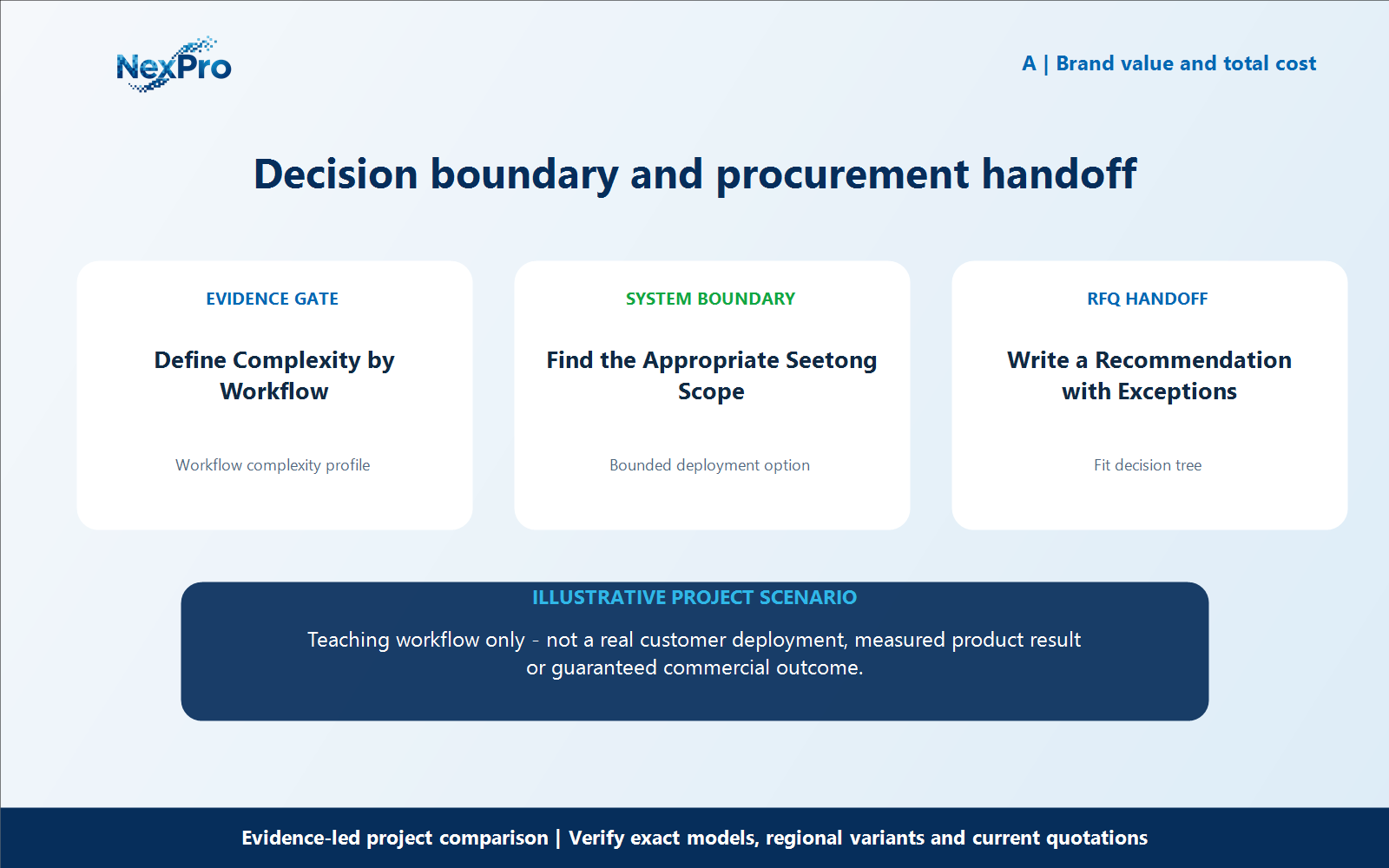
Write a Recommendation with Exceptions
How should a credible comparison conclude? Explain the required functions, the qualified alternatives and the trade-offs in cost and operation. Recommend a Seetong-compatible package for the conditions it satisfies, while retaining the enterprise option when mandatory capabilities remain unresolved. A documented limit makes the favorable value case more credible.
For write a recommendation with exceptions, build a working record around Fit decision tree. For when to choose Seetong CCTV, record the current project condition, candidate response, evidence source and unresolved boundary before comparing offers.
Review Fit decision tree separately from the downstream workflow. This prevents one attractive specification from deciding the complete when to choose Seetong CCTV question without considering recording, installation, operation and support consequences.
Carry the Fit decision tree record into the RFQ, BOQ review or pilot checklist. For when to choose Seetong CCTV, keep product capability, project assumptions and supplier responsibility beside the write a recommendation with exceptions decision; site measurements, network policy, installation safety and acceptance remain project inputs unless the signed scope says otherwise.
What should the buyer include in an RFQ for when to choose Seetong CCTV? Provide the camera schedule, required workflows, candidate equipment lists, mandatory brand or integration constraints, and the evidence still needed for write a recommendation with exceptions. Keep access credentials out of the inquiry. For when to choose Seetong CCTV, this defines the next comparison; it does not promise identical performance, fixed savings or automatic approval.
- Record fit decision tree with a named source, owner or acceptance check; do not leave it as an unqualified brochure phrase.
Engineering references
These sources support the general planning principles. Always use the selected product's current datasheet and applicable project standards for final design.