Buying a camera advertised as working with Seetong does not answer who built it, which firmware it uses or who will support it. Buyers need a traceable equipment identity alongside the client application. This distinction makes it possible to consider a competitively quoted Seetong-compatible system without treating every device in the ecosystem as interchangeable.
Section 01
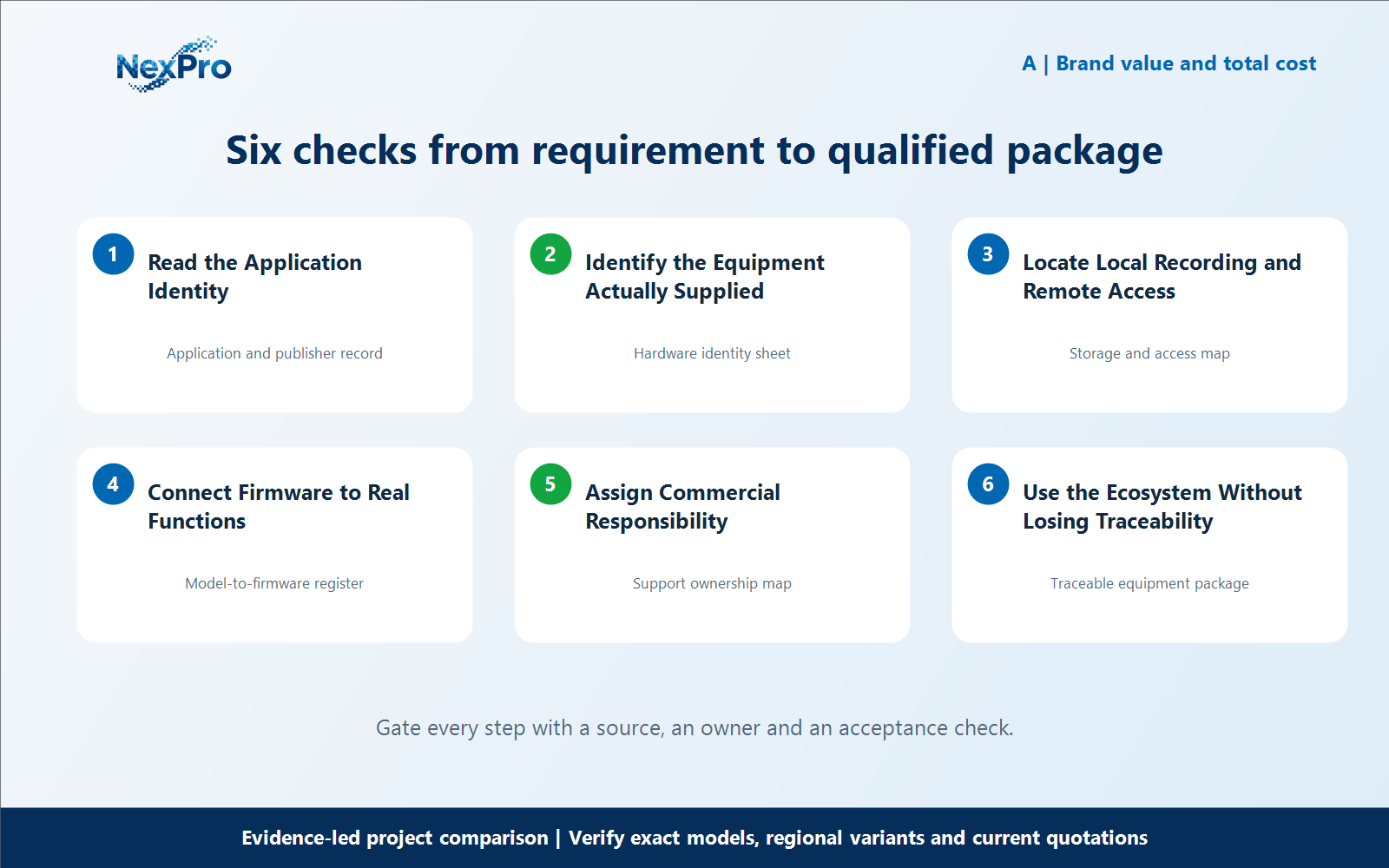
Read the Application Identity
Buying a camera advertised as working with Seetong does not answer who built it, which firmware it uses or who will support it. Buyers need a traceable equipment identity alongside the client application. This distinction makes it possible to consider a competitively quoted Seetong-compatible system without treating every device in the ecosystem as interchangeable. Who publishes the Seetong app? Use the publisher information in the official application listing, not a reseller description, when explaining software identity. Keep that publisher separate from the manufacturer named on an equipment label. The public-source notes in this pack record the listing used for this distinction.
For read the application identity, build a working record around Application and publisher record. For what is Seetong camera, record the current project condition, candidate response, evidence source and unresolved boundary before comparing offers.
Review Application and publisher record separately from the downstream workflow. This prevents one attractive specification from deciding the complete what is Seetong camera question without considering recording, installation, operation and support consequences.
Carry the Application and publisher record record into the RFQ, BOQ review or pilot checklist. For what is Seetong camera, keep product capability, project assumptions and supplier responsibility beside the read the application identity decision; site measurements, network policy, installation safety and acceptance remain project inputs unless the signed scope says otherwise.
- Record application and publisher record with a named source, owner or acceptance check; do not leave it as an unqualified brochure phrase.
Section 02
Identify the Equipment Actually Supplied
Why can two Seetong-compatible cameras perform differently? A shared client does not fix the sensor, lens, illumination, encoding settings or enclosure. Those characteristics belong to the particular hardware configuration. Compare the exact model and hardware revision, then evaluate the tasks the project needs rather than assuming common app support means common performance.
For identify the equipment actually supplied, build a working record around Hardware identity sheet. For what is Seetong camera, record the current project condition, candidate response, evidence source and unresolved boundary before comparing offers.
Review Hardware identity sheet separately from the downstream workflow. This prevents one attractive specification from deciding the complete what is Seetong camera question without considering recording, installation, operation and support consequences.
Carry the Hardware identity sheet record into the RFQ, BOQ review or pilot checklist. For what is Seetong camera, keep product capability, project assumptions and supplier responsibility beside the identify the equipment actually supplied decision; site measurements, network policy, installation safety and acceptance remain project inputs unless the signed scope says otherwise.
- Record hardware identity sheet with a named source, owner or acceptance check; do not leave it as an unqualified brochure phrase.
Section 03
Locate Local Recording and Remote Access
Is the app the same as the NVR operating system? Treat the recorder interface and remote client as separate parts of the workflow. A project can require local HDMI operation, remote playback and mobile alerts, each with its own configuration. Document where video is stored and which functions depend on external connectivity.
For locate local recording and remote access, build a working record around Storage and access map. For what is Seetong camera, record the current project condition, candidate response, evidence source and unresolved boundary before comparing offers.
Review Storage and access map separately from the downstream workflow. This prevents one attractive specification from deciding the complete what is Seetong camera question without considering recording, installation, operation and support consequences.
Carry the Storage and access map record into the RFQ, BOQ review or pilot checklist. For what is Seetong camera, keep product capability, project assumptions and supplier responsibility beside the locate local recording and remote access decision; site measurements, network policy, installation safety and acceptance remain project inputs unless the signed scope says otherwise.
- Record storage and access map with a named source, owner or acceptance check; do not leave it as an unqualified brochure phrase.
| Comparison factor | Object or condition | Evidence-led action | Do not infer |
|---|---|---|---|
| Application | Seetong client | Publisher listing | Does not identify every camera maker |
| Hardware | Camera and NVR SKU | Model label and specification | Does not imply every software feature |
| Configuration | Firmware and settings | Supported release record | Not interchangeable by appearance |
| Contract | Supply and service | Written supplier scope | App publisher is not automatically the warrantor |
Section 04
Connect Firmware to Real Functions
Can I use any firmware with a Seetong-compatible device? No. Firmware must match the supported hardware and supplier release path. A common client name is not permission to cross-flash unrelated devices. Keep model, hardware and firmware versions together so that later troubleshooting and replacement do not rely on appearance alone.
For connect firmware to real functions, build a working record around Model-to-firmware register. For what is Seetong camera, record the current project condition, candidate response, evidence source and unresolved boundary before comparing offers.
Review Model-to-firmware register separately from the downstream workflow. This prevents one attractive specification from deciding the complete what is Seetong camera question without considering recording, installation, operation and support consequences.
Carry the Model-to-firmware register record into the RFQ, BOQ review or pilot checklist. For what is Seetong camera, keep product capability, project assumptions and supplier responsibility beside the connect firmware to real functions decision; site measurements, network policy, installation safety and acceptance remain project inputs unless the signed scope says otherwise.
- Record model-to-firmware register with a named source, owner or acceptance check; do not leave it as an unqualified brochure phrase.
Section 05
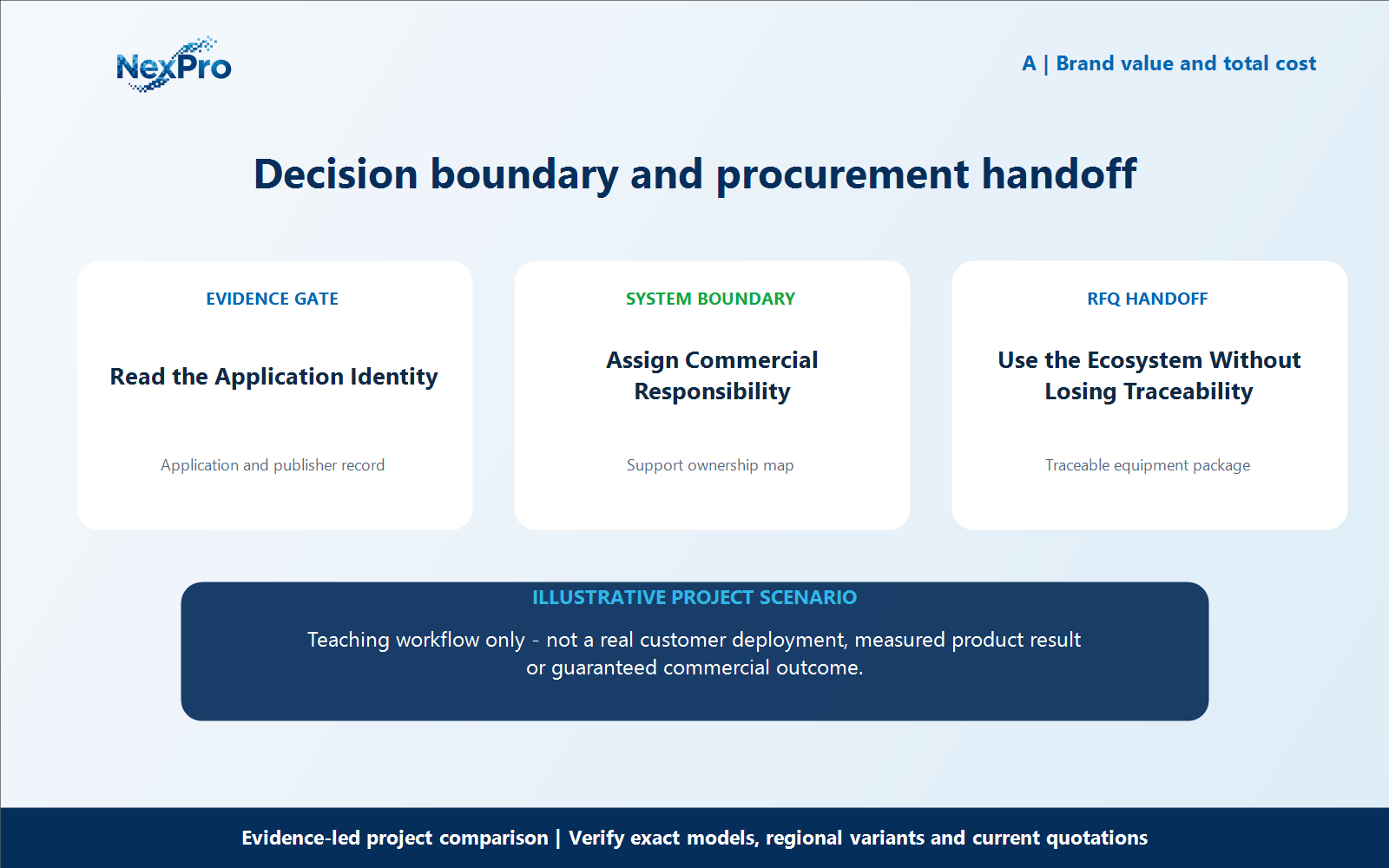
Assign Commercial Responsibility
Who handles a failed camera or missing function? Agree the responsibility with the contracting supplier. Record who handles device replacement, remote technical questions and issues requiring application or firmware escalation. An application publisher and a local installer are not automatically parties to the hardware warranty or project service agreement.
For assign commercial responsibility, build a working record around Support ownership map. For what is Seetong camera, record the current project condition, candidate response, evidence source and unresolved boundary before comparing offers.
Review Support ownership map separately from the downstream workflow. This prevents one attractive specification from deciding the complete what is Seetong camera question without considering recording, installation, operation and support consequences.
Carry the Support ownership map record into the RFQ, BOQ review or pilot checklist. For what is Seetong camera, keep product capability, project assumptions and supplier responsibility beside the assign commercial responsibility decision; site measurements, network policy, installation safety and acceptance remain project inputs unless the signed scope says otherwise.
- Record support ownership map with a named source, owner or acceptance check; do not leave it as an unqualified brochure phrase.
Section 06
Use the Ecosystem Without Losing Traceability
How should buyers evaluate a NexPro-Link Seetong package? Request the proposed models, intended Seetong workflows and the package scope together. This makes the offer comparable with a defined Hikvision or Dahua system. A documented package can be economical without relying on a vague promise that all ecosystem devices have identical capabilities.
For use the ecosystem without losing traceability, build a working record around Traceable equipment package. For what is Seetong camera, record the current project condition, candidate response, evidence source and unresolved boundary before comparing offers.
Review Traceable equipment package separately from the downstream workflow. This prevents one attractive specification from deciding the complete what is Seetong camera question without considering recording, installation, operation and support consequences.
Carry the Traceable equipment package record into the RFQ, BOQ review or pilot checklist. For what is Seetong camera, keep product capability, project assumptions and supplier responsibility beside the use the ecosystem without losing traceability decision; site measurements, network policy, installation safety and acceptance remain project inputs unless the signed scope says otherwise.
What should the buyer include in an RFQ for what is Seetong camera? Provide the camera schedule, required workflows, candidate equipment lists, mandatory brand or integration constraints, and the evidence still needed for use the ecosystem without losing traceability. Keep access credentials out of the inquiry. For what is Seetong camera, this defines the next comparison; it does not promise identical performance, fixed savings or automatic approval.
- Record traceable equipment package with a named source, owner or acceptance check; do not leave it as an unqualified brochure phrase.
Engineering references
These sources support the general planning principles. Always use the selected product's current datasheet and applicable project standards for final design.