An OEM-oriented CCTV proposal is attractive only when its commercial flexibility is matched by technical traceability. A Seetong-compatible package should identify the hardware, firmware, client application and responsible supplier. Compare those responsibilities with the proposed branded system so that the buyer understands who controls a change and who resolves a problem.
Section 01
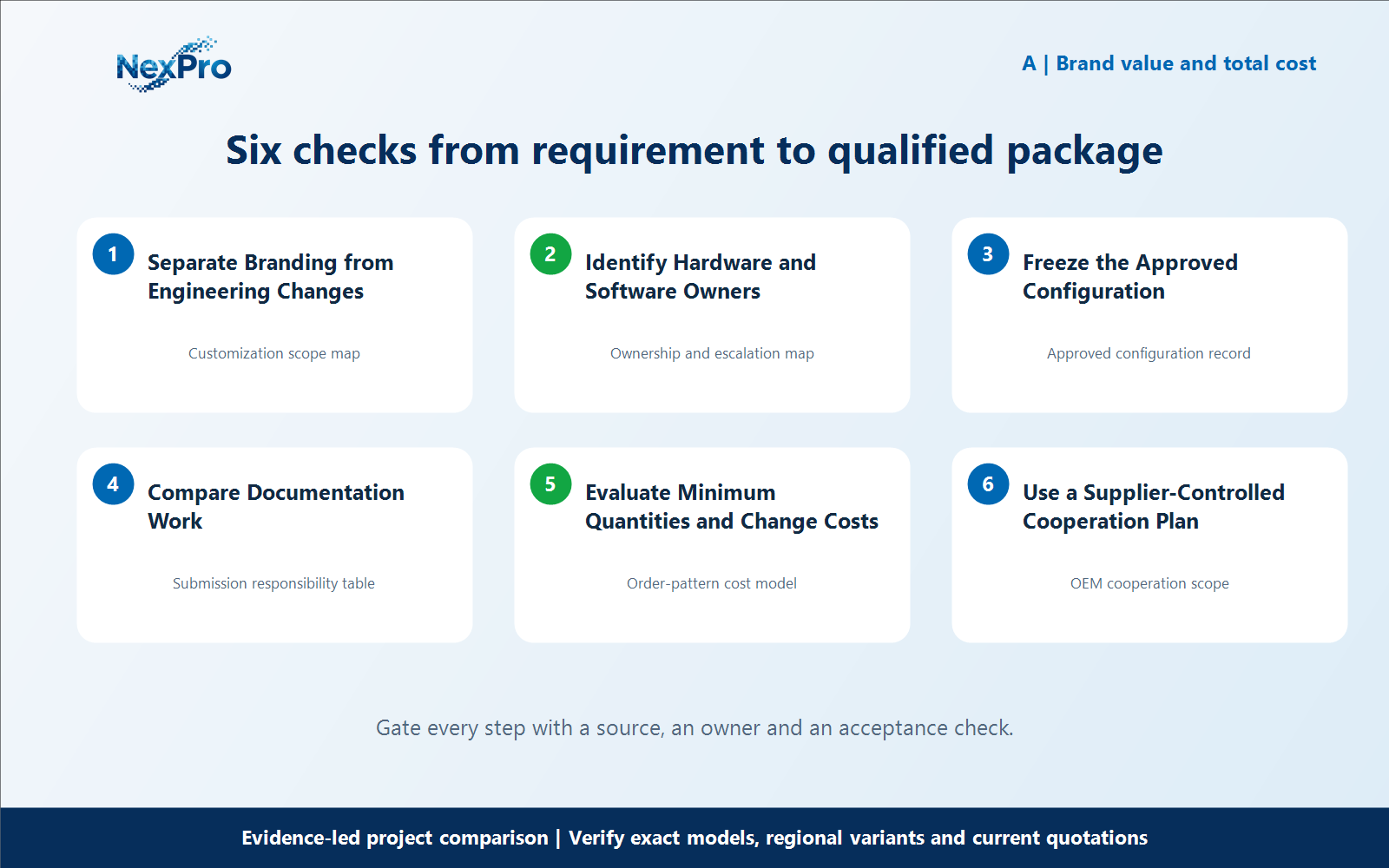
Separate Branding from Engineering Changes
An OEM-oriented CCTV proposal is attractive only when its commercial flexibility is matched by technical traceability. A Seetong-compatible package should identify the hardware, firmware, client application and responsible supplier. Compare those responsibilities with the proposed branded system so that the buyer understands who controls a change and who resolves a problem. Does private labeling mean the product can be redesigned freely? No. A label or packaging change differs from a sensor, firmware or software change. Define the requested customization and its effect on documentation, testing and ordering identity. Commercial flexibility is useful only when the resulting configuration remains identifiable and supportable.
For separate branding from engineering changes, build a working record around Customization scope map. For Seetong OEM CCTV system, record the current project condition, candidate response, evidence source and unresolved boundary before comparing offers.
Review Customization scope map separately from the downstream workflow. This prevents one attractive specification from deciding the complete Seetong OEM CCTV system question without considering recording, installation, operation and support consequences.
Carry the Customization scope map record into the RFQ, BOQ review or pilot checklist. For Seetong OEM CCTV system, keep product capability, project assumptions and supplier responsibility beside the separate branding from engineering changes decision; site measurements, network policy, installation safety and acceptance remain project inputs unless the signed scope says otherwise.
- Record customization scope map with a named source, owner or acceptance check; do not leave it as an unqualified brochure phrase.
Section 02
Identify Hardware and Software Owners
Who controls the camera, NVR and client? Record the parties responsible for each layer and the supplier that will coordinate them. Do not assume one organization controls every component merely because they appear in a single package. Buyers should know where a feature request or defect must be escalated.
For identify hardware and software owners, build a working record around Ownership and escalation map. For Seetong OEM CCTV system, record the current project condition, candidate response, evidence source and unresolved boundary before comparing offers.
Review Ownership and escalation map separately from the downstream workflow. This prevents one attractive specification from deciding the complete Seetong OEM CCTV system question without considering recording, installation, operation and support consequences.
Carry the Ownership and escalation map record into the RFQ, BOQ review or pilot checklist. For Seetong OEM CCTV system, keep product capability, project assumptions and supplier responsibility beside the identify hardware and software owners decision; site measurements, network policy, installation safety and acceptance remain project inputs unless the signed scope says otherwise.
- Record ownership and escalation map with a named source, owner or acceptance check; do not leave it as an unqualified brochure phrase.
Section 03
Freeze the Approved Configuration
How can repeated OEM orders stay consistent? Maintain a reference configuration including model, hardware version, firmware, lens and required functions. Use a change record when any of those items is substituted. A sample approval is only useful when later batches can be related to the approved configuration.
For freeze the approved configuration, build a working record around Approved configuration record. For Seetong OEM CCTV system, record the current project condition, candidate response, evidence source and unresolved boundary before comparing offers.
Review Approved configuration record separately from the downstream workflow. This prevents one attractive specification from deciding the complete Seetong OEM CCTV system question without considering recording, installation, operation and support consequences.
Carry the Approved configuration record record into the RFQ, BOQ review or pilot checklist. For Seetong OEM CCTV system, keep product capability, project assumptions and supplier responsibility beside the freeze the approved configuration decision; site measurements, network policy, installation safety and acceptance remain project inputs unless the signed scope says otherwise.
- Record approved configuration record with a named source, owner or acceptance check; do not leave it as an unqualified brochure phrase.
| Comparison factor | Object or condition | Evidence-led action | Do not infer |
|---|---|---|---|
| Branding | Labels and packaging | Approved artwork and scope | Not an app-development promise |
| Hardware | Specified device configuration | Model and revision | Not all ecosystem products |
| Firmware | Supported release path | Supplier change record | No cross-flashing |
| Service | Agreed responsible parties | Written escalation path | No inferred global SLA |
Section 04
Compare Documentation Work
What documents should a branded or OEM offer provide? Match the documents to the purchasing task: model schedule, relevant specifications, setup guidance and agreed service terms. Use the same submission requirement for both supply routes. A familiar brand should not replace a missing model reference, and an OEM package should not claim documents it cannot supply.
For compare documentation work, build a working record around Submission responsibility table. For Seetong OEM CCTV system, record the current project condition, candidate response, evidence source and unresolved boundary before comparing offers.
Review Submission responsibility table separately from the downstream workflow. This prevents one attractive specification from deciding the complete Seetong OEM CCTV system question without considering recording, installation, operation and support consequences.
Carry the Submission responsibility table record into the RFQ, BOQ review or pilot checklist. For Seetong OEM CCTV system, keep product capability, project assumptions and supplier responsibility beside the compare documentation work decision; site measurements, network policy, installation safety and acceptance remain project inputs unless the signed scope says otherwise.
- Record submission responsibility table with a named source, owner or acceptance check; do not leave it as an unqualified brochure phrase.
Section 05
Evaluate Minimum Quantities and Change Costs
Is OEM always cheaper than buying a branded product? No. Packaging, minimum quantities, engineering work and inventory commitments can change the economics. Compare those costs over the actual order pattern. A standard Seetong-compatible package may be suitable for one project while a customized variant makes sense only for repeated demand.
For evaluate minimum quantities and change costs, build a working record around Order-pattern cost model. For Seetong OEM CCTV system, record the current project condition, candidate response, evidence source and unresolved boundary before comparing offers.
Review Order-pattern cost model separately from the downstream workflow. This prevents one attractive specification from deciding the complete Seetong OEM CCTV system question without considering recording, installation, operation and support consequences.
Carry the Order-pattern cost model record into the RFQ, BOQ review or pilot checklist. For Seetong OEM CCTV system, keep product capability, project assumptions and supplier responsibility beside the evaluate minimum quantities and change costs decision; site measurements, network policy, installation safety and acceptance remain project inputs unless the signed scope says otherwise.
- Record order-pattern cost model with a named source, owner or acceptance check; do not leave it as an unqualified brochure phrase.
Section 06
Use a Supplier-Controlled Cooperation Plan
How should NexPro-Link present the OEM value proposition? Present the configurable items, fixed technical limits and agreed support path in one proposal. Relate the offer to the buyer’s repeat equipment needs rather than promising unlimited customization. This turns platform flexibility into a manageable supply arrangement instead of an undocumented collection of parts.
For use a supplier-controlled cooperation plan, build a working record around OEM cooperation scope. For Seetong OEM CCTV system, record the current project condition, candidate response, evidence source and unresolved boundary before comparing offers.
Review OEM cooperation scope separately from the downstream workflow. This prevents one attractive specification from deciding the complete Seetong OEM CCTV system question without considering recording, installation, operation and support consequences.
Carry the OEM cooperation scope record into the RFQ, BOQ review or pilot checklist. For Seetong OEM CCTV system, keep product capability, project assumptions and supplier responsibility beside the use a supplier-controlled cooperation plan decision; site measurements, network policy, installation safety and acceptance remain project inputs unless the signed scope says otherwise.
What should the buyer include in an RFQ for Seetong OEM CCTV system? Provide the camera schedule, required workflows, candidate equipment lists, mandatory brand or integration constraints, and the evidence still needed for use a supplier-controlled cooperation plan. Keep access credentials out of the inquiry. For Seetong OEM CCTV system, this defines the next comparison; it does not promise identical performance, fixed savings or automatic approval.
- Record oem cooperation scope with a named source, owner or acceptance check; do not leave it as an unqualified brochure phrase.
Engineering references
These sources support the general planning principles. Always use the selected product's current datasheet and applicable project standards for final design.