Clarify the hygienic environment, cabinet location and data continuity without upgrading an IP rating or material into a food-compliance claim.
Section 01
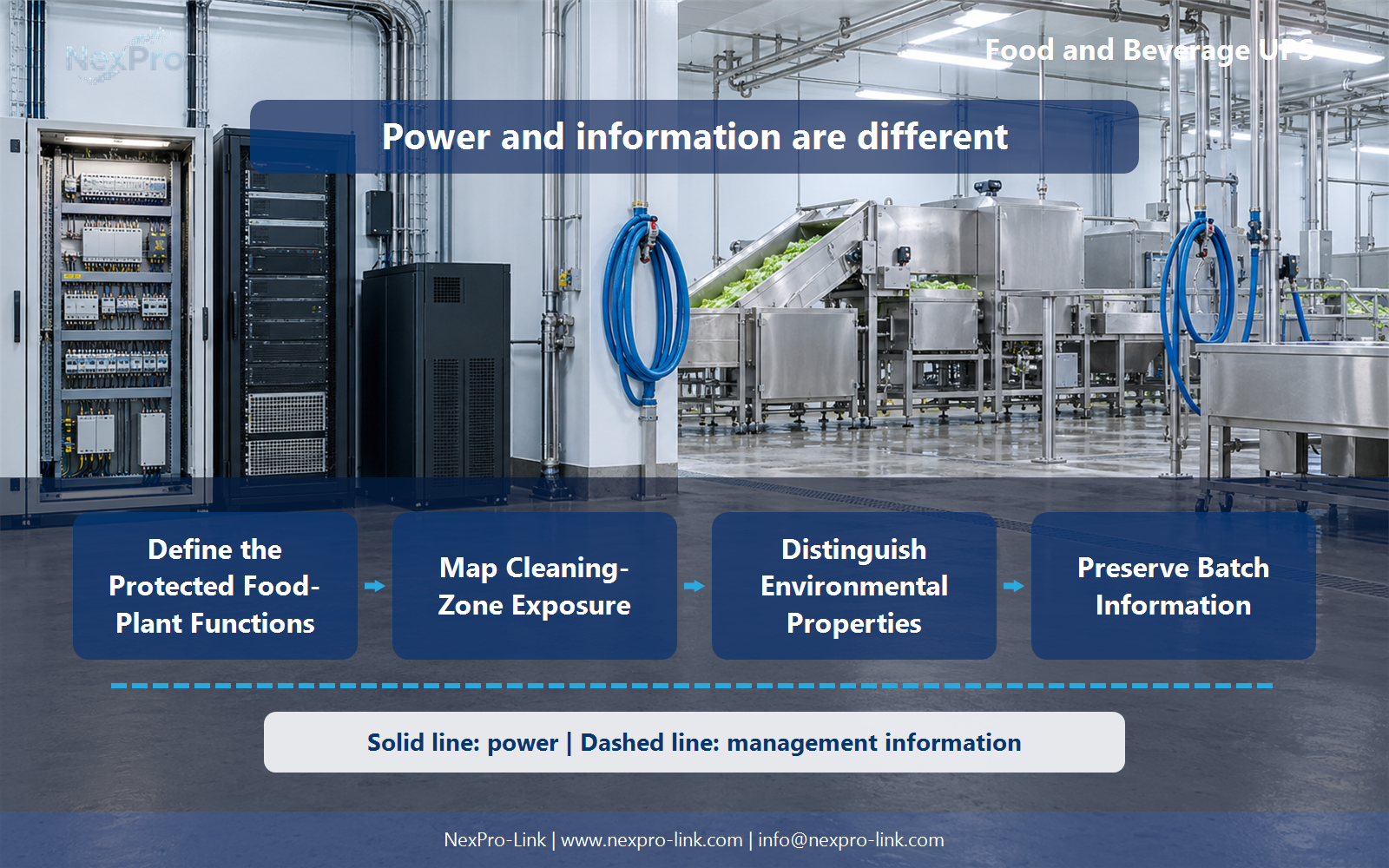
Define the Protected Food-Plant Functions
Clarify the hygienic environment, cabinet location and data continuity without upgrading an IP rating or material into a food-compliance claim.
Most of a food plant does not need backup power. Motors, heating jackets, pasteurizers and refrigeration draw far more energy than the devices that matter during a short interruption. The first step is to name the loads that must keep running long enough to finish a task, then leave the rest to their own arrangements.
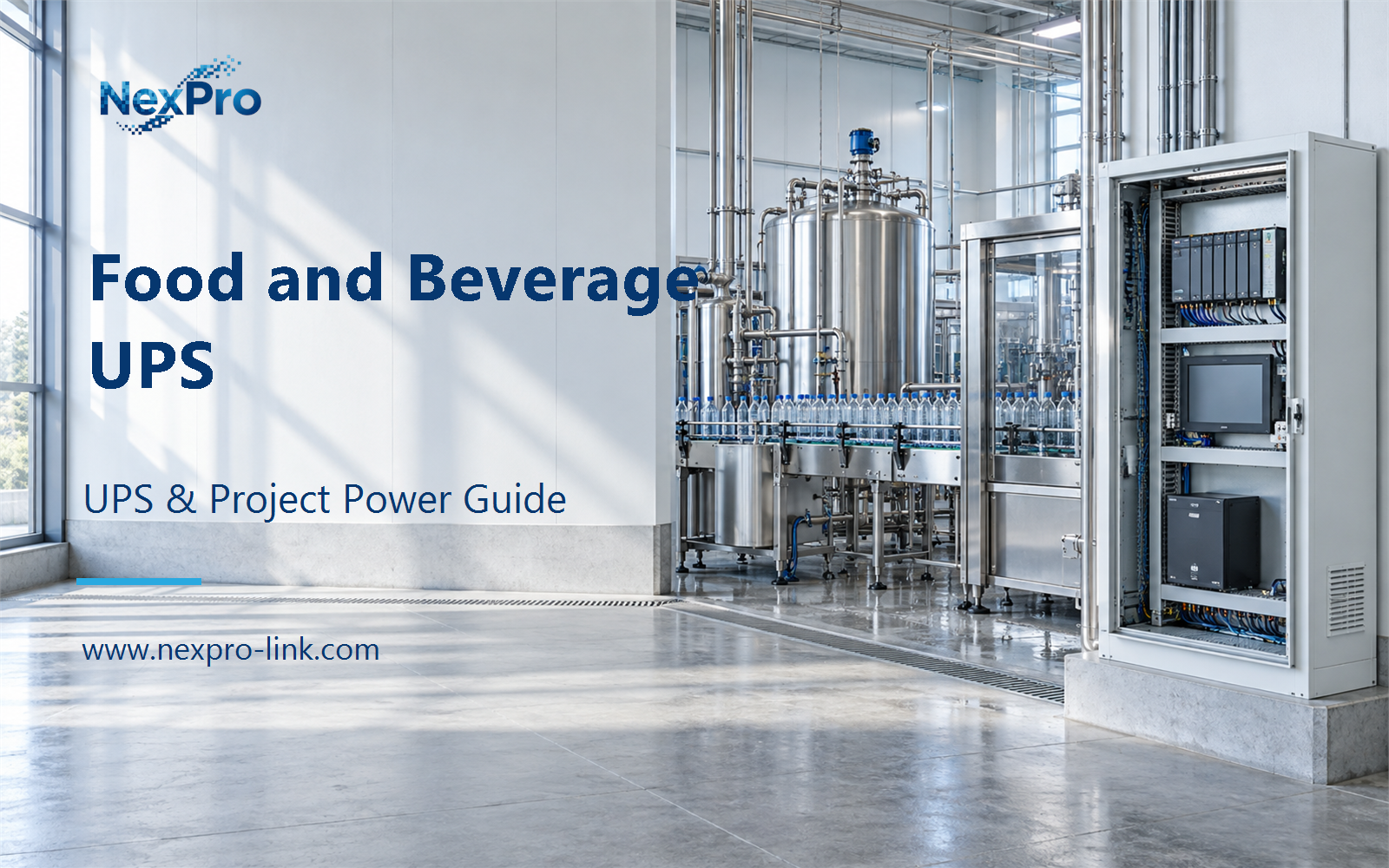
For a beverage line the protected list usually comes down to the controller, its I/O, the record terminal and the gateway that carries batch data to plant storage. These devices are small, but they hold the state of a running sequence. Process heating, pumping and refrigeration belong elsewhere. They need their own motor controls and often their own restart procedure, and a short UPS window buys very little for them.
Product-safety and machine-safety decisions stay inside the approved production system. A general UPS holds power up for a brief window. It does not decide whether a product is safe or a machine can restart. Keep those responsibilities where they already live.
| Decision area | Project question | Required output |
|---|---|---|
| Define the Protected Food-Plant Functions | Which food-and-beverage production loads belong in the backup scope? | Scope: controls / tracking / IT / process power |
| Map Cleaning-Zone Exposure | Must the UPS itself be installed in the washdown area? | Location map: wet zone / dry cabinet / routes / access |
| Distinguish Environmental Properties | Does an IP rating establish every environmental property? | Property table: ingress / chemicals / corrosion / cleaning / location |
Section 02
Map Cleaning-Zone Exposure
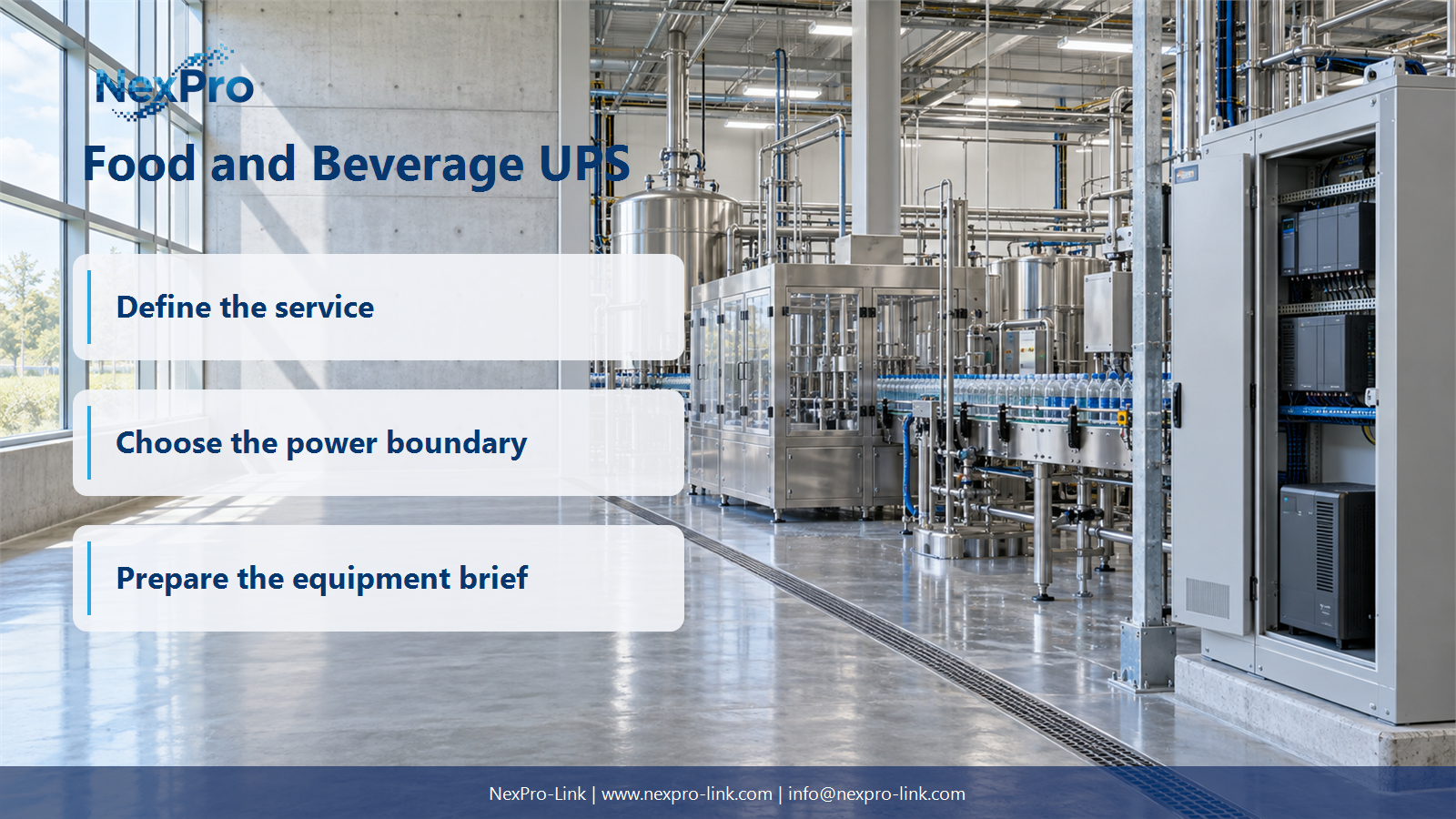
The UPS itself rarely belongs in the washdown area. A nearby washdown process does not turn a standard unit into a direct-spray unit, and it does not make an unspecified enclosure suitable for cleaning exposure. The cleaner choice is usually a dry cabinet or electrical room with a defined boundary where cables enter the wet zone.
Record where the equipment sits, what it is exposed to, and how service staff reach it. Those three facts drive the enclosure decision more than any general rule about food plants. A team that skips this step tends to buy the enclosure first and ask about the cleaning regime later.
Section 03
Distinguish Environmental Properties
An IP rating describes one test, usually dust and water entry. Chemical attack, corrosion and hygienic design are separate specifications. Writing them into one blanket claim, such as "IP-rated, therefore food grade", skips the material, finish and cleaning-regime details that decide whether a cabinet actually survives the room.
Specify each installation condition on its own. Ingress protection says how well the enclosure resists the stated test. Chemical exposure depends on the detergent, its concentration and the contact time. Corrosion depends on the material and finish. The cleaning regime and the location then decide where the unit can sit and how it is mounted.
- Confirm the answer to: Does an IP rating establish every environmental property?
- Draw electrical power as a solid path and management information as a separate dashed path.
- Keep external services and specialist approvals outside the UPS equipment claim.
Section 04
Preserve Batch Information
Backup power supports batch records by keeping the chain alive long enough for each step to finish. That chain runs from acquisition at the terminal, through storage, and out to the plant system that confirms the record. A UPS gives the chain time. It does not check that the record is complete or that the quality system accepts it.
Define what the site treats as confirmed and what it treats as needing reconciliation. If power drops partway through a write, the plant has to know which records stand and which need a look. Runtime alone answers none of that, and a longer battery does not make a broken record whole.
Section 05
Plan Recovery with Production
Before production resumes, the plant has to confirm four things: power is stable, the process is in a known state, the records are complete, and the quality team has made its call on affected product. The UPS reports electrical status. Product disposition is a quality decision made under the plant's procedures.
Keep the owners separate. Engineering confirms power and equipment state. Operations confirms which step was running and what stopped. Quality confirms records and releases or holds product. A recovery plan that hands all three to one person tends to blur them, and the blur shows up later as an unresolved hold.
Section 06
Prepare the Environmental RFQ
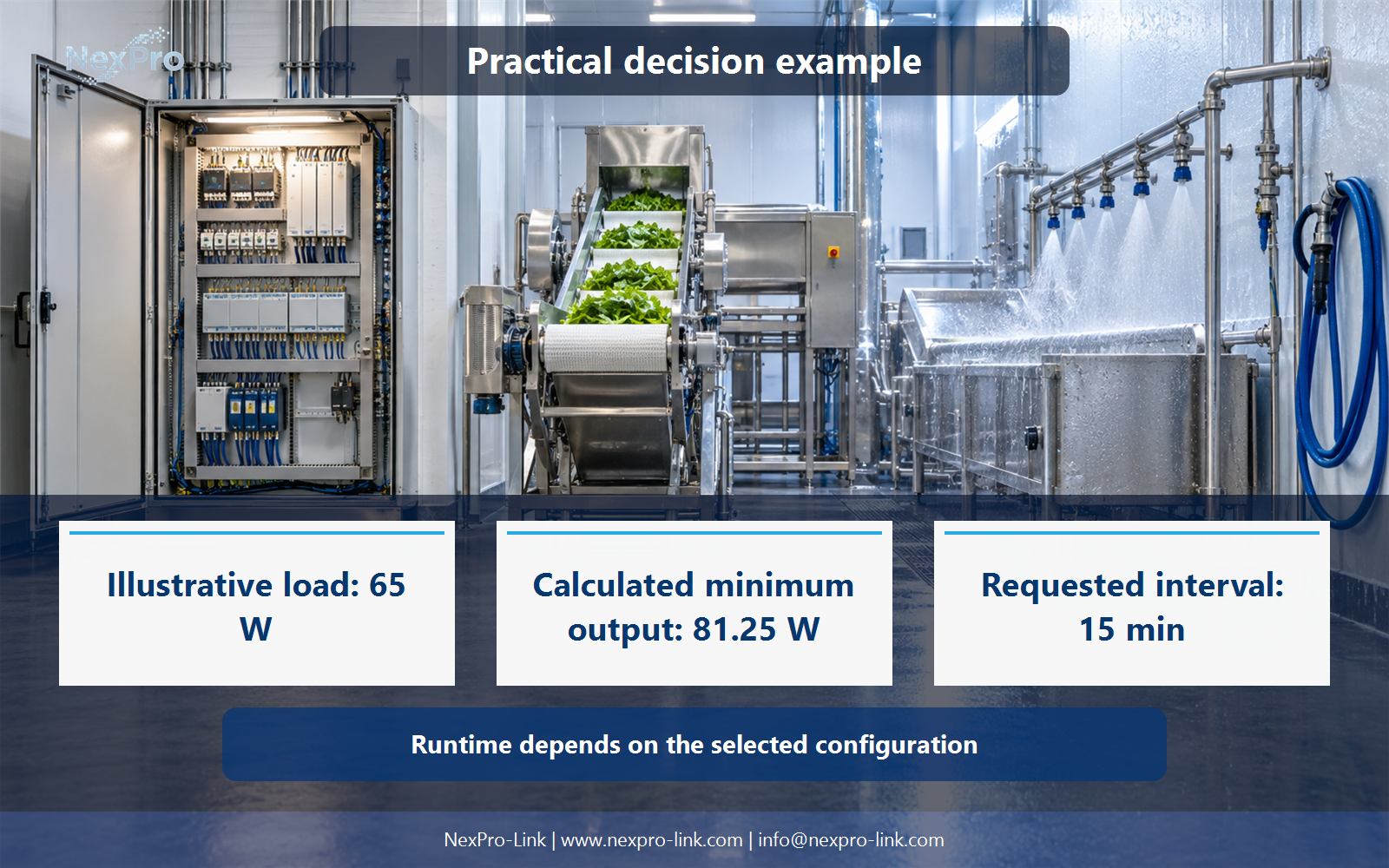
A supplier cannot quote "protect our beverage line". It needs the device list, the environment, the cleaning-zone boundary and the backup objective. Hand those over and the discussion becomes specific. A brief built from the tables above already carries most of the answer.
NexPro-Link can discuss equipment matching for that defined location. Food, hygienic and corrosion-related claims should match the specified arrangement, with no generic marketing language attached.
Engineering references
These sources support the general planning principles. Always use the selected product's current datasheet and applicable project standards for final design.