A sample package is accepted for one warehouse, then a second order is released for five similar buildings. Identify the accepted hardware, lens, firmware and supplied accessories together.
Section 01
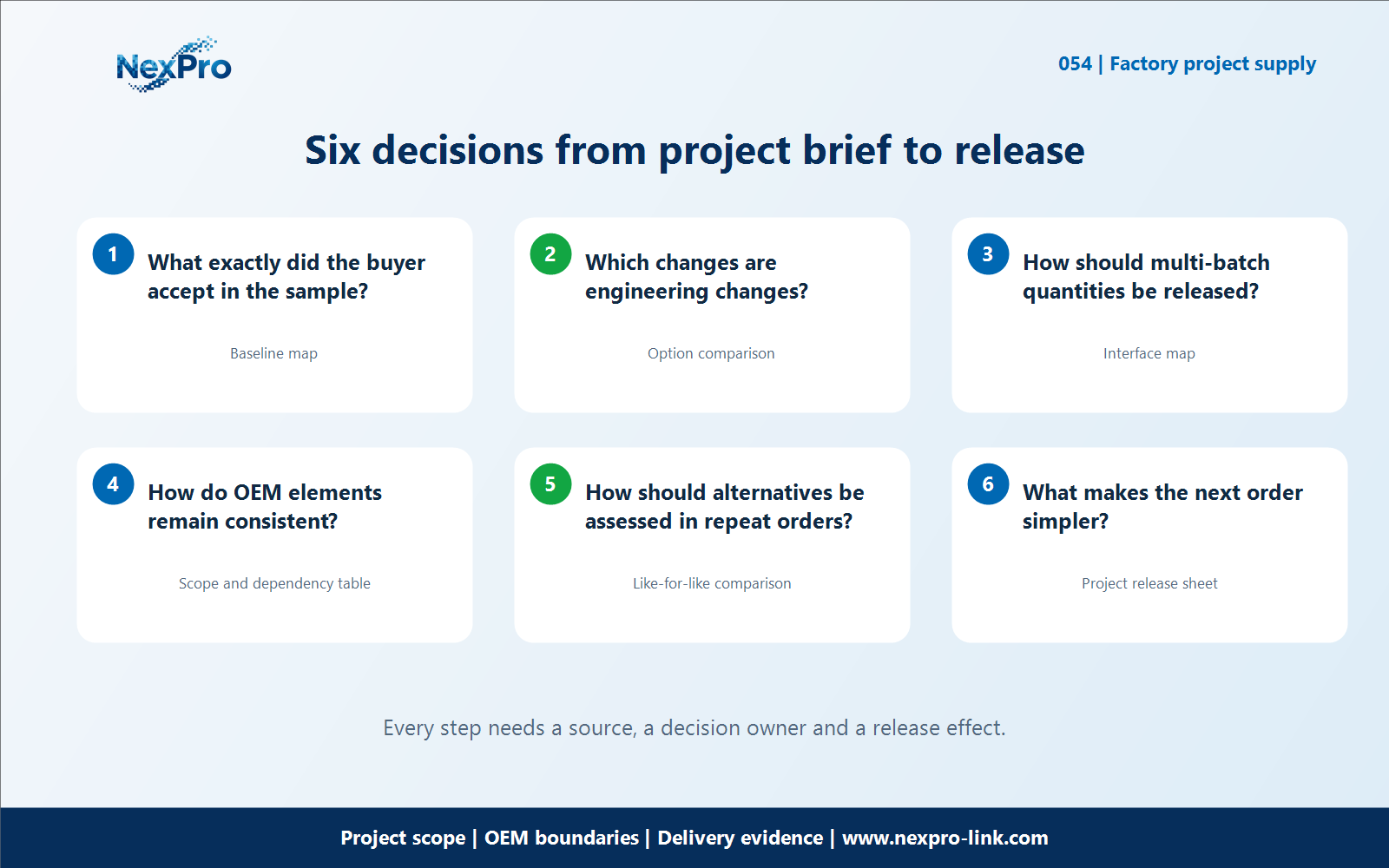
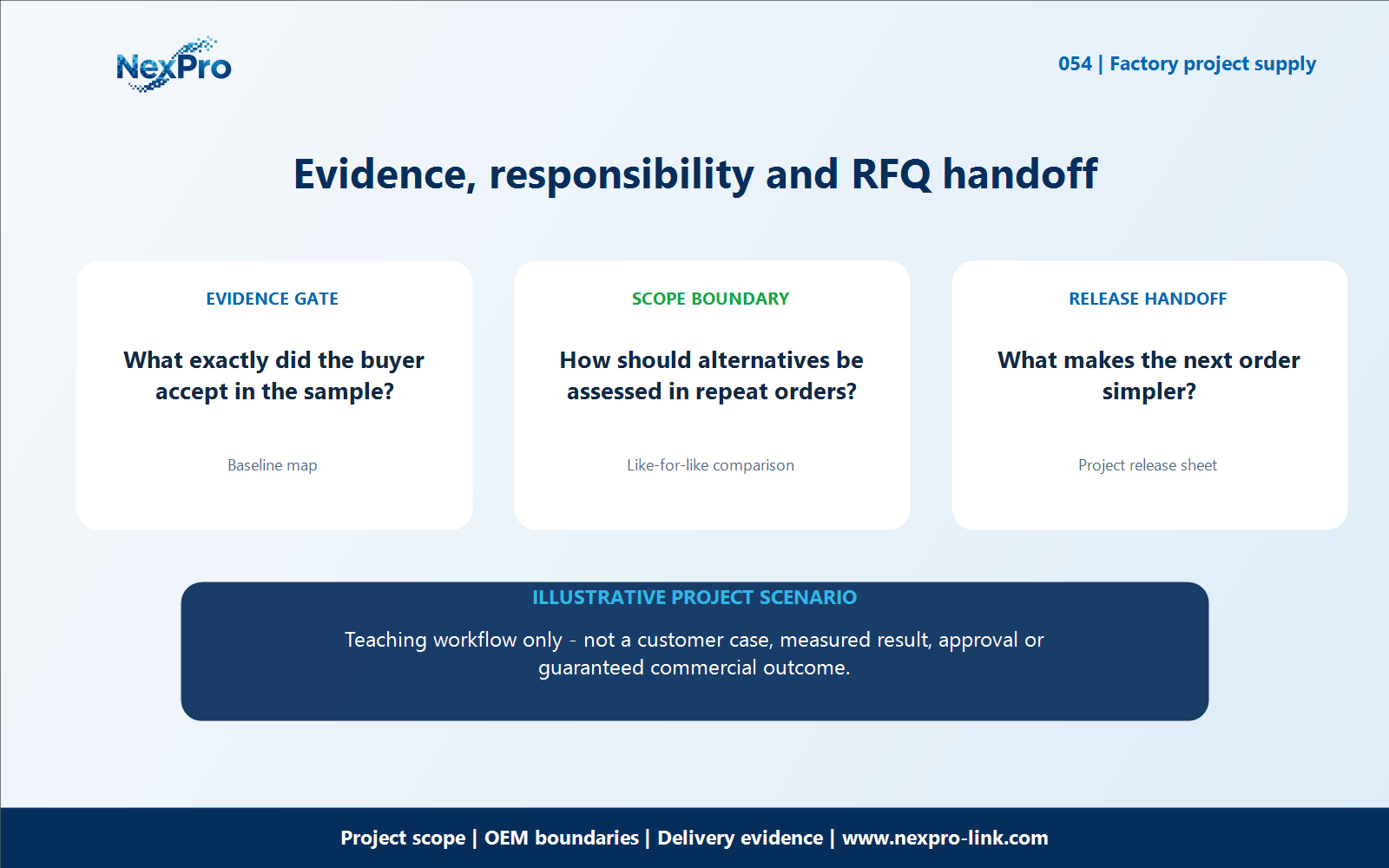
What exactly did the buyer accept in the sample?
A sample package is accepted for one warehouse, then a second order is released for five similar buildings. Identify the accepted hardware, lens, firmware and supplied accessories together. The sample also establishes a reference for branding and packing. An approval based only on appearance is too narrow to define what a later production batch should reproduce.
For the "What exactly did the buyer accept in the sample" decision, use the baseline map fields Area or item, Required task, Current assumption, Decision owner. Apply it to CCTV pilot to volume configuration so the buyer, supplier and local integrator can see which input is confirmed, who owns it and which evidence remains open.
Evaluate what exactly did the buyer accept in the sample against the stated site task and the surrounding equipment, documentation, packing and handover dependencies for CCTV pilot to volume configuration. For what exactly did the buyer accept in the sample in CCTV pilot to volume configuration, record the confirmed condition, chosen option and remaining evidence separately; an open value is not a price, test, approval or customer-result claim.
Carry the what exactly did the buyer accept in the sample decision into the RFQ, BOQ, configuration or release record for CCTV pilot to volume configuration. For what exactly did the buyer accept in the sample in CCTV pilot to volume configuration, name the equipment, artwork, network, installation and acceptance owner; site-specific work remains with the buyer or integrator unless the signed scope says otherwise.
Section 02
Which changes are engineering changes?
Which changes are engineering changes? Separate a carton-text correction from a change to the image chain or software behavior. Technical substitutions may affect the accepted workflow even when the housing stays the same. Review those effects against the sample's intended tasks rather than its exterior alone. For From CCTV Pilot Samples to Volume Supply Without Configuration Drift, keep this decision tied to the same project brief rather than opening a separate generic specification exercise.
For the "Which changes are engineering changes" decision, use the option comparison fields Position or option, Suitable condition, Trade-off, Next choice. Apply it to CCTV pilot to volume configuration so the buyer, supplier and local integrator can see which input is confirmed, who owns it and which evidence remains open.
Evaluate which changes are engineering changes against the stated site task and the surrounding equipment, documentation, packing and handover dependencies for CCTV pilot to volume configuration. For which changes are engineering changes in CCTV pilot to volume configuration, record the confirmed condition, chosen option and remaining evidence separately; an open value is not a price, test, approval or customer-result claim.
Carry the which changes are engineering changes decision into the RFQ, BOQ, configuration or release record for CCTV pilot to volume configuration. For which changes are engineering changes in CCTV pilot to volume configuration, name the equipment, artwork, network, installation and acceptance owner; site-specific work remains with the buyer or integrator unless the signed scope says otherwise.
Section 03
How should multi-batch quantities be released?
How should multi-batch quantities be released? Allocate quantities by building or installation phase and tie each release to a configuration reference. Keep forecast quantities separate from committed orders. This allows phased buying without losing track of which version each site actually receives. For From CCTV Pilot Samples to Volume Supply Without Configuration Drift, keep this decision tied to the same project brief rather than opening a separate generic specification exercise.
For the "How should multi-batch quantities be released" decision, use the interface map fields Device or record, Input, Output, Responsible party. Apply it to CCTV pilot to volume configuration so the buyer, supplier and local integrator can see which input is confirmed, who owns it and which evidence remains open.
Evaluate how should multi-batch quantities be released against the stated site task and the surrounding equipment, documentation, packing and handover dependencies for CCTV pilot to volume configuration. For how should multi-batch quantities be released in CCTV pilot to volume configuration, record the confirmed condition, chosen option and remaining evidence separately; an open value is not a price, test, approval or customer-result claim.
Carry the how should multi-batch quantities be released decision into the RFQ, BOQ, configuration or release record for CCTV pilot to volume configuration. For how should multi-batch quantities be released in CCTV pilot to volume configuration, name the equipment, artwork, network, installation and acceptance owner; site-specific work remains with the buyer or integrator unless the signed scope says otherwise.
| Project question | Project-oriented treatment | Keep equal when comparing offers |
|---|---|---|
| What exactly did the buyer accept in the sample? | Identify the accepted hardware, lens, firmware and supplied accessories together. | Exact configuration and accessory scope |
| Which changes are engineering changes? | Separate a carton-text correction from a change to the image chain or software behavior. | Preparation versus on-site work |
| How should multi-batch quantities be released? | Allocate quantities by building or installation phase and tie each release to a configuration reference. | Branding process and artwork scope |
| How do OEM elements remain consistent? | Keep the artwork revision, logo position and packaging version with the equipment configuration. | Delivery and support responsibilities |
Section 04
How do OEM elements remain consistent?
How do OEM elements remain consistent? Keep the artwork revision, logo position and packaging version with the equipment configuration. Technical consistency and brand consistency are separate tasks, but both affect the customer's experience when additional units arrive months after the original sample. For From CCTV Pilot Samples to Volume Supply Without Configuration Drift, keep this decision tied to the same project brief rather than opening a separate generic specification exercise.
For the "How do OEM elements remain consistent" decision, use the scope and dependency table fields Item, Included, Dependency, Separate option. Apply it to CCTV pilot to volume configuration so the buyer, supplier and local integrator can see which input is confirmed, who owns it and which evidence remains open.
Evaluate how do oem elements remain consistent against the stated site task and the surrounding equipment, documentation, packing and handover dependencies for CCTV pilot to volume configuration. For how do oem elements remain consistent in CCTV pilot to volume configuration, record the confirmed condition, chosen option and remaining evidence separately; an open value is not a price, test, approval or customer-result claim.
Carry the how do oem elements remain consistent decision into the RFQ, BOQ, configuration or release record for CCTV pilot to volume configuration. For how do oem elements remain consistent in CCTV pilot to volume configuration, name the equipment, artwork, network, installation and acceptance owner; site-specific work remains with the buyer or integrator unless the signed scope says otherwise.
Section 05
How should alternatives be assessed in repeat orders?
How should alternatives be assessed in repeat orders? Compare exact configurations in repeat orders, not just familiar family names. Any supplier can introduce revisions or substitutions. A useful alternative proposal identifies what remains equivalent for the application and what must be evaluated again before release. For From CCTV Pilot Samples to Volume Supply Without Configuration Drift, keep this decision tied to the same project brief rather than opening a separate generic specification exercise.
For the "How should alternatives be assessed in repeat orders" decision, use the like-for-like comparison fields Requirement, Baseline, Proposed treatment, Remaining difference. Apply it to CCTV pilot to volume configuration so the buyer, supplier and local integrator can see which input is confirmed, who owns it and which evidence remains open.
Evaluate how should alternatives be assessed in repeat orders against the stated site task and the surrounding equipment, documentation, packing and handover dependencies for CCTV pilot to volume configuration. For how should alternatives be assessed in repeat orders in CCTV pilot to volume configuration, record the confirmed condition, chosen option and remaining evidence separately; an open value is not a price, test, approval or customer-result claim.
Carry the how should alternatives be assessed in repeat orders decision into the RFQ, BOQ, configuration or release record for CCTV pilot to volume configuration. For how should alternatives be assessed in repeat orders in CCTV pilot to volume configuration, name the equipment, artwork, network, installation and acceptance owner; site-specific work remains with the buyer or integrator unless the signed scope says otherwise.
Section 06
What makes the next order simpler?
What makes the next order simpler? Maintain a reusable configuration card and a short exception list. Future orders can reference the agreed baseline and identify only changed quantities or site conditions. This makes repeat procurement clearer without assuming that every new location is identical. For From CCTV Pilot Samples to Volume Supply Without Configuration Drift, keep this decision tied to the same project brief rather than opening a separate generic specification exercise.
For the "What makes the next order simpler" decision, use the project release sheet fields Configuration, Artwork, Quantity, Location, Release stage. Apply it to CCTV pilot to volume configuration so the buyer, supplier and local integrator can see which input is confirmed, who owns it and which evidence remains open.
Evaluate what makes the next order simpler against the stated site task and the surrounding equipment, documentation, packing and handover dependencies for CCTV pilot to volume configuration. For what makes the next order simpler in CCTV pilot to volume configuration, record the confirmed condition, chosen option and remaining evidence separately; an open value is not a price, test, approval or customer-result claim.
Carry the what makes the next order simpler decision into the RFQ, BOQ, configuration or release record for CCTV pilot to volume configuration. For what makes the next order simpler in CCTV pilot to volume configuration, name the equipment, artwork, network, installation and acceptance owner; site-specific work remains with the buyer or integrator unless the signed scope says otherwise.
Engineering references
These sources support the general planning principles. Always use the selected product's current datasheet and applicable project standards for final design.