The cheapest camera can be expensive if it leaves the important target too small in the recording. Compare Seetong-compatible, Hikvision and Dahua cameras by the view needed at each position. Relate lens choice and output resolution to scene width, then account for blind spots and installation constraints before deciding which package offers better coverage value.
Section 01
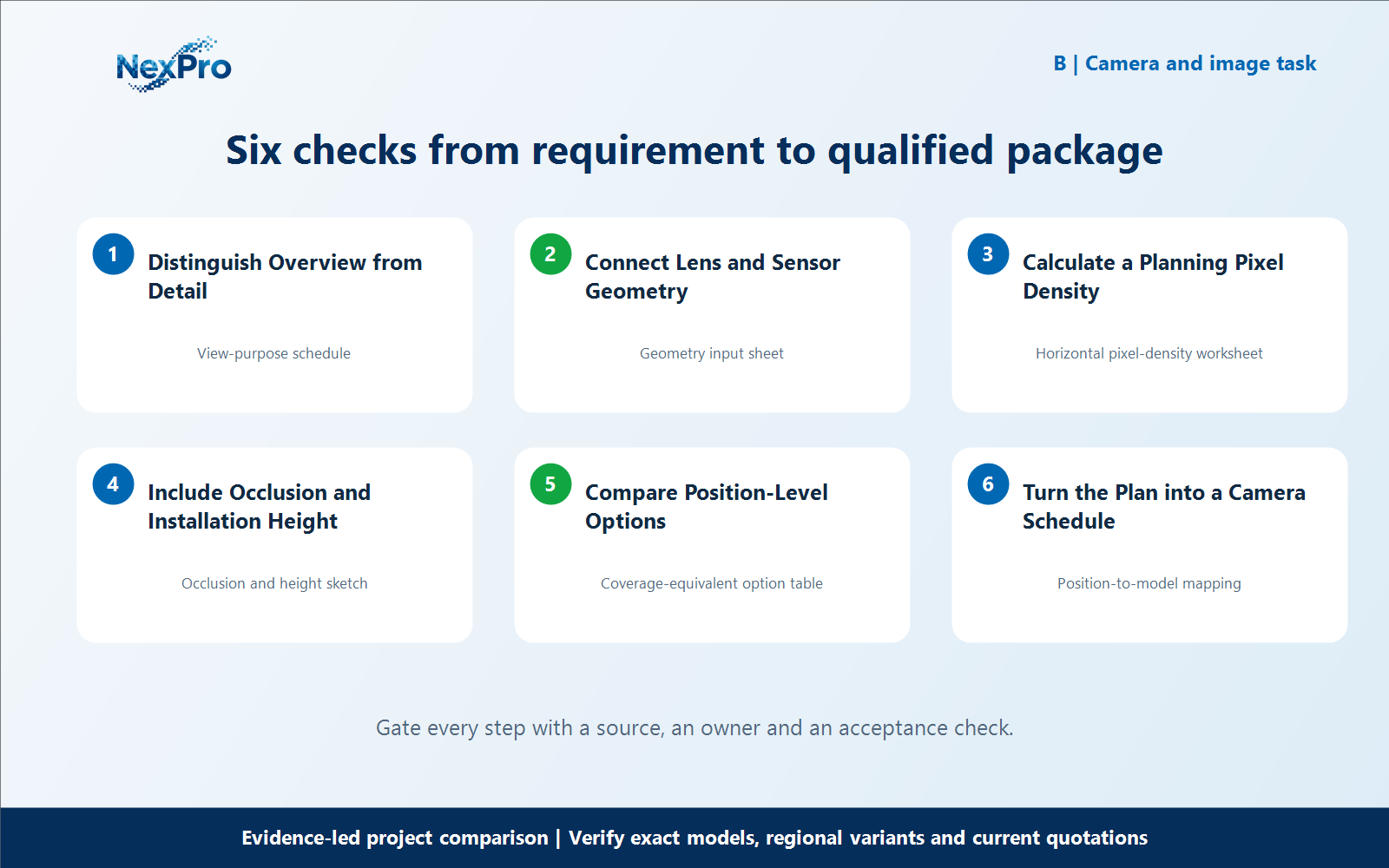
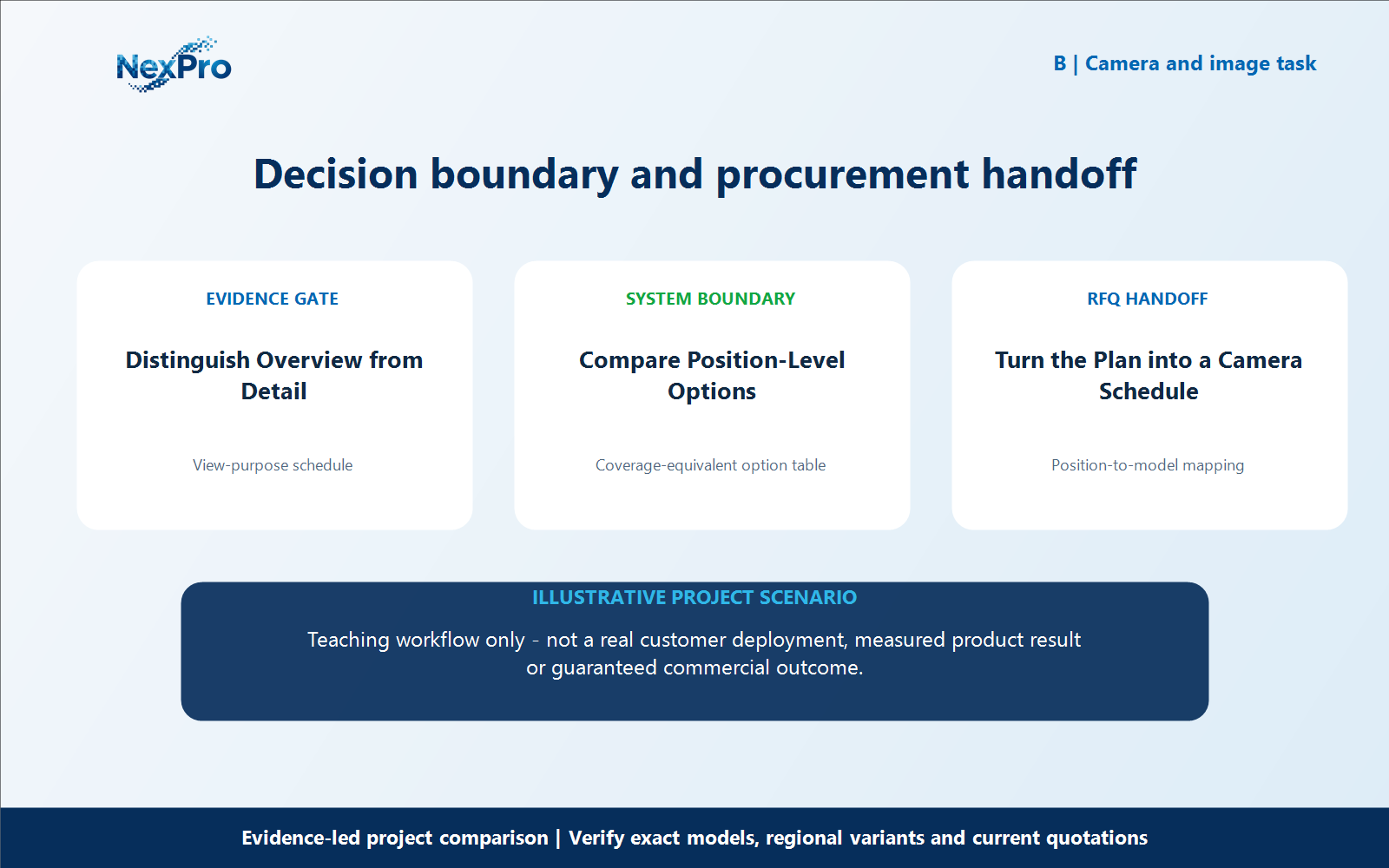
Distinguish Overview from Detail
The cheapest camera can be expensive if it leaves the important target too small in the recording. Compare Seetong-compatible, Hikvision and Dahua cameras by the view needed at each position. Relate lens choice and output resolution to scene width, then account for blind spots and installation constraints before deciding which package offers better coverage value. Can an overview image replace a detail view? Only when it provides the information required at the target. A wide overview may show activity while leaving critical detail too small. Separate overview and detail objectives in the camera schedule, then compare options that actually satisfy each one rather than counting covered floor area alone.
For distinguish overview from detail, build a working record around View-purpose schedule. For Seetong Hikvision Dahua coverage comparison, record the current project condition, candidate response, evidence source and unresolved boundary before comparing offers.
Review View-purpose schedule separately from the downstream workflow. This prevents one attractive specification from deciding the complete Seetong Hikvision Dahua coverage comparison question without considering recording, installation, operation and support consequences.
Carry the View-purpose schedule record into the RFQ, BOQ review or pilot checklist. For Seetong Hikvision Dahua coverage comparison, keep product capability, project assumptions and supplier responsibility beside the distinguish overview from detail decision; site measurements, network policy, installation safety and acceptance remain project inputs unless the signed scope says otherwise.
- Record view-purpose schedule with a named source, owner or acceptance check; do not leave it as an unqualified brochure phrase.
Section 02
Connect Lens and Sensor Geometry
Can focal length alone predict coverage? Not reliably without the relevant sensor geometry or a manufacturer-specified angle of view. Compare the actual model’s viewing information and the mounting position. Two cameras with the same focal length can frame a scene differently, so lens labels should not substitute for a plan or measured view.
For connect lens and sensor geometry, build a working record around Geometry input sheet. For Seetong Hikvision Dahua coverage comparison, record the current project condition, candidate response, evidence source and unresolved boundary before comparing offers.
Review Geometry input sheet separately from the downstream workflow. This prevents one attractive specification from deciding the complete Seetong Hikvision Dahua coverage comparison question without considering recording, installation, operation and support consequences.
Carry the Geometry input sheet record into the RFQ, BOQ review or pilot checklist. For Seetong Hikvision Dahua coverage comparison, keep product capability, project assumptions and supplier responsibility beside the connect lens and sensor geometry decision; site measurements, network policy, installation safety and acceptance remain project inputs unless the signed scope says otherwise.
- Record geometry input sheet with a named source, owner or acceptance check; do not leave it as an unqualified brochure phrase.
Section 03
Calculate a Planning Pixel Density
How is horizontal pixel density estimated? Divide the horizontal output pixel count by the width of the scene at the target plane. State the distance and framing used. This is a planning calculation, not proof of successful recognition in all lighting or motion conditions; inspect the recorded target as part of commissioning.
For calculate a planning pixel density, build a working record around Horizontal pixel-density worksheet. For Seetong Hikvision Dahua coverage comparison, record the current project condition, candidate response, evidence source and unresolved boundary before comparing offers.
Review Horizontal pixel-density worksheet separately from the downstream workflow. This prevents one attractive specification from deciding the complete Seetong Hikvision Dahua coverage comparison question without considering recording, installation, operation and support consequences.
Carry the Horizontal pixel-density worksheet record into the RFQ, BOQ review or pilot checklist. For Seetong Hikvision Dahua coverage comparison, keep product capability, project assumptions and supplier responsibility beside the calculate a planning pixel density decision; site measurements, network policy, installation safety and acceptance remain project inputs unless the signed scope says otherwise.
- Record horizontal pixel-density worksheet with a named source, owner or acceptance check; do not leave it as an unqualified brochure phrase.
| Comparison factor | Object or condition | Evidence-led action | Do not infer |
|---|---|---|---|
| Overview | Wide context | Confirm target remains usable | Not equivalent to close detail |
| Detail | Required target plane | Calculate and inspect detail | Do not infer from megapixels |
| Mounting | Height and obstructions | Check physical line of sight | Lens cannot fix every location |
| Proposal | Coverage-equivalent scope | Explain any count change | Avoid missing-view savings |
Section 04
Include Occlusion and Installation Height
Why can a high-mounted camera miss useful detail? Objects, people, racks and steep viewing angles can hide or distort the target even when the nominal pixel count is sufficient. Review these obstructions from the intended mounting position. A better lens cannot always compensate for an unsuitable physical location.
For include occlusion and installation height, build a working record around Occlusion and height sketch. For Seetong Hikvision Dahua coverage comparison, record the current project condition, candidate response, evidence source and unresolved boundary before comparing offers.
Review Occlusion and height sketch separately from the downstream workflow. This prevents one attractive specification from deciding the complete Seetong Hikvision Dahua coverage comparison question without considering recording, installation, operation and support consequences.
Carry the Occlusion and height sketch record into the RFQ, BOQ review or pilot checklist. For Seetong Hikvision Dahua coverage comparison, keep product capability, project assumptions and supplier responsibility beside the include occlusion and installation height decision; site measurements, network policy, installation safety and acceptance remain project inputs unless the signed scope says otherwise.
- Record occlusion and height sketch with a named source, owner or acceptance check; do not leave it as an unqualified brochure phrase.
Section 05
Compare Position-Level Options
Should all three packages use identical camera counts? Use the same required tasks and explain any count difference. A changed layout can be valid, but it must show how coverage, blind spots and failure impact are handled. Do not claim fewer cameras are better value simply because the proposal omits some viewing objectives.
For compare position-level options, build a working record around Coverage-equivalent option table. For Seetong Hikvision Dahua coverage comparison, record the current project condition, candidate response, evidence source and unresolved boundary before comparing offers.
Review Coverage-equivalent option table separately from the downstream workflow. This prevents one attractive specification from deciding the complete Seetong Hikvision Dahua coverage comparison question without considering recording, installation, operation and support consequences.
Carry the Coverage-equivalent option table record into the RFQ, BOQ review or pilot checklist. For Seetong Hikvision Dahua coverage comparison, keep product capability, project assumptions and supplier responsibility beside the compare position-level options decision; site measurements, network policy, installation safety and acceptance remain project inputs unless the signed scope says otherwise.
- Record coverage-equivalent option table with a named source, owner or acceptance check; do not leave it as an unqualified brochure phrase.
Section 06
Turn the Plan into a Camera Schedule
What makes a coverage comparison useful for procurement? A schedule linking each position to its target, required view, candidate model and installation assumptions. It lets procurement compare complete alternatives and preserves design intent during substitution. NexPro-Link can use those inputs to discuss lens and equipment options rather than offer a uniform camera package without context.
For turn the plan into a camera schedule, build a working record around Position-to-model mapping. For Seetong Hikvision Dahua coverage comparison, record the current project condition, candidate response, evidence source and unresolved boundary before comparing offers.
Review Position-to-model mapping separately from the downstream workflow. This prevents one attractive specification from deciding the complete Seetong Hikvision Dahua coverage comparison question without considering recording, installation, operation and support consequences.
Carry the Position-to-model mapping record into the RFQ, BOQ review or pilot checklist. For Seetong Hikvision Dahua coverage comparison, keep product capability, project assumptions and supplier responsibility beside the turn the plan into a camera schedule decision; site measurements, network policy, installation safety and acceptance remain project inputs unless the signed scope says otherwise.
What should the buyer include in an RFQ for Seetong Hikvision Dahua coverage comparison? Provide the camera schedule, required workflows, candidate equipment lists, mandatory brand or integration constraints, and the evidence still needed for turn the plan into a camera schedule. Keep access credentials out of the inquiry. For Seetong Hikvision Dahua coverage comparison, this defines the next comparison; it does not promise identical performance, fixed savings or automatic approval.
- Record position-to-model mapping with a named source, owner or acceptance check; do not leave it as an unqualified brochure phrase.
Engineering references
These sources support the general planning principles. Always use the selected product's current datasheet and applicable project standards for final design.