A building contractor wants cameras used during construction to remain useful after the owner takes over the completed property. Select reusable devices by their future task, not just their availability on site.
Section 01
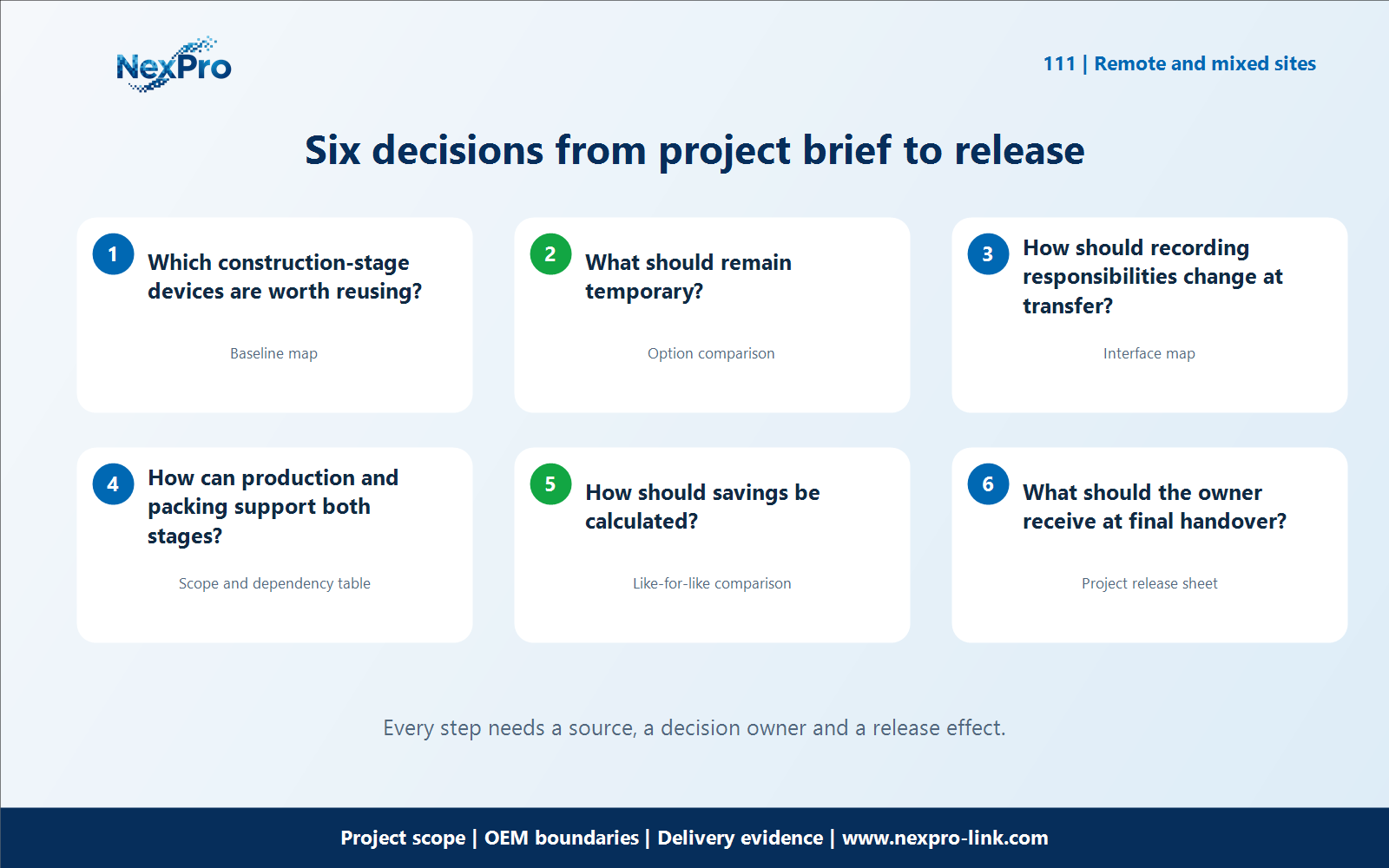
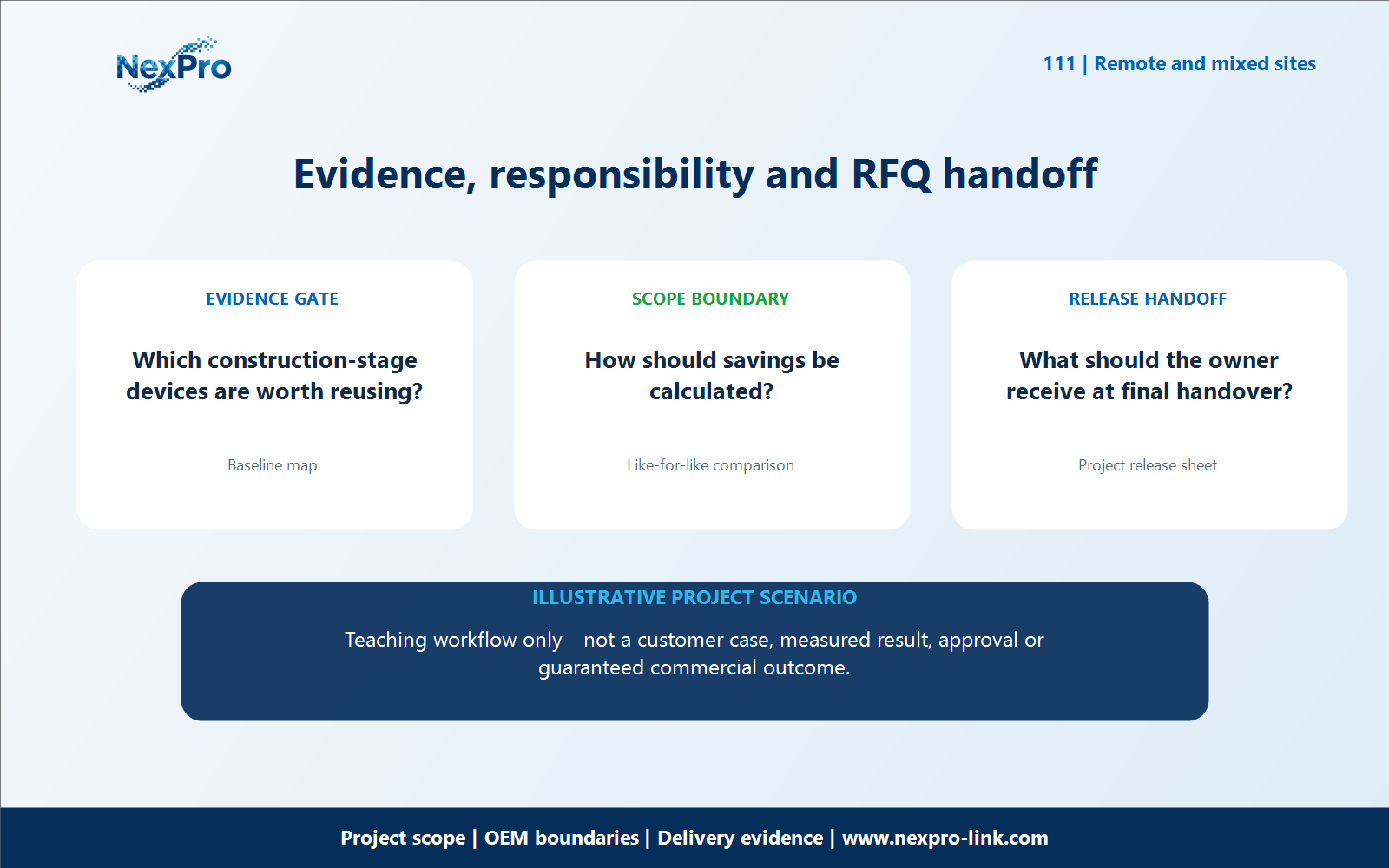
Which construction-stage devices are worth reusing?
A building contractor wants cameras used during construction to remain useful after the owner takes over the completed property. Select reusable devices by their future task, not just their availability on site. A camera suitable for a temporary yard overview may not suit an interior entrance. Connect each intended reuse item to a role in the final equipment schedule before procurement.
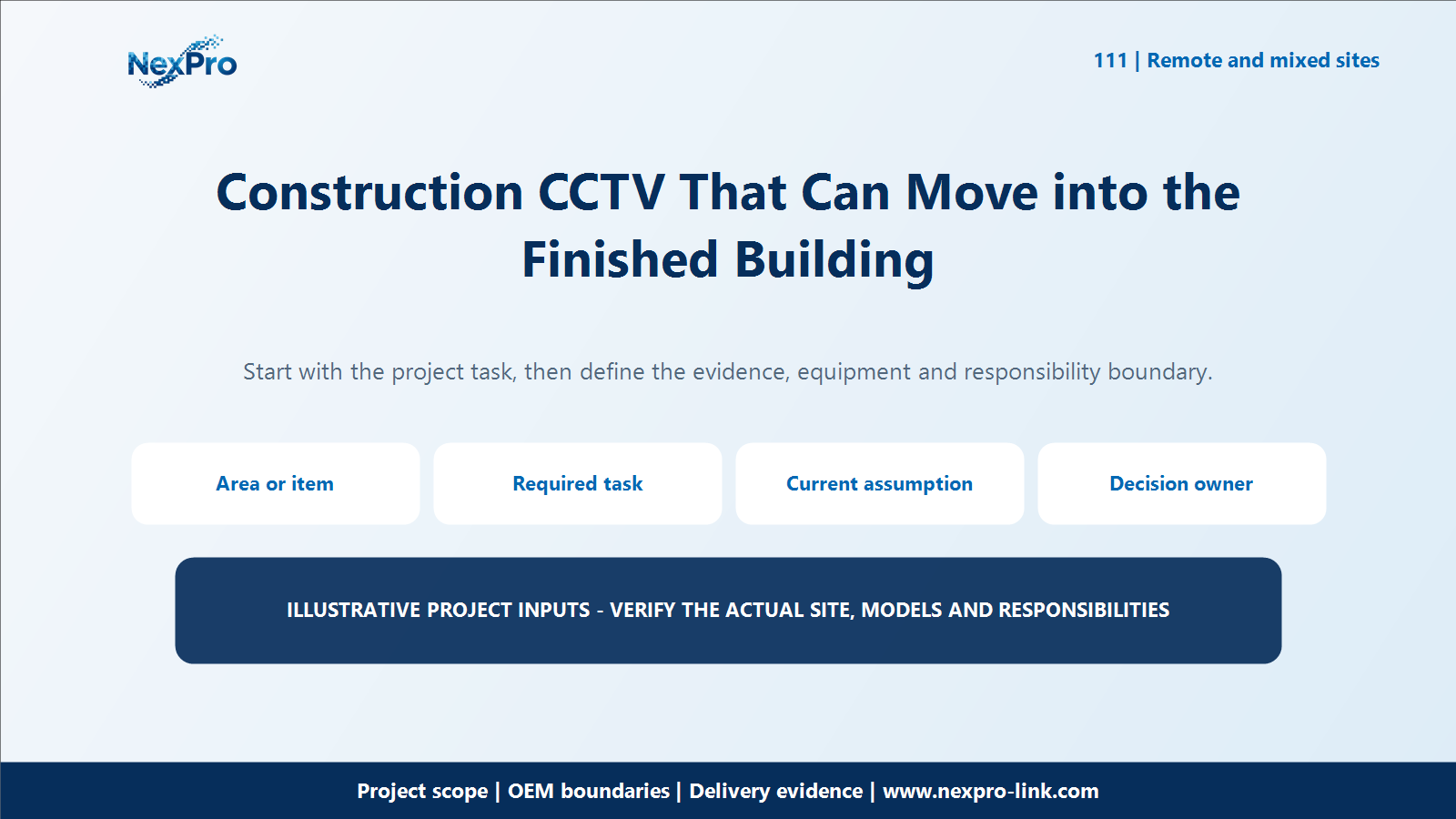
For the "Which construction-stage devices are worth reusing" decision, use the baseline map fields Area or item, Required task, Current assumption, Decision owner. Apply it to temporary to permanent construction CCTV so the buyer, supplier and local integrator can see which input is confirmed, who owns it and which evidence remains open.
Evaluate which construction-stage devices are worth reusing against the stated site task and the surrounding equipment, documentation, packing and handover dependencies for temporary to permanent construction CCTV. For which construction-stage devices are worth reusing in temporary to permanent construction CCTV, record the confirmed condition, chosen option and remaining evidence separately; an open value is not a price, test, approval or customer-result claim.
Carry the which construction-stage devices are worth reusing decision into the RFQ, BOQ, configuration or release record for temporary to permanent construction CCTV. For which construction-stage devices are worth reusing in temporary to permanent construction CCTV, name the equipment, artwork, network, installation and acceptance owner; site-specific work remains with the buyer or integrator unless the signed scope says otherwise.
Section 02
What should remain temporary?
What should remain temporary? Identify temporary mounts, routes, power arrangements and communication services separately. Reusing a camera does not make all its temporary infrastructure appropriate for permanent service. Quote the changes needed for the finished building instead of calling the whole construction system ready for handover. For Construction CCTV That Can Move into the Finished Building, keep this decision tied to the same project brief rather than opening a separate generic specification exercise.
For the "What should remain temporary" decision, use the option comparison fields Position or option, Suitable condition, Trade-off, Next choice. Apply it to temporary to permanent construction CCTV so the buyer, supplier and local integrator can see which input is confirmed, who owns it and which evidence remains open.
Evaluate what should remain temporary against the stated site task and the surrounding equipment, documentation, packing and handover dependencies for temporary to permanent construction CCTV. For what should remain temporary in temporary to permanent construction CCTV, record the confirmed condition, chosen option and remaining evidence separately; an open value is not a price, test, approval or customer-result claim.
Carry the what should remain temporary decision into the RFQ, BOQ, configuration or release record for temporary to permanent construction CCTV. For what should remain temporary in temporary to permanent construction CCTV, name the equipment, artwork, network, installation and acceptance owner; site-specific work remains with the buyer or integrator unless the signed scope says otherwise.
Section 03
How should recording responsibilities change at transfer?
How should recording responsibilities change at transfer? Plan the change from contractor operation to owner operation explicitly. Decide how existing recordings and accounts are handled through the authorized process. The physical movement of equipment is only one part of transferring a working security system. For Construction CCTV That Can Move into the Finished Building, keep this decision tied to the same project brief rather than opening a separate generic specification exercise.
For the "How should recording responsibilities change at transfer" decision, use the interface map fields Device or record, Input, Output, Responsible party. Apply it to temporary to permanent construction CCTV so the buyer, supplier and local integrator can see which input is confirmed, who owns it and which evidence remains open.
Evaluate how should recording responsibilities change at transfer against the stated site task and the surrounding equipment, documentation, packing and handover dependencies for temporary to permanent construction CCTV. For how should recording responsibilities change at transfer in temporary to permanent construction CCTV, record the confirmed condition, chosen option and remaining evidence separately; an open value is not a price, test, approval or customer-result claim.
Carry the how should recording responsibilities change at transfer decision into the RFQ, BOQ, configuration or release record for temporary to permanent construction CCTV. For how should recording responsibilities change at transfer in temporary to permanent construction CCTV, name the equipment, artwork, network, installation and acceptance owner; site-specific work remains with the buyer or integrator unless the signed scope says otherwise.
| Project question | Project-oriented treatment | Keep equal when comparing offers |
|---|---|---|
| Which construction-stage devices are worth reusing? | Select reusable devices by their future task, not just their availability on site. | Site-specific task and environmental boundary |
| What should remain temporary? | Identify temporary mounts, routes, power arrangements and communication services separately. | Remote infrastructure and power scope |
| How should recording responsibilities change at transfer? | Plan the change from contractor operation to owner operation explicitly. | Local versus remote operating outcome |
| How can production and packing support both stages? | Maintain configuration identities that follow the reusable devices through both stages. | Complete project and maintenance arrangement |
Section 04
How can production and packing support both stages?
How can production and packing support both stages? Maintain configuration identities that follow the reusable devices through both stages. Separate temporary accessory kits from the permanent mounting package. Project labels and accurate serial records make the transition easier to plan without losing track of which equipment has already been used. For Construction CCTV That Can Move into the Finished Building, keep this decision tied to the same project brief rather than opening a separate generic specification exercise.
For the "How can production and packing support both stages" decision, use the scope and dependency table fields Item, Included, Dependency, Separate option. Apply it to temporary to permanent construction CCTV so the buyer, supplier and local integrator can see which input is confirmed, who owns it and which evidence remains open.
Evaluate how can production and packing support both stages against the stated site task and the surrounding equipment, documentation, packing and handover dependencies for temporary to permanent construction CCTV. For how can production and packing support both stages in temporary to permanent construction CCTV, record the confirmed condition, chosen option and remaining evidence separately; an open value is not a price, test, approval or customer-result claim.
Carry the how can production and packing support both stages decision into the RFQ, BOQ, configuration or release record for temporary to permanent construction CCTV. For how can production and packing support both stages in temporary to permanent construction CCTV, name the equipment, artwork, network, installation and acceptance owner; site-specific work remains with the buyer or integrator unless the signed scope says otherwise.
Section 05
How should savings be calculated?
How should savings be calculated? Compare avoided replacement purchases against relocation, reconfiguration, testing and any additional temporary protection. Use actual quotations and assumptions. Reuse is an economic option only when the resulting permanent system still meets its required task and support conditions. For Construction CCTV That Can Move into the Finished Building, keep this decision tied to the same project brief rather than opening a separate generic specification exercise.
For the "How should savings be calculated" decision, use the like-for-like comparison fields Requirement, Baseline, Proposed treatment, Remaining difference. Apply it to temporary to permanent construction CCTV so the buyer, supplier and local integrator can see which input is confirmed, who owns it and which evidence remains open.
Evaluate how should savings be calculated against the stated site task and the surrounding equipment, documentation, packing and handover dependencies for temporary to permanent construction CCTV. For how should savings be calculated in temporary to permanent construction CCTV, record the confirmed condition, chosen option and remaining evidence separately; an open value is not a price, test, approval or customer-result claim.
Carry the how should savings be calculated decision into the RFQ, BOQ, configuration or release record for temporary to permanent construction CCTV. For how should savings be calculated in temporary to permanent construction CCTV, name the equipment, artwork, network, installation and acceptance owner; site-specific work remains with the buyer or integrator unless the signed scope says otherwise.
Section 06
What should the owner receive at final handover?
What should the owner receive at final handover? Deliver the final location map, actual device identities and the agreed support information, including the reused equipment. Optional owner or contractor branding should not hide that history. The owner needs an accurate operating system, not simply repackaged construction equipment. For Construction CCTV That Can Move into the Finished Building, keep this decision tied to the same project brief rather than opening a separate generic specification exercise.
For the "What should the owner receive at final handover" decision, use the project release sheet fields Configuration, Artwork, Quantity, Location, Release stage. Apply it to temporary to permanent construction CCTV so the buyer, supplier and local integrator can see which input is confirmed, who owns it and which evidence remains open.
Evaluate what should the owner receive at final handover against the stated site task and the surrounding equipment, documentation, packing and handover dependencies for temporary to permanent construction CCTV. For what should the owner receive at final handover in temporary to permanent construction CCTV, record the confirmed condition, chosen option and remaining evidence separately; an open value is not a price, test, approval or customer-result claim.
Carry the what should the owner receive at final handover decision into the RFQ, BOQ, configuration or release record for temporary to permanent construction CCTV. For what should the owner receive at final handover in temporary to permanent construction CCTV, name the equipment, artwork, network, installation and acceptance owner; site-specific work remains with the buyer or integrator unless the signed scope says otherwise.
Engineering references
These sources support the general planning principles. Always use the selected product's current datasheet and applicable project standards for final design.