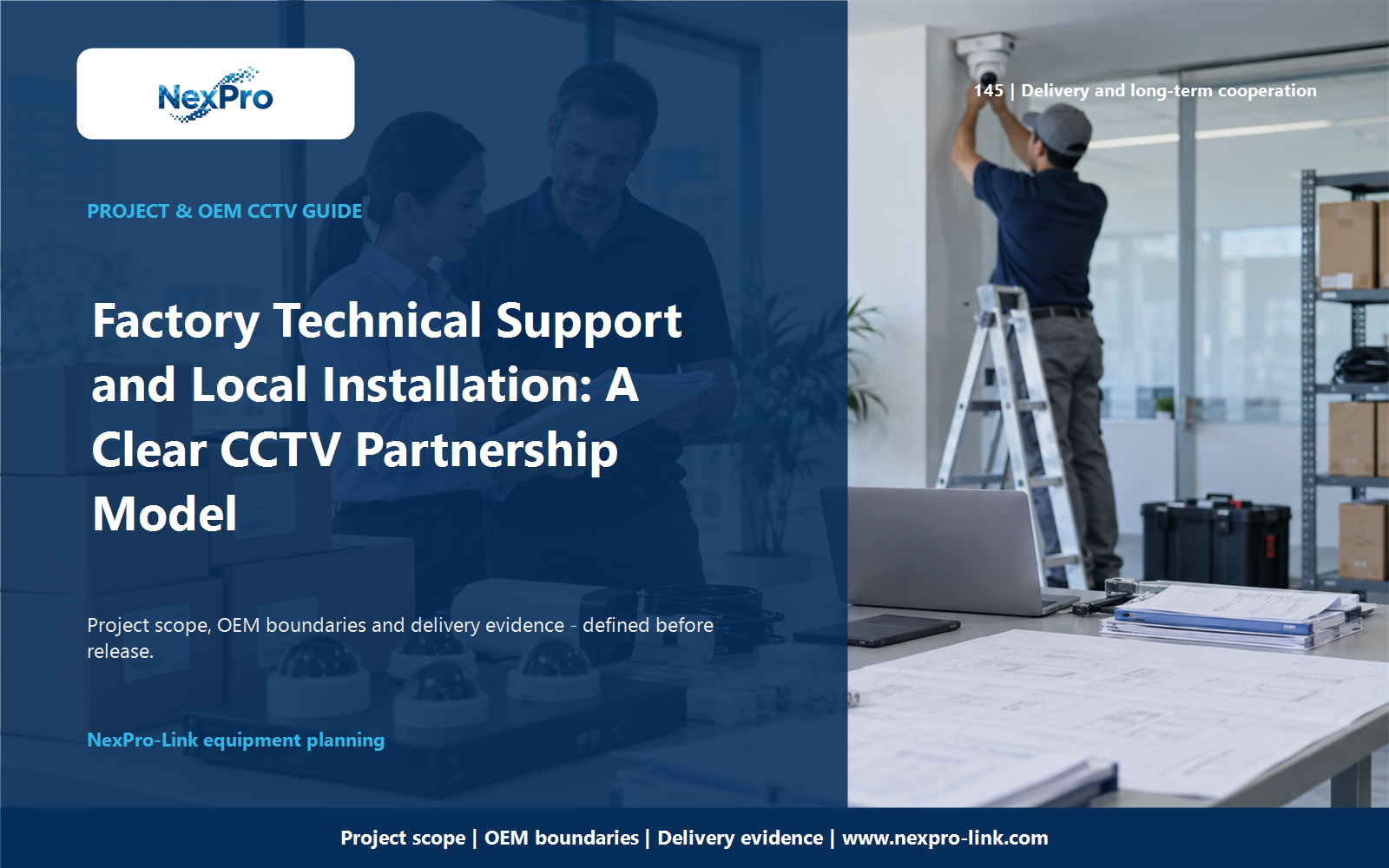
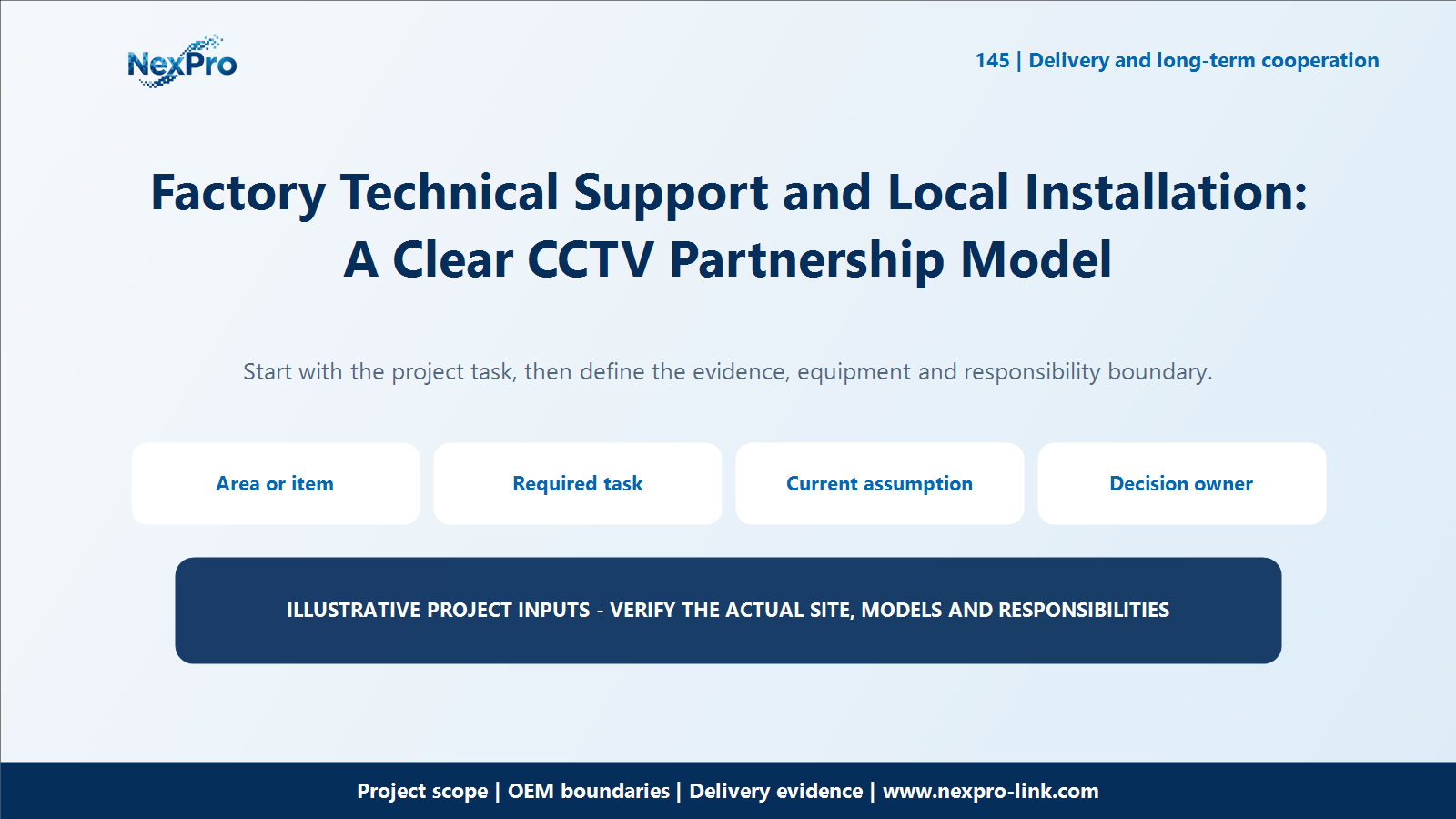
A local integrator supplies and installs a CCTV package while NexPro-Link provides the agreed equipment and remote technical coordination. Define the supplier tasks explicitly, such as model information, configuration guidance and assistance with equipment-related questions.
Section 01
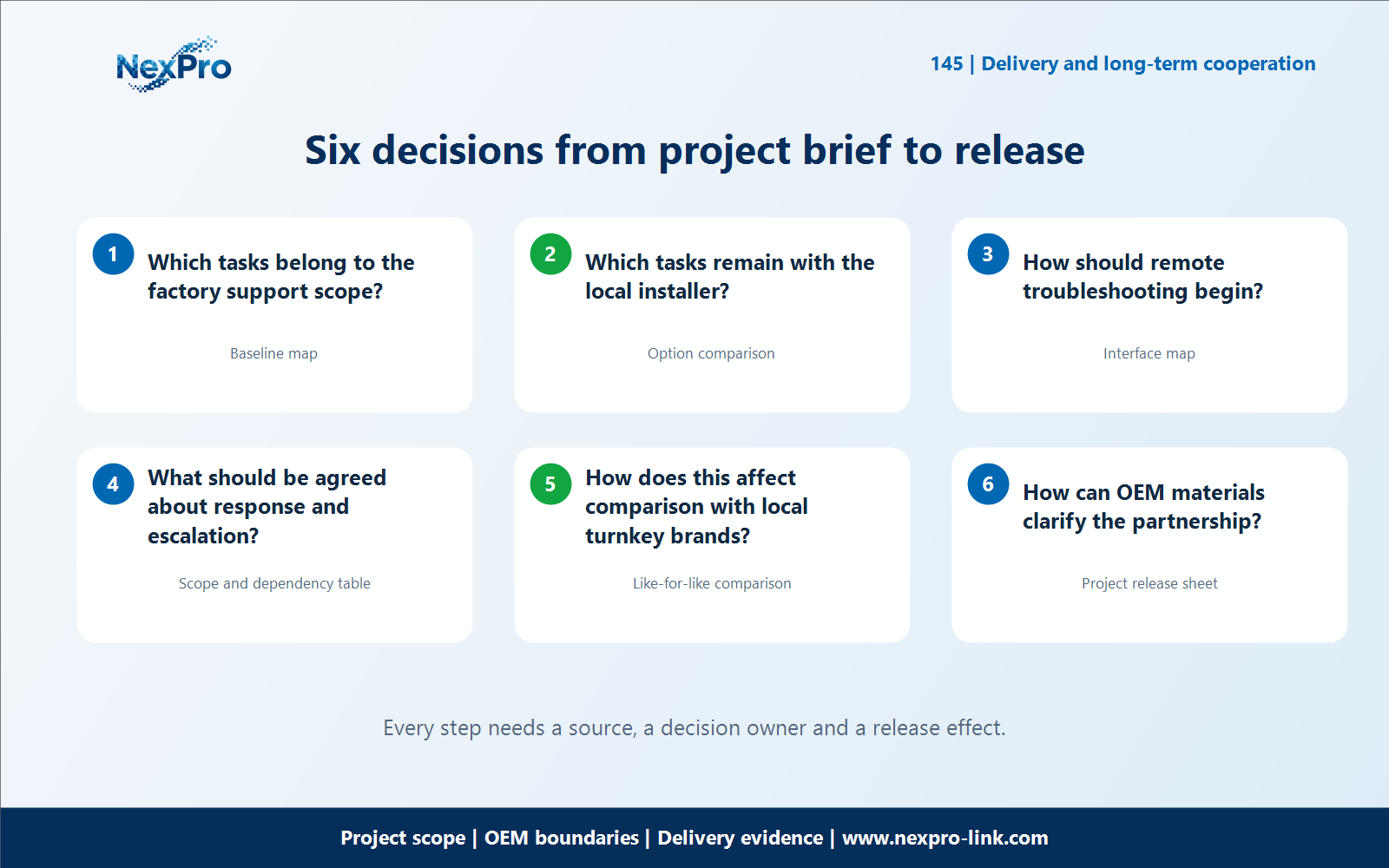
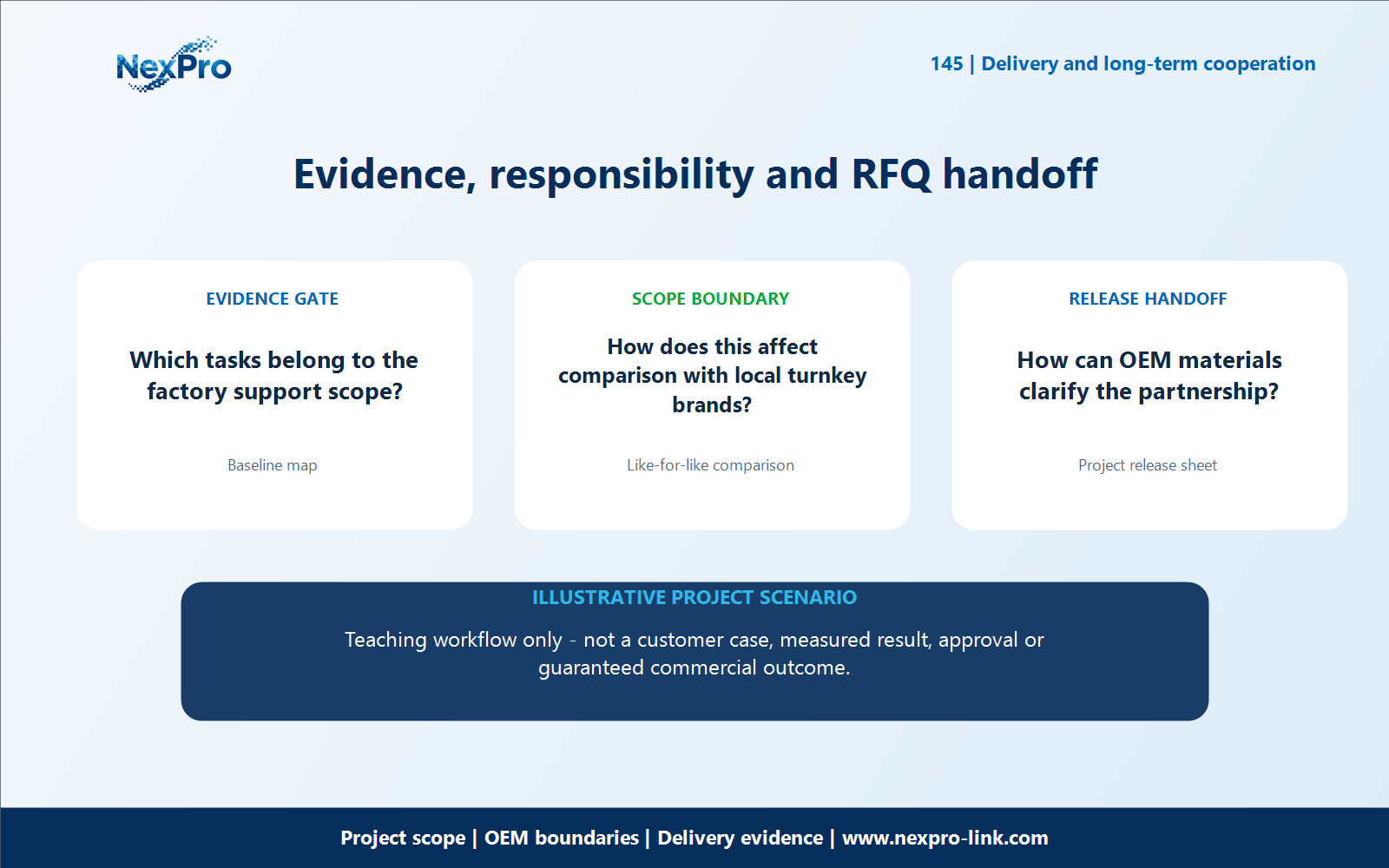
Which tasks belong to the factory support scope?
A local integrator supplies and installs a CCTV package while NexPro-Link provides the agreed equipment and remote technical coordination. Define the supplier tasks explicitly, such as model information, configuration guidance and assistance with equipment-related questions. Link them to the supplied package. Factory support is most useful when the local installer knows what information to provide and which questions the supplier can address.
For the "Which tasks belong to the factory support scope" decision, use the baseline map fields Area or item, Required task, Current assumption, Decision owner. Apply it to remote factory support local installer so the buyer, supplier and local integrator can see which input is confirmed, who owns it and which evidence remains open.
Evaluate which tasks belong to the factory support scope against the stated site task and the surrounding equipment, documentation, packing and handover dependencies for remote factory support local installer. For which tasks belong to the factory support scope in remote factory support local installer, record the confirmed condition, chosen option and remaining evidence separately; an open value is not a price, test, approval or customer-result claim.
Carry the which tasks belong to the factory support scope decision into the RFQ, BOQ, configuration or release record for remote factory support local installer. For which tasks belong to the factory support scope in remote factory support local installer, name the equipment, artwork, network, installation and acceptance owner; site-specific work remains with the buyer or integrator unless the signed scope says otherwise.
Section 02
Which tasks remain with the local installer?
Which tasks remain with the local installer? Keep site surveying, installation and local acceptance with the responsible parties in the project. The installer has access to conditions a remote supplier cannot directly observe. A clear division of work makes coordination practical without implying that equipment supply includes an overseas installation team. For Factory Technical Support and Local Installation: A Clear CCTV Partnership Model, keep this decision tied to the same project brief rather than opening a separate generic specification exercise.
For the "Which tasks remain with the local installer" decision, use the option comparison fields Position or option, Suitable condition, Trade-off, Next choice. Apply it to remote factory support local installer so the buyer, supplier and local integrator can see which input is confirmed, who owns it and which evidence remains open.
Evaluate which tasks remain with the local installer against the stated site task and the surrounding equipment, documentation, packing and handover dependencies for remote factory support local installer. For which tasks remain with the local installer in remote factory support local installer, record the confirmed condition, chosen option and remaining evidence separately; an open value is not a price, test, approval or customer-result claim.
Carry the which tasks remain with the local installer decision into the RFQ, BOQ, configuration or release record for remote factory support local installer. For which tasks remain with the local installer in remote factory support local installer, name the equipment, artwork, network, installation and acceptance owner; site-specific work remains with the buyer or integrator unless the signed scope says otherwise.
Section 03
How should remote troubleshooting begin?
How should remote troubleshooting begin? Start with the device identity, relevant configuration and a clear description of the observed problem. Share only the information needed through an authorized channel. This gives support a better basis than an unlabelled screenshot while avoiding unnecessary exposure of credentials or customer footage. For Factory Technical Support and Local Installation: A Clear CCTV Partnership Model, keep this decision tied to the same project brief rather than opening a separate generic specification exercise.
For the "How should remote troubleshooting begin" decision, use the interface map fields Device or record, Input, Output, Responsible party. Apply it to remote factory support local installer so the buyer, supplier and local integrator can see which input is confirmed, who owns it and which evidence remains open.
Evaluate how should remote troubleshooting begin against the stated site task and the surrounding equipment, documentation, packing and handover dependencies for remote factory support local installer. For how should remote troubleshooting begin in remote factory support local installer, record the confirmed condition, chosen option and remaining evidence separately; an open value is not a price, test, approval or customer-result claim.
Carry the how should remote troubleshooting begin decision into the RFQ, BOQ, configuration or release record for remote factory support local installer. For how should remote troubleshooting begin in remote factory support local installer, name the equipment, artwork, network, installation and acceptance owner; site-specific work remains with the buyer or integrator unless the signed scope says otherwise.
| Project question | Project-oriented treatment | Keep equal when comparing offers |
|---|---|---|
| Which tasks belong to the factory support scope? | Define the supplier tasks explicitly, such as model information, configuration guidance and assistance with equipment-related questions. | Actual supplied equipment and stage |
| Which tasks remain with the local installer? | Keep site surveying, installation and local acceptance with the responsible parties in the project. | Ownership of installation and support tasks |
| How should remote troubleshooting begin? | Start with the device identity, relevant configuration and a clear description of the observed problem. | Branding and configuration references |
| What should be agreed about response and escalation? | Agree contact channels, working-hour expectations and who can test proposed actions on site. | Confirmed order versus planned follow-up |
Section 04
What should be agreed about response and escalation?
What should be agreed about response and escalation? Agree contact channels, working-hour expectations and who can test proposed actions on site. Define escalation for issues that require another supplier or specialist. Any response commitment should come from the actual service agreement rather than a generic always-available claim in marketing copy. For Factory Technical Support and Local Installation: A Clear CCTV Partnership Model, keep this decision tied to the same project brief rather than opening a separate generic specification exercise.
For the "What should be agreed about response and escalation" decision, use the scope and dependency table fields Item, Included, Dependency, Separate option. Apply it to remote factory support local installer so the buyer, supplier and local integrator can see which input is confirmed, who owns it and which evidence remains open.
Evaluate what should be agreed about response and escalation against the stated site task and the surrounding equipment, documentation, packing and handover dependencies for remote factory support local installer. For what should be agreed about response and escalation in remote factory support local installer, record the confirmed condition, chosen option and remaining evidence separately; an open value is not a price, test, approval or customer-result claim.
Carry the what should be agreed about response and escalation decision into the RFQ, BOQ, configuration or release record for remote factory support local installer. For what should be agreed about response and escalation in remote factory support local installer, name the equipment, artwork, network, installation and acceptance owner; site-specific work remains with the buyer or integrator unless the signed scope says otherwise.
Section 05
How does this affect comparison with local turnkey brands?
How does this affect comparison with local turnkey brands? Compare the complete cooperation model with an installed local offer. Include the local work still required and the actual supplier support terms. Remote guidance can be valuable, but it is not the same deliverable as a technician attending the site under a turnkey contract. For Factory Technical Support and Local Installation: A Clear CCTV Partnership Model, keep this decision tied to the same project brief rather than opening a separate generic specification exercise.
For the "How does this affect comparison with local turnkey brands" decision, use the like-for-like comparison fields Requirement, Baseline, Proposed treatment, Remaining difference. Apply it to remote factory support local installer so the buyer, supplier and local integrator can see which input is confirmed, who owns it and which evidence remains open.
Evaluate how does this affect comparison with local turnkey brands against the stated site task and the surrounding equipment, documentation, packing and handover dependencies for remote factory support local installer. For how does this affect comparison with local turnkey brands in remote factory support local installer, record the confirmed condition, chosen option and remaining evidence separately; an open value is not a price, test, approval or customer-result claim.
Carry the how does this affect comparison with local turnkey brands decision into the RFQ, BOQ, configuration or release record for remote factory support local installer. For how does this affect comparison with local turnkey brands in remote factory support local installer, name the equipment, artwork, network, installation and acceptance owner; site-specific work remains with the buyer or integrator unless the signed scope says otherwise.
Section 06
How can OEM materials clarify the partnership?
How can OEM materials clarify the partnership? Use branded materials to identify the customer's normal support route and the supplied configuration. Keep technical references available for escalation to the factory. This helps the end user reach the right party while giving the installer a clear channel for equipment-specific assistance. For Factory Technical Support and Local Installation: A Clear CCTV Partnership Model, keep this decision tied to the same project brief rather than opening a separate generic specification exercise.
For the "How can OEM materials clarify the partnership" decision, use the project release sheet fields Configuration, Artwork, Quantity, Location, Release stage. Apply it to remote factory support local installer so the buyer, supplier and local integrator can see which input is confirmed, who owns it and which evidence remains open.
Evaluate how can oem materials clarify the partnership against the stated site task and the surrounding equipment, documentation, packing and handover dependencies for remote factory support local installer. For how can oem materials clarify the partnership in remote factory support local installer, record the confirmed condition, chosen option and remaining evidence separately; an open value is not a price, test, approval or customer-result claim.
Carry the how can oem materials clarify the partnership decision into the RFQ, BOQ, configuration or release record for remote factory support local installer. For how can oem materials clarify the partnership in remote factory support local installer, name the equipment, artwork, network, installation and acceptance owner; site-specific work remains with the buyer or integrator unless the signed scope says otherwise.
Engineering references
These sources support the general planning principles. Always use the selected product's current datasheet and applicable project standards for final design.