A clinic is opening a nonclinical security system for entrances and service routes while keeping consultation and treatment spaces outside the camera plan. State the approved nonclinical security purpose first.
Section 01
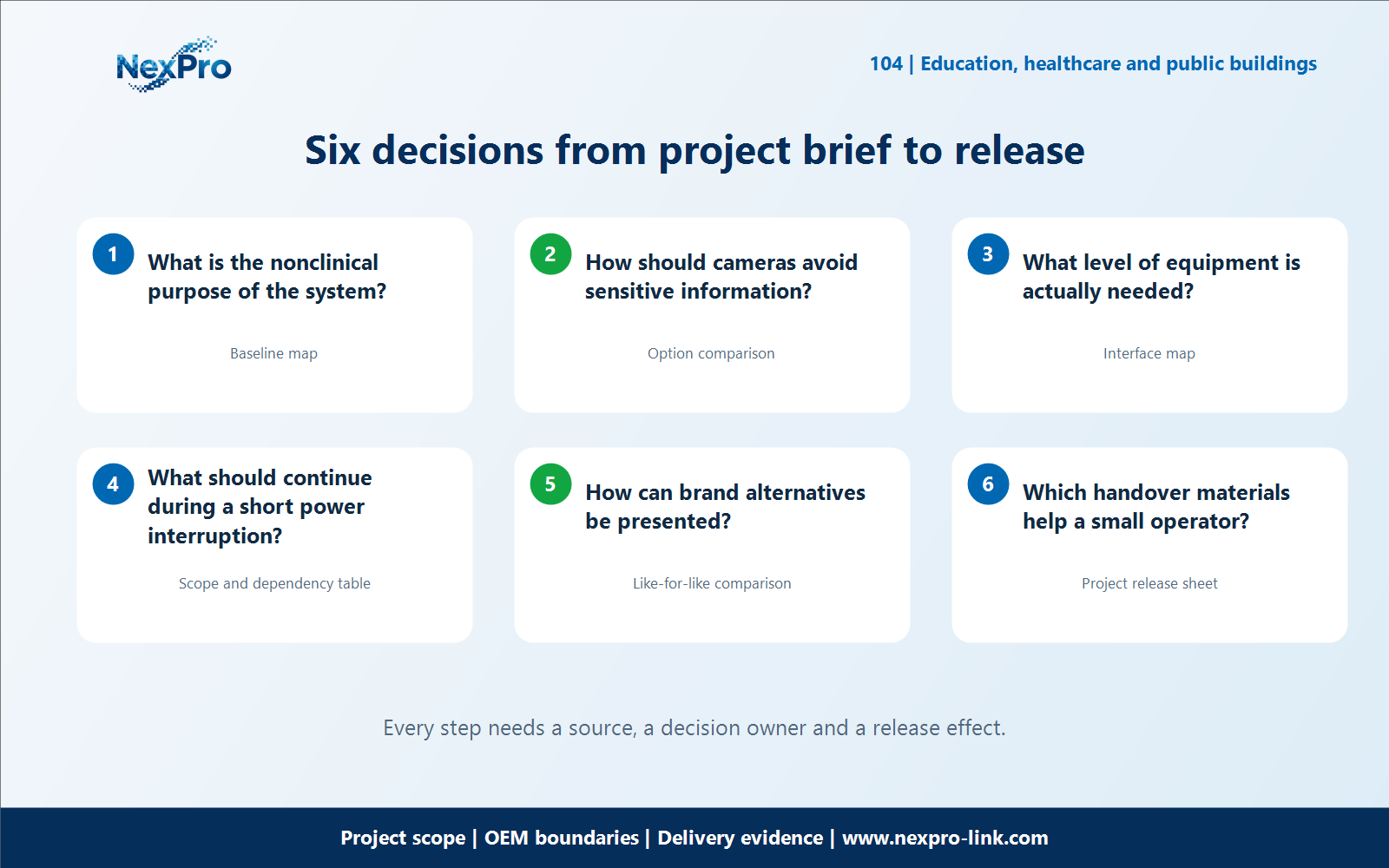
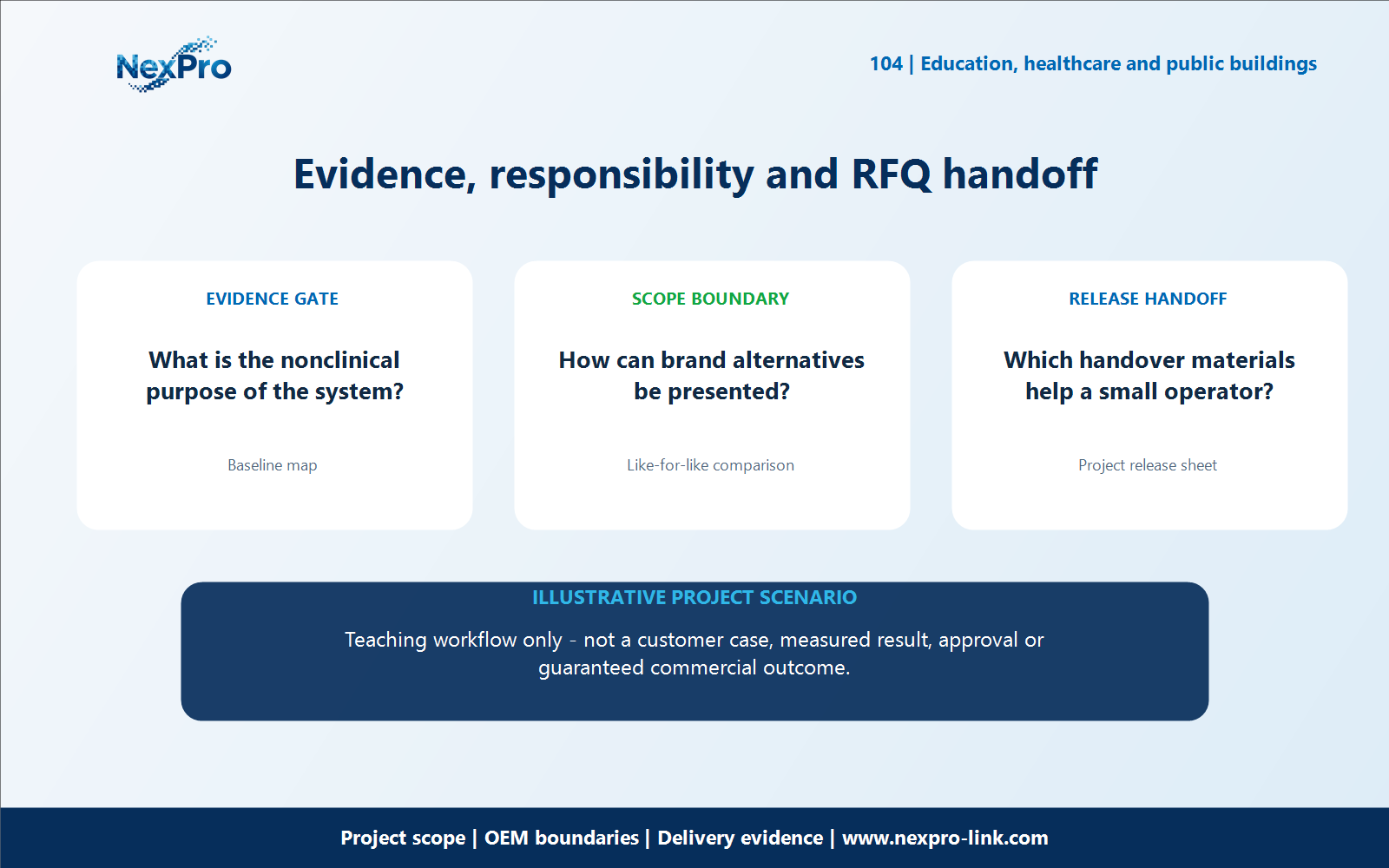
What is the nonclinical purpose of the system?
A clinic is opening a nonclinical security system for entrances and service routes while keeping consultation and treatment spaces outside the camera plan. State the approved nonclinical security purpose first. Entrance and service-route monitoring should not be described as patient diagnosis or clinical observation. The clinic must determine where recording is appropriate before equipment quantities and viewing positions are finalized.
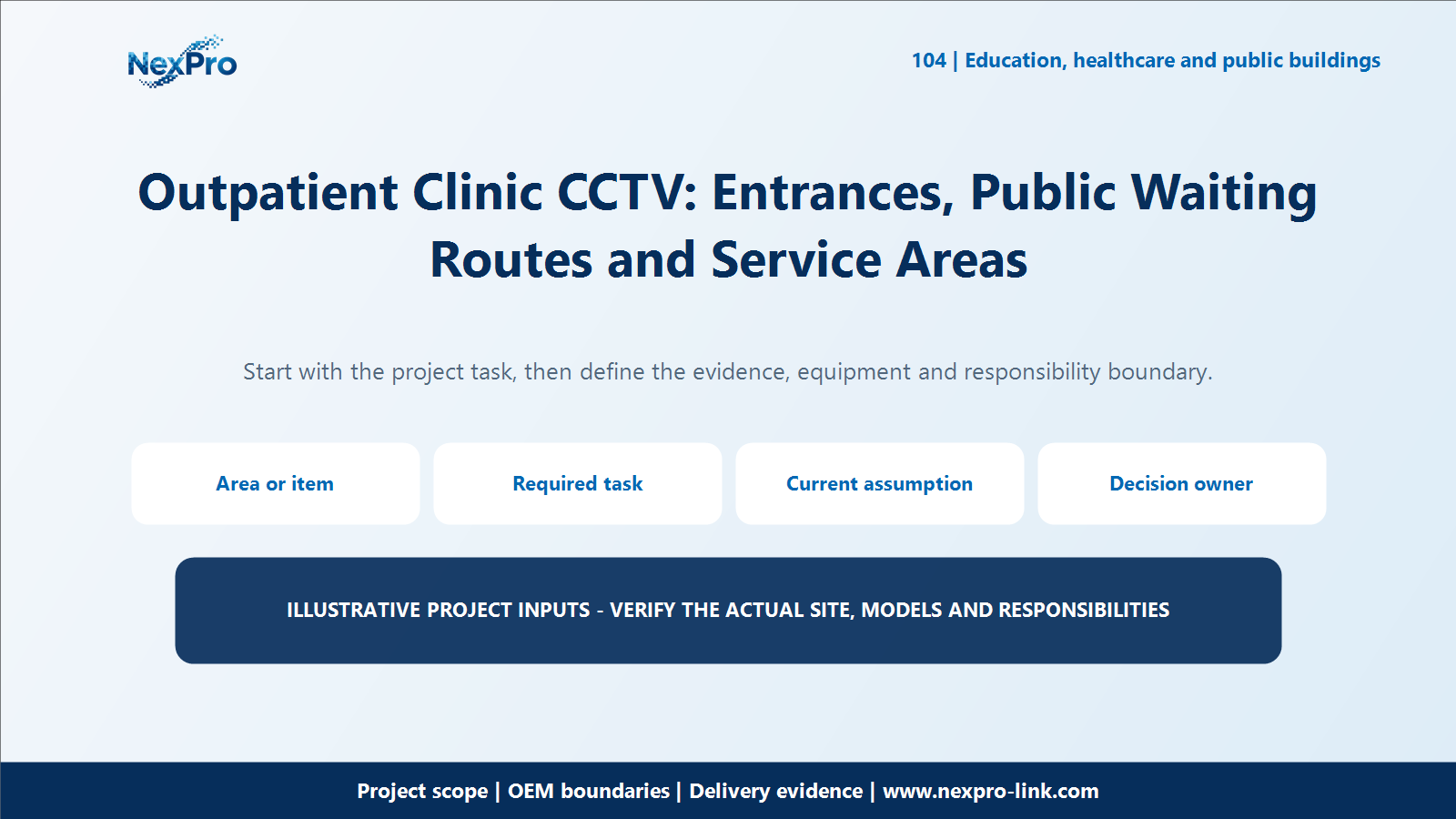
For the "What is the nonclinical purpose of the system" decision, use the baseline map fields Area or item, Required task, Current assumption, Decision owner. Apply it to outpatient clinic nonclinical CCTV so the buyer, supplier and local integrator can see which input is confirmed, who owns it and which evidence remains open.
Evaluate what is the nonclinical purpose of the system against the stated site task and the surrounding equipment, documentation, packing and handover dependencies for outpatient clinic nonclinical CCTV. For what is the nonclinical purpose of the system in outpatient clinic nonclinical CCTV, record the confirmed condition, chosen option and remaining evidence separately; an open value is not a price, test, approval or customer-result claim.
Carry the what is the nonclinical purpose of the system decision into the RFQ, BOQ, configuration or release record for outpatient clinic nonclinical CCTV. For what is the nonclinical purpose of the system in outpatient clinic nonclinical CCTV, name the equipment, artwork, network, installation and acceptance owner; site-specific work remains with the buyer or integrator unless the signed scope says otherwise.
Section 02
How should cameras avoid sensitive information?
How should cameras avoid sensitive information? Frame the approved views to avoid unnecessary capture of consultation activity, records and screens. The appropriate policy depends on the clinic and applicable requirements. A supplier can help describe coverage limits but should not promise universal healthcare privacy compliance. For Outpatient Clinic CCTV: Entrances, Public Waiting Routes and Service Areas, keep this decision tied to the same project brief rather than opening a separate generic specification exercise.
For the "How should cameras avoid sensitive information" decision, use the option comparison fields Position or option, Suitable condition, Trade-off, Next choice. Apply it to outpatient clinic nonclinical CCTV so the buyer, supplier and local integrator can see which input is confirmed, who owns it and which evidence remains open.
Evaluate how should cameras avoid sensitive information against the stated site task and the surrounding equipment, documentation, packing and handover dependencies for outpatient clinic nonclinical CCTV. For how should cameras avoid sensitive information in outpatient clinic nonclinical CCTV, record the confirmed condition, chosen option and remaining evidence separately; an open value is not a price, test, approval or customer-result claim.
Carry the how should cameras avoid sensitive information decision into the RFQ, BOQ, configuration or release record for outpatient clinic nonclinical CCTV. For how should cameras avoid sensitive information in outpatient clinic nonclinical CCTV, name the equipment, artwork, network, installation and acceptance owner; site-specific work remains with the buyer or integrator unless the signed scope says otherwise.
Section 03
What level of equipment is actually needed?
What level of equipment is actually needed? Select devices according to the entrance and corridor tasks, including lighting and target detail. A clinic label alone does not require the highest product tier at every point. The complete solution should satisfy the approved security workflow without implying clinical capability. For Outpatient Clinic CCTV: Entrances, Public Waiting Routes and Service Areas, keep this decision tied to the same project brief rather than opening a separate generic specification exercise.
For the "What level of equipment is actually needed" decision, use the interface map fields Device or record, Input, Output, Responsible party. Apply it to outpatient clinic nonclinical CCTV so the buyer, supplier and local integrator can see which input is confirmed, who owns it and which evidence remains open.
Evaluate what level of equipment is actually needed against the stated site task and the surrounding equipment, documentation, packing and handover dependencies for outpatient clinic nonclinical CCTV. For what level of equipment is actually needed in outpatient clinic nonclinical CCTV, record the confirmed condition, chosen option and remaining evidence separately; an open value is not a price, test, approval or customer-result claim.
Carry the what level of equipment is actually needed decision into the RFQ, BOQ, configuration or release record for outpatient clinic nonclinical CCTV. For what level of equipment is actually needed in outpatient clinic nonclinical CCTV, name the equipment, artwork, network, installation and acceptance owner; site-specific work remains with the buyer or integrator unless the signed scope says otherwise.
| Project question | Project-oriented treatment | Keep equal when comparing offers |
|---|---|---|
| What is the nonclinical purpose of the system? | State the approved nonclinical security purpose first. | Authorized institutional security purpose |
| How should cameras avoid sensitive information? | Frame the approved views to avoid unnecessary capture of consultation activity, records and screens. | Mandatory system and procurement requirements |
| What level of equipment is actually needed? | Select devices according to the entrance and corridor tasks, including lighting and target detail. | Network, recording and access scope |
| What should continue during a short power interruption? | Define the continuity target for the nonclinical CCTV path and size backup power accordingly. | Actual delivery and operating support |
Section 04
What should continue during a short power interruption?
What should continue during a short power interruption? Define the continuity target for the nonclinical CCTV path and size backup power accordingly. Keep life-support and other medical power systems outside this ordinary security package. Protecting a recorder does not mean the cameras will remain active unless their network power also remains available. For Outpatient Clinic CCTV: Entrances, Public Waiting Routes and Service Areas, keep this decision tied to the same project brief rather than opening a separate generic specification exercise.
For the "What should continue during a short power interruption" decision, use the scope and dependency table fields Item, Included, Dependency, Separate option. Apply it to outpatient clinic nonclinical CCTV so the buyer, supplier and local integrator can see which input is confirmed, who owns it and which evidence remains open.
Evaluate what should continue during a short power interruption against the stated site task and the surrounding equipment, documentation, packing and handover dependencies for outpatient clinic nonclinical CCTV. For what should continue during a short power interruption in outpatient clinic nonclinical CCTV, record the confirmed condition, chosen option and remaining evidence separately; an open value is not a price, test, approval or customer-result claim.
Carry the what should continue during a short power interruption decision into the RFQ, BOQ, configuration or release record for outpatient clinic nonclinical CCTV. For what should continue during a short power interruption in outpatient clinic nonclinical CCTV, name the equipment, artwork, network, installation and acceptance owner; site-specific work remains with the buyer or integrator unless the signed scope says otherwise.
Section 05
How can brand alternatives be presented?
How can brand alternatives be presented? Compare the same nonclinical locations, recording policy and support arrangement. Any remote-access method must fit the clinic's authorized workflow. A value-oriented NexPro-Link package should explain those boundaries rather than claim that lower cost alone makes it suitable for healthcare. For Outpatient Clinic CCTV: Entrances, Public Waiting Routes and Service Areas, keep this decision tied to the same project brief rather than opening a separate generic specification exercise.
For the "How can brand alternatives be presented" decision, use the like-for-like comparison fields Requirement, Baseline, Proposed treatment, Remaining difference. Apply it to outpatient clinic nonclinical CCTV so the buyer, supplier and local integrator can see which input is confirmed, who owns it and which evidence remains open.
Evaluate how can brand alternatives be presented against the stated site task and the surrounding equipment, documentation, packing and handover dependencies for outpatient clinic nonclinical CCTV. For how can brand alternatives be presented in outpatient clinic nonclinical CCTV, record the confirmed condition, chosen option and remaining evidence separately; an open value is not a price, test, approval or customer-result claim.
Carry the how can brand alternatives be presented decision into the RFQ, BOQ, configuration or release record for outpatient clinic nonclinical CCTV. For how can brand alternatives be presented in outpatient clinic nonclinical CCTV, name the equipment, artwork, network, installation and acceptance owner; site-specific work remains with the buyer or integrator unless the signed scope says otherwise.
Section 06
Which handover materials help a small operator?
Which handover materials help a small operator? Provide a concise device schedule, normal playback instructions and an authorized support route. Optional clinic or contractor branding can organize the package, but third-party application identity should remain accurate. Keep access credentials separate from publicly distributed operating sheets. For Outpatient Clinic CCTV: Entrances, Public Waiting Routes and Service Areas, keep this decision tied to the same project brief rather than opening a separate generic specification exercise.
For the "Which handover materials help a small operator" decision, use the project release sheet fields Configuration, Artwork, Quantity, Location, Release stage. Apply it to outpatient clinic nonclinical CCTV so the buyer, supplier and local integrator can see which input is confirmed, who owns it and which evidence remains open.
Evaluate which handover materials help a small operator against the stated site task and the surrounding equipment, documentation, packing and handover dependencies for outpatient clinic nonclinical CCTV. For which handover materials help a small operator in outpatient clinic nonclinical CCTV, record the confirmed condition, chosen option and remaining evidence separately; an open value is not a price, test, approval or customer-result claim.
Carry the which handover materials help a small operator decision into the RFQ, BOQ, configuration or release record for outpatient clinic nonclinical CCTV. For which handover materials help a small operator in outpatient clinic nonclinical CCTV, name the equipment, artwork, network, installation and acceptance owner; site-specific work remains with the buyer or integrator unless the signed scope says otherwise.
Engineering references
These sources support the general planning principles. Always use the selected product's current datasheet and applicable project standards for final design.