An installer is choosing between standard boxed kits and a private-label equipment batch for several contracted commercial projects. Compare the kit's actual contents and functions with the required project schedule.
Section 01
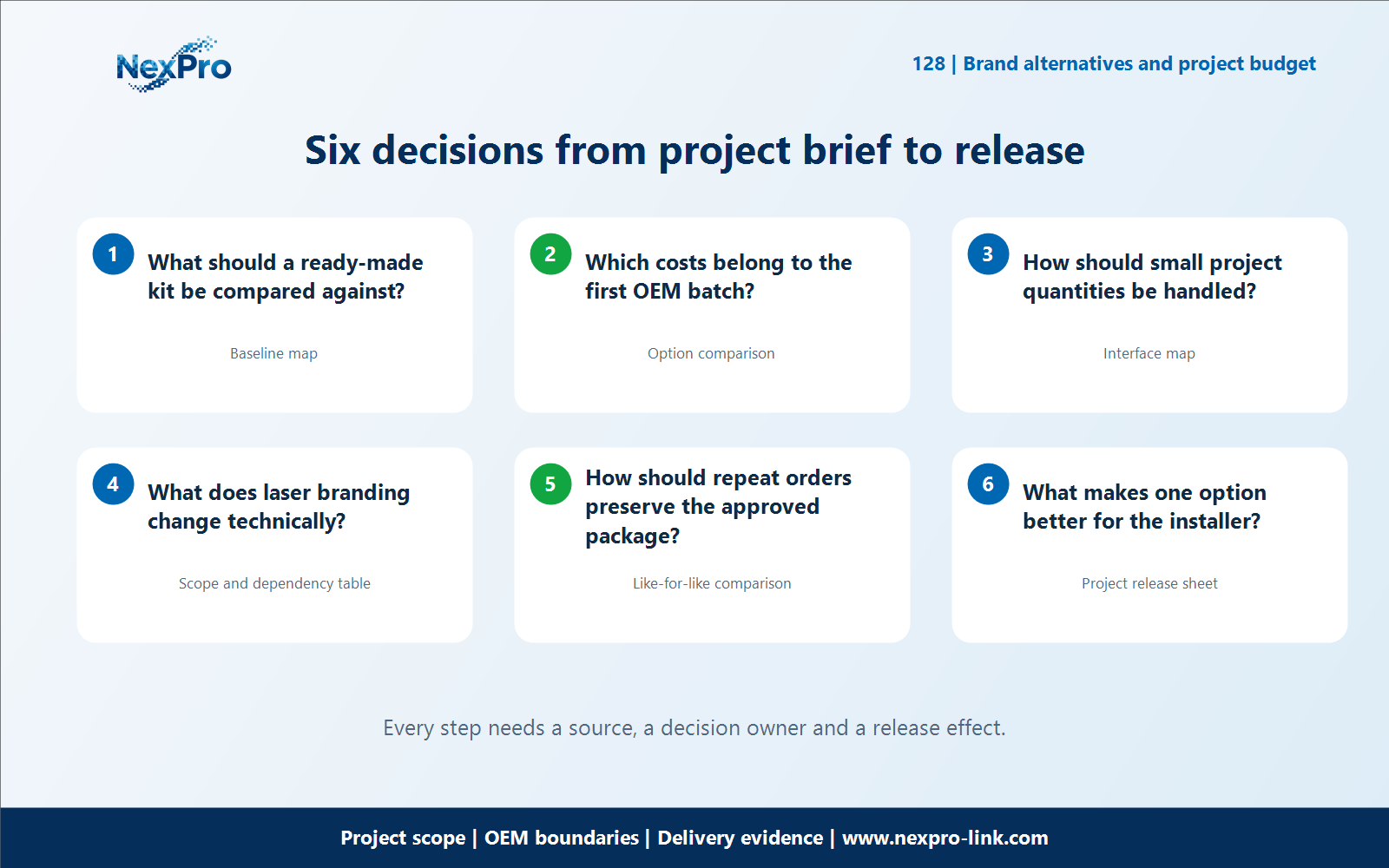
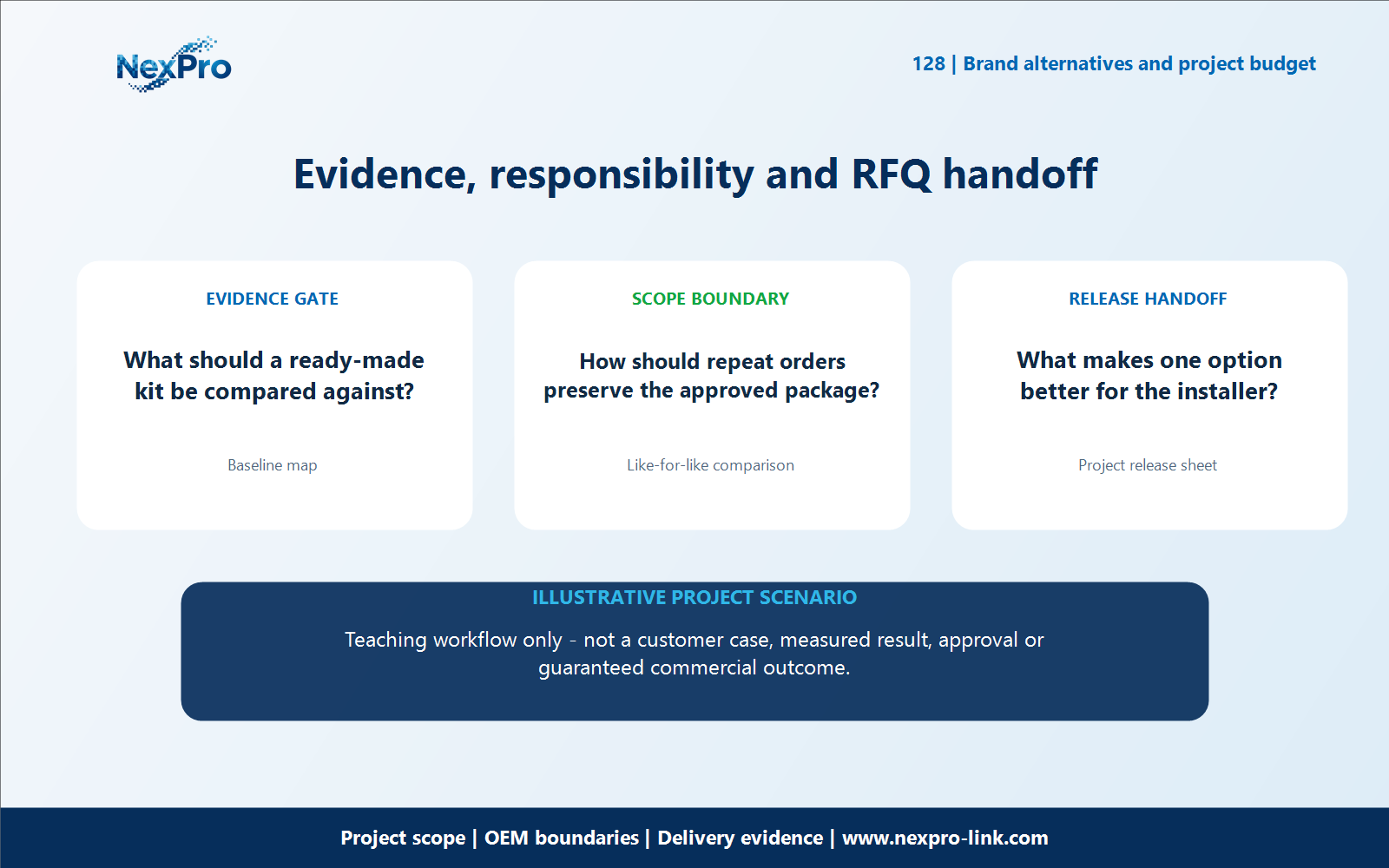
What should a ready-made kit be compared against?
An installer is choosing between standard boxed kits and a private-label equipment batch for several contracted commercial projects. Compare the kit's actual contents and functions with the required project schedule. A ready-made bundle may be practical when it fits. An OEM order should be evaluated as an equipment and delivery arrangement, not merely the same box with a different name printed on it.
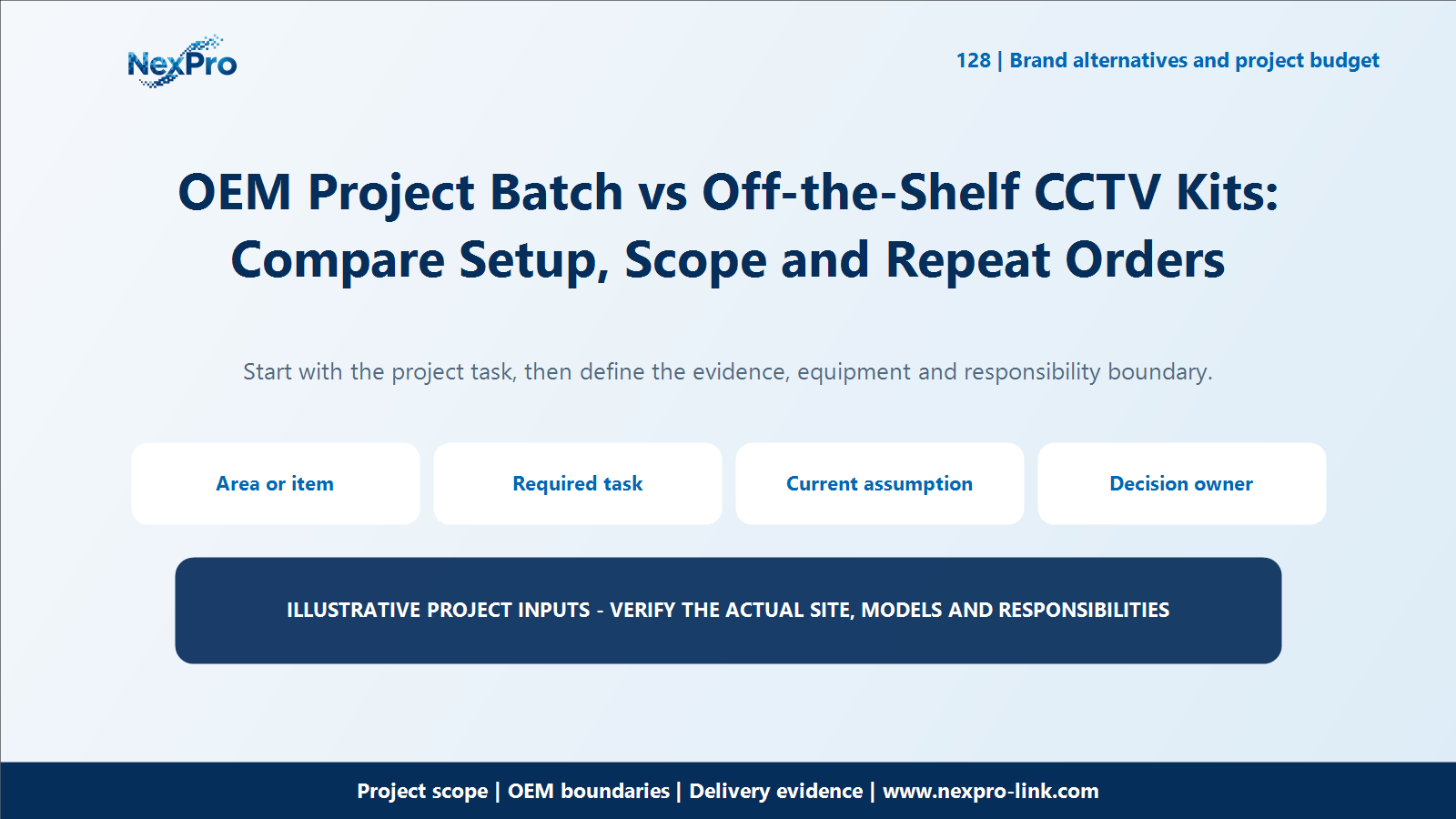
For the "What should a ready-made kit be compared against" decision, use the baseline map fields Area or item, Required task, Current assumption, Decision owner. Apply it to OEM small project batch vs retail kit so the buyer, supplier and local integrator can see which input is confirmed, who owns it and which evidence remains open.
Evaluate what should a ready-made kit be compared against against the stated site task and the surrounding equipment, documentation, packing and handover dependencies for OEM small project batch vs retail kit. For what should a ready-made kit be compared against in OEM small project batch vs retail kit, record the confirmed condition, chosen option and remaining evidence separately; an open value is not a price, test, approval or customer-result claim.
Carry the what should a ready-made kit be compared against decision into the RFQ, BOQ, configuration or release record for OEM small project batch vs retail kit. For what should a ready-made kit be compared against in OEM small project batch vs retail kit, name the equipment, artwork, network, installation and acceptance owner; site-specific work remains with the buyer or integrator unless the signed scope says otherwise.
Section 02
Which costs belong to the first OEM batch?
Which costs belong to the first OEM batch? Separate artwork, sample and packaging setup from recurring equipment costs where those charges apply. Use the supplier's actual quotation. The first batch may carry work that later orders reuse, so its unit price should not be treated as the only long-term cost measure. For OEM Project Batch vs Off-the-Shelf CCTV Kits: Compare Setup, Scope and Repeat Orders, keep this decision tied to the same project brief rather than opening a separate generic specification exercise.
For the "Which costs belong to the first OEM batch" decision, use the option comparison fields Position or option, Suitable condition, Trade-off, Next choice. Apply it to OEM small project batch vs retail kit so the buyer, supplier and local integrator can see which input is confirmed, who owns it and which evidence remains open.
Evaluate which costs belong to the first oem batch against the stated site task and the surrounding equipment, documentation, packing and handover dependencies for OEM small project batch vs retail kit. For which costs belong to the first oem batch in OEM small project batch vs retail kit, record the confirmed condition, chosen option and remaining evidence separately; an open value is not a price, test, approval or customer-result claim.
Carry the which costs belong to the first oem batch decision into the RFQ, BOQ, configuration or release record for OEM small project batch vs retail kit. For which costs belong to the first oem batch in OEM small project batch vs retail kit, name the equipment, artwork, network, installation and acceptance owner; site-specific work remains with the buyer or integrator unless the signed scope says otherwise.
Section 03
How should small project quantities be handled?
How should small project quantities be handled? Group identical approved configurations where practical, while keeping project allocation clear. Minimum quantities depend on the model and customization process. Neutral packing with project labels may be a useful alternative when a fully printed package is not proportionate to the order. For OEM Project Batch vs Off-the-Shelf CCTV Kits: Compare Setup, Scope and Repeat Orders, keep this decision tied to the same project brief rather than opening a separate generic specification exercise.
For the "How should small project quantities be handled" decision, use the interface map fields Device or record, Input, Output, Responsible party. Apply it to OEM small project batch vs retail kit so the buyer, supplier and local integrator can see which input is confirmed, who owns it and which evidence remains open.
Evaluate how should small project quantities be handled against the stated site task and the surrounding equipment, documentation, packing and handover dependencies for OEM small project batch vs retail kit. For how should small project quantities be handled in OEM small project batch vs retail kit, record the confirmed condition, chosen option and remaining evidence separately; an open value is not a price, test, approval or customer-result claim.
Carry the how should small project quantities be handled decision into the RFQ, BOQ, configuration or release record for OEM small project batch vs retail kit. For how should small project quantities be handled in OEM small project batch vs retail kit, name the equipment, artwork, network, installation and acceptance owner; site-specific work remains with the buyer or integrator unless the signed scope says otherwise.
| Project question | Project-oriented treatment | Keep equal when comparing offers |
|---|---|---|
| What should a ready-made kit be compared against? | Compare the kit's actual contents and functions with the required project schedule. | Unchanged required project outcome |
| Which costs belong to the first OEM batch? | Separate artwork, sample and packaging setup from recurring equipment costs where those charges apply. | Exact equipment and interface scope |
| How should small project quantities be handled? | Group identical approved configurations where practical, while keeping project allocation clear. | Comparable quotation date and delivery basis |
| What does laser branding change technically? | Laser marking changes the physical branding treatment, not the camera's imaging or recording capability. | Separately priced branding and support |
Section 04
What does laser branding change technically?
What does laser branding change technically? Laser marking changes the physical branding treatment, not the camera's imaging or recording capability. Confirm the applicable surface and marking area. Technical identities and necessary labels should remain readable so the branded device is still straightforward to service. For OEM Project Batch vs Off-the-Shelf CCTV Kits: Compare Setup, Scope and Repeat Orders, keep this decision tied to the same project brief rather than opening a separate generic specification exercise.
For the "What does laser branding change technically" decision, use the scope and dependency table fields Item, Included, Dependency, Separate option. Apply it to OEM small project batch vs retail kit so the buyer, supplier and local integrator can see which input is confirmed, who owns it and which evidence remains open.
Evaluate what does laser branding change technically against the stated site task and the surrounding equipment, documentation, packing and handover dependencies for OEM small project batch vs retail kit. For what does laser branding change technically in OEM small project batch vs retail kit, record the confirmed condition, chosen option and remaining evidence separately; an open value is not a price, test, approval or customer-result claim.
Carry the what does laser branding change technically decision into the RFQ, BOQ, configuration or release record for OEM small project batch vs retail kit. For what does laser branding change technically in OEM small project batch vs retail kit, name the equipment, artwork, network, installation and acceptance owner; site-specific work remains with the buyer or integrator unless the signed scope says otherwise.
Section 05
How should repeat orders preserve the approved package?
How should repeat orders preserve the approved package? Reference the approved equipment configuration and the separate artwork version in repeat orders. Do not rely only on a photo of the previous box. This keeps branding continuity from hiding an unintended hardware or accessory change. For OEM Project Batch vs Off-the-Shelf CCTV Kits: Compare Setup, Scope and Repeat Orders, keep this decision tied to the same project brief rather than opening a separate generic specification exercise.
For the "How should repeat orders preserve the approved package" decision, use the like-for-like comparison fields Requirement, Baseline, Proposed treatment, Remaining difference. Apply it to OEM small project batch vs retail kit so the buyer, supplier and local integrator can see which input is confirmed, who owns it and which evidence remains open.
Evaluate how should repeat orders preserve the approved package against the stated site task and the surrounding equipment, documentation, packing and handover dependencies for OEM small project batch vs retail kit. For how should repeat orders preserve the approved package in OEM small project batch vs retail kit, record the confirmed condition, chosen option and remaining evidence separately; an open value is not a price, test, approval or customer-result claim.
Carry the how should repeat orders preserve the approved package decision into the RFQ, BOQ, configuration or release record for OEM small project batch vs retail kit. For how should repeat orders preserve the approved package in OEM small project batch vs retail kit, name the equipment, artwork, network, installation and acceptance owner; site-specific work remains with the buyer or integrator unless the signed scope says otherwise.
Section 06
What makes one option better for the installer?
What makes one option better for the installer? Choose from the actual project fit, delivery capability and brand-development goal. A standard kit may be appropriate for one small job, while a repeatable private-label package may suit a continuing pipeline. NexPro-Link's offer should make both the technical scope and customization cost clear. For OEM Project Batch vs Off-the-Shelf CCTV Kits: Compare Setup, Scope and Repeat Orders, keep this decision tied to the same project brief rather than opening a separate generic specification exercise.
For the "What makes one option better for the installer" decision, use the project release sheet fields Configuration, Artwork, Quantity, Location, Release stage. Apply it to OEM small project batch vs retail kit so the buyer, supplier and local integrator can see which input is confirmed, who owns it and which evidence remains open.
Evaluate what makes one option better for the installer against the stated site task and the surrounding equipment, documentation, packing and handover dependencies for OEM small project batch vs retail kit. For what makes one option better for the installer in OEM small project batch vs retail kit, record the confirmed condition, chosen option and remaining evidence separately; an open value is not a price, test, approval or customer-result claim.
Carry the what makes one option better for the installer decision into the RFQ, BOQ, configuration or release record for OEM small project batch vs retail kit. For what makes one option better for the installer in OEM small project batch vs retail kit, name the equipment, artwork, network, installation and acceptance owner; site-specific work remains with the buyer or integrator unless the signed scope says otherwise.
Engineering references
These sources support the general planning principles. Always use the selected product's current datasheet and applicable project standards for final design.