A new hotel's service route connects deliveries, dry storage, kitchen entrances and staff-only corridors. State the operational purpose of each view, such as delivery handover or access to a restricted service route.
Section 01
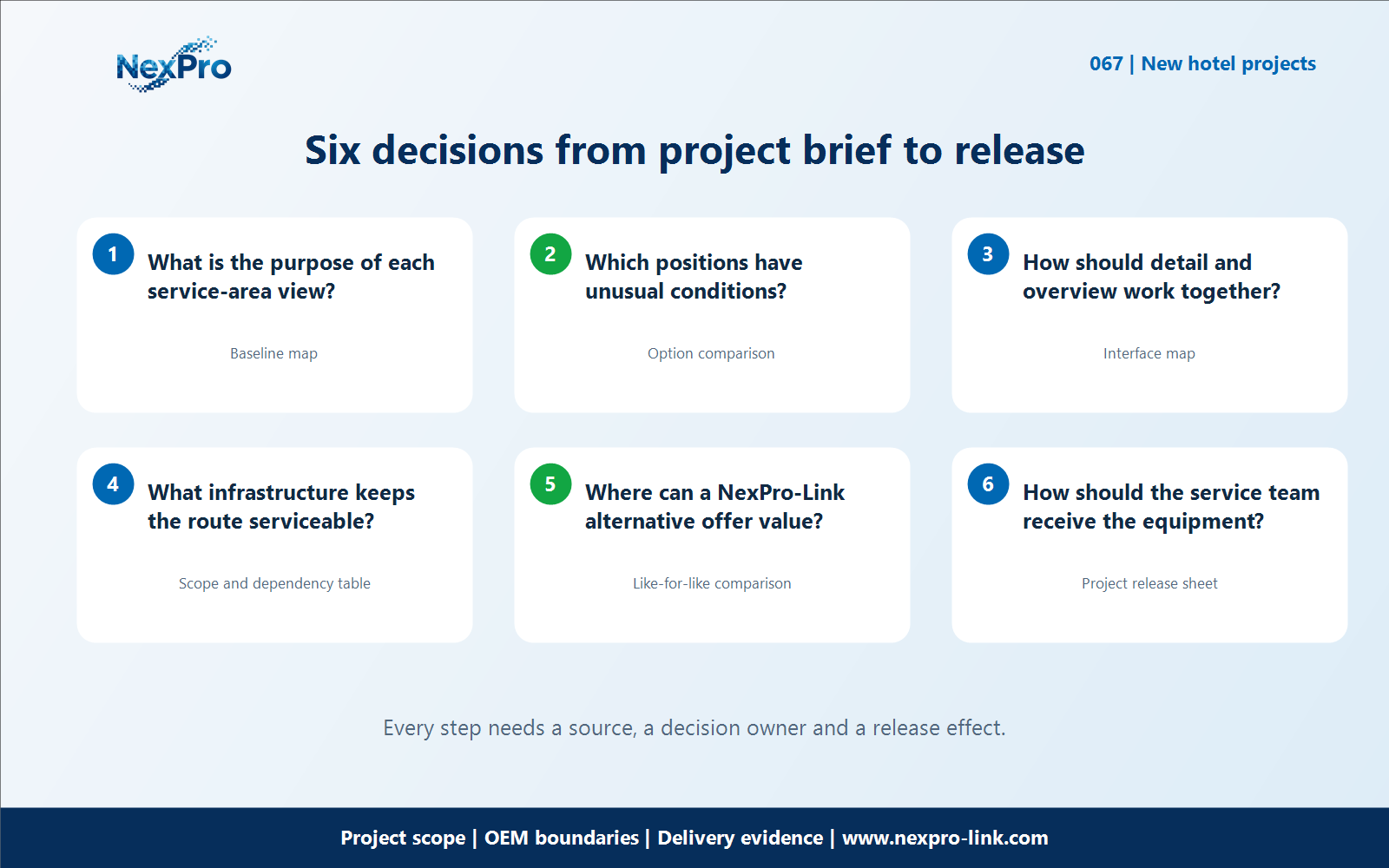
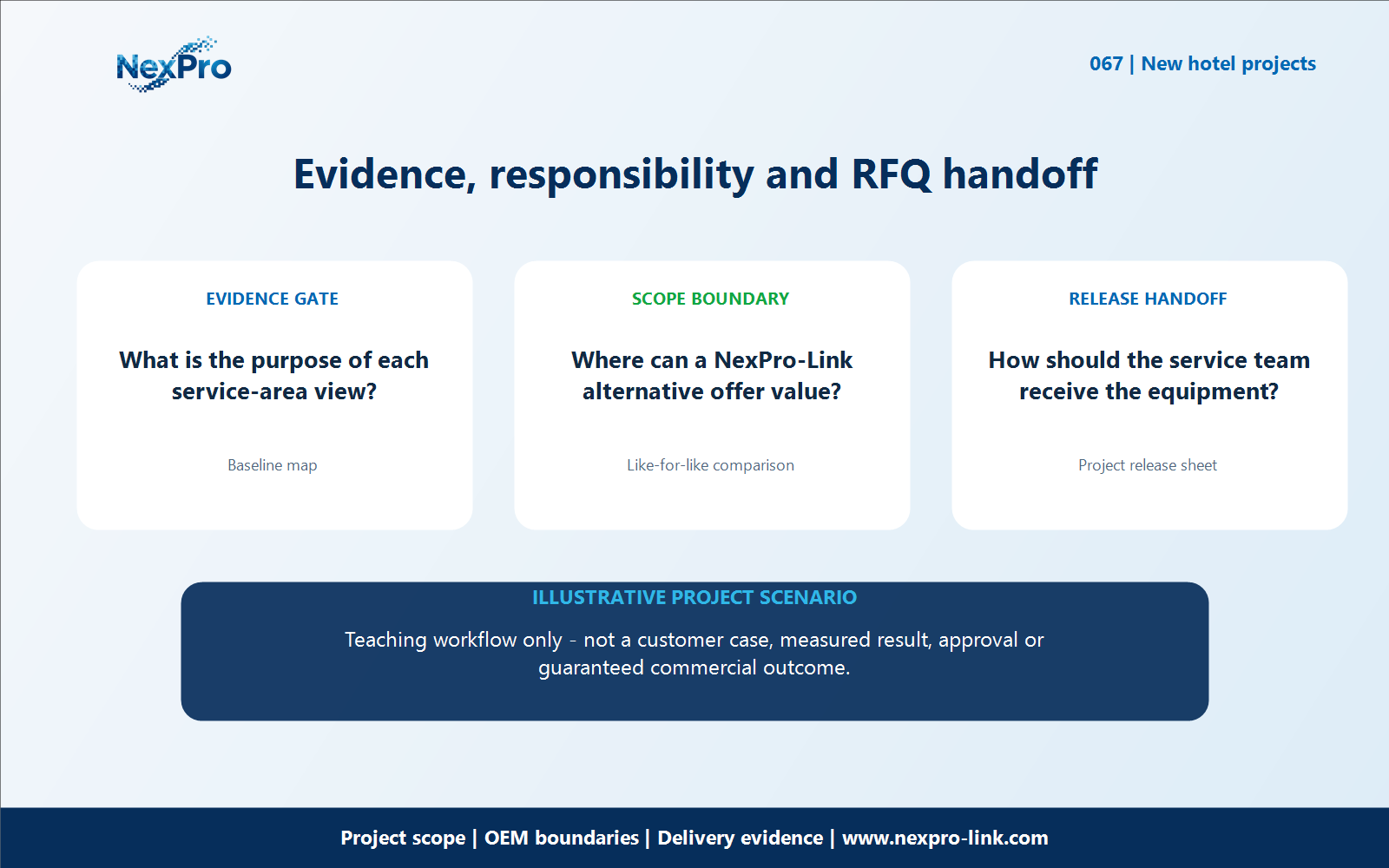
What is the purpose of each service-area view?
A new hotel's service route connects deliveries, dry storage, kitchen entrances and staff-only corridors. State the operational purpose of each view, such as delivery handover or access to a restricted service route. Keep the scope tied to those tasks. Monitoring should not expand automatically into private staff facilities or unrelated individual tracking.
For the "What is the purpose of each service-area view" decision, use the baseline map fields Area or item, Required task, Current assumption, Decision owner. Apply it to hotel back of house CCTV so the buyer, supplier and local integrator can see which input is confirmed, who owns it and which evidence remains open.
Evaluate what is the purpose of each service-area view against the stated site task and the surrounding equipment, documentation, packing and handover dependencies for hotel back of house CCTV. For what is the purpose of each service-area view in hotel back of house CCTV, record the confirmed condition, chosen option and remaining evidence separately; an open value is not a price, test, approval or customer-result claim.
Carry the what is the purpose of each service-area view decision into the RFQ, BOQ, configuration or release record for hotel back of house CCTV. For what is the purpose of each service-area view in hotel back of house CCTV, name the equipment, artwork, network, installation and acceptance owner; site-specific work remains with the buyer or integrator unless the signed scope says otherwise.
Section 02
Which positions have unusual conditions?
Which positions have unusual conditions? Distinguish ordinary corridors from positions exposed to steam, grease, cleaning chemicals or heat. Select mounting and equipment for the actual conditions. An ingress rating alone should not be used to claim suitability for every kitchen-cleaning environment. For Hotel Back-of-House CCTV: Receiving, Kitchens and Staff-Only Routes, keep this decision tied to the same project brief rather than opening a separate generic specification exercise.
For the "Which positions have unusual conditions" decision, use the option comparison fields Position or option, Suitable condition, Trade-off, Next choice. Apply it to hotel back of house CCTV so the buyer, supplier and local integrator can see which input is confirmed, who owns it and which evidence remains open.
Evaluate which positions have unusual conditions against the stated site task and the surrounding equipment, documentation, packing and handover dependencies for hotel back of house CCTV. For which positions have unusual conditions in hotel back of house CCTV, record the confirmed condition, chosen option and remaining evidence separately; an open value is not a price, test, approval or customer-result claim.
Carry the which positions have unusual conditions decision into the RFQ, BOQ, configuration or release record for hotel back of house CCTV. For which positions have unusual conditions in hotel back of house CCTV, name the equipment, artwork, network, installation and acceptance owner; site-specific work remains with the buyer or integrator unless the signed scope says otherwise.
Section 03
How should detail and overview work together?
How should detail and overview work together? Use overview images for context and separate detail views where the brief requires them. A wide camera does not automatically make labels or documents readable. Define the target and distance before asking for higher resolution. For Hotel Back-of-House CCTV: Receiving, Kitchens and Staff-Only Routes, keep this decision tied to the same project brief rather than opening a separate generic specification exercise.
For the "How should detail and overview work together" decision, use the interface map fields Device or record, Input, Output, Responsible party. Apply it to hotel back of house CCTV so the buyer, supplier and local integrator can see which input is confirmed, who owns it and which evidence remains open.
Evaluate how should detail and overview work together against the stated site task and the surrounding equipment, documentation, packing and handover dependencies for hotel back of house CCTV. For how should detail and overview work together in hotel back of house CCTV, record the confirmed condition, chosen option and remaining evidence separately; an open value is not a price, test, approval or customer-result claim.
Carry the how should detail and overview work together decision into the RFQ, BOQ, configuration or release record for hotel back of house CCTV. For how should detail and overview work together in hotel back of house CCTV, name the equipment, artwork, network, installation and acceptance owner; site-specific work remains with the buyer or integrator unless the signed scope says otherwise.
| Project question | Project-oriented treatment | Keep equal when comparing offers |
|---|---|---|
| What is the purpose of each service-area view? | State the operational purpose of each view, such as delivery handover or access to a restricted service route. | Approved hotel zones and opening phase |
| Which positions have unusual conditions? | Distinguish ordinary corridors from positions exposed to steam, grease, cleaning chemicals or heat. | Required image and recording task |
| How should detail and overview work together? | Use overview images for context and separate detail views where the brief requires them. | Operator and platform interfaces |
| What infrastructure keeps the route serviceable? | Choose maintainable routes and mounting positions, then let the local design team apply the installation requirements. | Branding, site allocation and delivery scope |
Section 04
What infrastructure keeps the route serviceable?
What infrastructure keeps the route serviceable? Choose maintainable routes and mounting positions, then let the local design team apply the installation requirements. Keep recording and network equipment in suitable locations. A technically capable camera does not remove practical access, cleaning and cable-management needs. For Hotel Back-of-House CCTV: Receiving, Kitchens and Staff-Only Routes, keep this decision tied to the same project brief rather than opening a separate generic specification exercise.
For the "What infrastructure keeps the route serviceable" decision, use the scope and dependency table fields Item, Included, Dependency, Separate option. Apply it to hotel back of house CCTV so the buyer, supplier and local integrator can see which input is confirmed, who owns it and which evidence remains open.
Evaluate what infrastructure keeps the route serviceable against the stated site task and the surrounding equipment, documentation, packing and handover dependencies for hotel back of house CCTV. For what infrastructure keeps the route serviceable in hotel back of house CCTV, record the confirmed condition, chosen option and remaining evidence separately; an open value is not a price, test, approval or customer-result claim.
Carry the what infrastructure keeps the route serviceable decision into the RFQ, BOQ, configuration or release record for hotel back of house CCTV. For what infrastructure keeps the route serviceable in hotel back of house CCTV, name the equipment, artwork, network, installation and acceptance owner; site-specific work remains with the buyer or integrator unless the signed scope says otherwise.
Section 05
Where can a NexPro-Link alternative offer value?
Where can a NexPro-Link alternative offer value? Compare the complete service-route package, not a uniform camera price. Economical cameras may serve ordinary locations while exposed positions require different equipment. The value argument should come from appropriate allocation, not from removing necessary environmental or imaging requirements. For Hotel Back-of-House CCTV: Receiving, Kitchens and Staff-Only Routes, keep this decision tied to the same project brief rather than opening a separate generic specification exercise.
For the "Where can a NexPro-Link alternative offer value" decision, use the like-for-like comparison fields Requirement, Baseline, Proposed treatment, Remaining difference. Apply it to hotel back of house CCTV so the buyer, supplier and local integrator can see which input is confirmed, who owns it and which evidence remains open.
Evaluate where can a nexpro-link alternative offer value against the stated site task and the surrounding equipment, documentation, packing and handover dependencies for hotel back of house CCTV. For where can a nexpro-link alternative offer value in hotel back of house CCTV, record the confirmed condition, chosen option and remaining evidence separately; an open value is not a price, test, approval or customer-result claim.
Carry the where can a nexpro-link alternative offer value decision into the RFQ, BOQ, configuration or release record for hotel back of house CCTV. For where can a nexpro-link alternative offer value in hotel back of house CCTV, name the equipment, artwork, network, installation and acceptance owner; site-specific work remains with the buyer or integrator unless the signed scope says otherwise.
Section 06
How should the service team receive the equipment?
How should the service team receive the equipment? Group the shipment by service zone and include the correct accessories for each position. Apply agreed OEM branding without obscuring equipment identity. The packing plan should let the installer see which units are intended for ordinary and exceptional conditions. For Hotel Back-of-House CCTV: Receiving, Kitchens and Staff-Only Routes, keep this decision tied to the same project brief rather than opening a separate generic specification exercise.
For the "How should the service team receive the equipment" decision, use the project release sheet fields Configuration, Artwork, Quantity, Location, Release stage. Apply it to hotel back of house CCTV so the buyer, supplier and local integrator can see which input is confirmed, who owns it and which evidence remains open.
Evaluate how should the service team receive the equipment against the stated site task and the surrounding equipment, documentation, packing and handover dependencies for hotel back of house CCTV. For how should the service team receive the equipment in hotel back of house CCTV, record the confirmed condition, chosen option and remaining evidence separately; an open value is not a price, test, approval or customer-result claim.
Carry the how should the service team receive the equipment decision into the RFQ, BOQ, configuration or release record for hotel back of house CCTV. For how should the service team receive the equipment in hotel back of house CCTV, name the equipment, artwork, network, installation and acceptance owner; site-specific work remains with the buyer or integrator unless the signed scope says otherwise.
Engineering references
These sources support the general planning principles. Always use the selected product's current datasheet and applicable project standards for final design.